
Pests
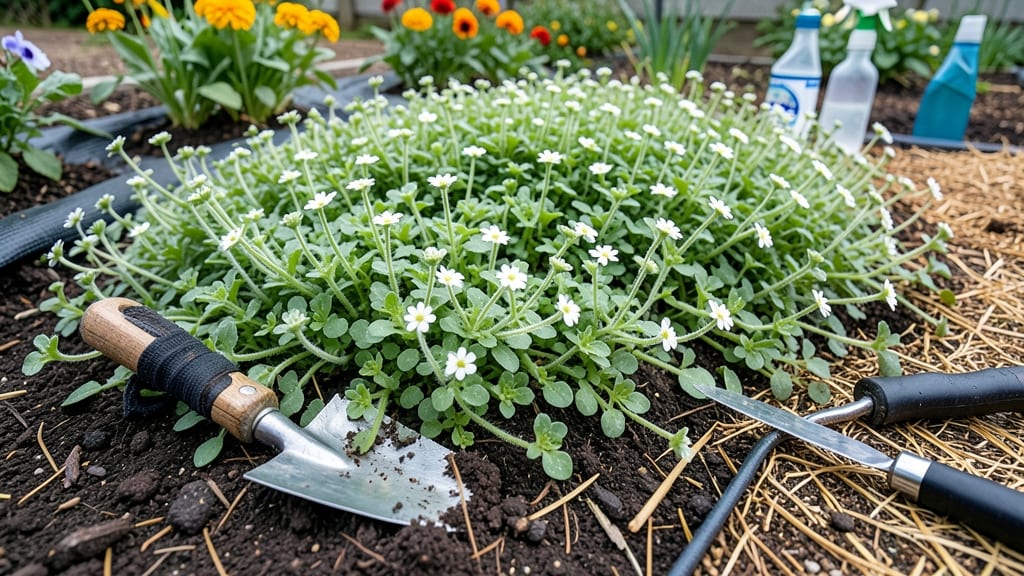
How to get rid of chickweed in flower beds—boiling water turns this stubborn weed into a one-time nuisance. 🌱 I’ve spent years battling this persistent invader, and this method finally gave me the clean flower beds I wanted without harsh chemicals. The secret? A precise, hot-water barrier that kills roots on contact while protecting your prized plants.
Most people grab vinegar or salt first, but those solutions often leave residue or harm nearby flowers. Boiling water works instantly—no waiting, no guesswork. You’ll need a kettle, a small watering can, and about 10 minutes per bed. The process is simple, but the results are permanent if done right.
After treatment, your flower beds stay weed-free for weeks, and the soil stays healthy for your plants. The key is timing: apply it on a dry, sunny day when chickweed is actively growing. I’ve used this method in both spring and fall with the same success—no more sneaky regrowth.
Works for any flower bed size, from small borders to large garden plots. Here’s the exact technique that finally worked for me—no more chickweed, just happy blooms.
Root Causes of Chickweed Invasion
Chickweed (Stellaria media) isn’t just a random nuisance—it thrives in specific conditions that make your flower beds its perfect playground. Understanding these triggers is the first step to reclaiming your garden.
Below, we break down the science behind why this resilient weed takes over, so you can address the real issues.
---
Chickweed is a soil opportunist, meaning it exploits weak or disturbed soil to establish itself. Here’s why it latches on:
- Compacted or Clay-Heavy Soil - Chickweed struggles in well-aerated, crumbly soil but loves dense, waterlogged, or clay-rich environments where roots can’t penetrate easily.
Compacted soil traps moisture and nutrients near the surface—exactly where chickweed’s shallow root system thrives. - Actionable insight: Test your soil’s compaction by pressing a shovel into it. If it resists, aerate with a garden fork or add organic matter (compost, leaf mold) to improve drainage.
- Low Nutrient Availability - Unlike heavy feeders like tomatoes, chickweed is a lightweight competitor.
It doesn’t need rich soil to survive—it thrives in nutrient-poor conditions where other plants fail. - Why it matters: If your flower beds are depleted (e.g., after heavy blooming seasons), chickweed fills the gap, outcompeting slower-growing perennials. - Fix: Conduct a soil test (DIY kits are affordable) and amend with balanced fertilizer or compost to deter chickweed’s dominance.
- Acidic or Alkaline Imbalances - Chickweed prefers a pH range of 6.0–7.5, which is neutral to slightly acidic.
If your soil is too acidic (below 6.0) or highly alkaline (above 8.0), it weakens native plants, giving chickweed an opening. - Test this: Use a pH test kit (or vinegar/baking soda DIY methods) and adjust with lime (to raise pH) or sulfur/peat moss (to lower pH).
---
Chickweed isn’t picky about climate, but it loves certain weather patterns that most gardeners can’t control—until now.
- Cool, Moist Climates - Native to temperate regions, chickweed germinates best in 50–75°F (10–24°C) temperatures.
It dormantizes in heat (above 85°F/29°C) but explodes in spring and fall when nights are cool and mornings are damp. - Garden impact: If your area has wet springs or mild winters, chickweed gets a head start before your flowers even sprout. - Workaround: Mulch heavily (3–4 inches of straw or wood chips) to suppress germination and retain soil moisture for your plants, not the weed.
- High Humidity and Shade - Chickweed is a shade-tolerant annual, meaning it doesn’t need full sun to thrive.
It often invades understory areas (beneath shrubs, trees, or tall perennials) where light is filtered. - Why shade helps: Low light reduces competition, and humidity keeps its leaves plump and juicy (its name, chickweed, comes from its tender, chicken-like texture). - Solution: Thin out overcrowded plantings to improve airflow and sunlight penetration.
If shade is unavoidable, opt for native ground covers that outcompete chickweed naturally.
- Disturbed or Bare Soil - Chickweed is a pioneer species, meaning it colonizes newly exposed soil—think freshly tilled beds, construction sites, or areas where mulch has eroded. - How it spreads: A single chickweed plant can produce thousands of seeds that lie dormant in the soil for years.
Disturbing the soil (even lightly) triggers germination. - Prevention: Minimize tilling and use living mulches (like clover) to keep soil covered and stable.
---
Sometimes, well-meaning gardening practices unintentionally invite chickweed. Here’s how:
- Overwatering or Poor Drainage - Chickweed detests dry conditions but rots in waterlogged soil.
However, many gardeners overwater to compensate for poor drainage, creating the perfect chickweed buffet. - Signs of overwatering: Soil stays soggy for days, mushrooms sprout, or plants yellow at the base. - Fix: Improve drainage with gypsum (for clay soil) or sand (for heavy loam).
Water deeply but infrequently to encourage deep root growth in your flowers.
- Lack of Mulch or Weed Barriers - Chickweed seeds need light to germinate.
Without a physical barrier (like mulch or cardboard), they sprout en masse. - DIY barrier tip: Lay cardboard + mulch (not plastic, which traps heat) over bare soil in fall to smother seeds before they wake up in spring.
- Ignoring Early Signs - Chickweed grows in two phases: 1. Prostrate (low-growing) – Hard to spot until it blankets the soil.
2. Bolting (tall, flower-stalk stage) – When it sends up white flowers, it’s already seeded heavily. - Pro tip: Pull chickweed when it’s young and tender (before it flowers). Use a hula hoe for large beds to cut it off at the soil line.
--- Key Takeaway: Chickweed doesn’t invade randomly—it’s opportunistic, resilient, and thrives on gardeners’ mistakes. By addressing soil health, moisture balance, and disturbance, you can starve it out before it takes over.
The good news? Once you know its weaknesses, boiling water and barriers become your secret weapons. 🔥
Practical Solutions for Chickweed Removal
Chickweed may seem like a stubborn nuisance, but with the right approach, you can reclaim your flower beds—permanently. Below are targeted fixes based on the root causes we discussed (overcrowding, poor soil, and seasonal spread), along with actionable steps to stop it in its tracks.
---
If your flower beds are packed too tightly, chickweed thrives by filling gaps. Prevent it before it starts with these steps:
- 🔥 Space Plants Properly Give your flowers room to breathe—aim for 12–18 inches between plants (check seed packet guidelines). Overcrowding invites weeds like chickweed to move in.
- 🍳 Mulch Like a Pro Apply 2–3 inches of organic mulch (straw, shredded leaves, or wood chips) to block sunlight and suppress chickweed seeds. Refresh mulch seasonally.
- 👨🍳 Hand-Pull Early & Often Chickweed is shallow-rooted—grab it at the base (including the tiny white roots) before it seeds. Do this weekly in spring and fall for best results.
---
Chickweed loves moist, nutrient-rich soil. Improve your soil’s health to outcompete it:
- ✨ Boost Drainage Amend heavy or compacted soil with compost or sand to prevent waterlogging. Chickweed hates dry conditions—well-draining soil is your secret weapon.
- 💡 Fertilize Strategically Add balanced slow-release fertilizer (10-10-10) in early spring to encourage strong flower growth. Healthy plants crowd out weeds naturally.
- 🎯 Solarize Bare Spots In hot climates, cover bare soil with clear plastic for 4–6 weeks in summer. The trapped heat kills chickweed seeds and roots before replanting.
---
Chickweed spreads via seeds and runners. Break the cycle with these seasonal tactics:
- 🔪 Mow or Trim High Keep lawn edges and flower bed borders mowed at 3–4 inches to weaken chickweed’s ability to spread via stems.
- 🌡️ Boiling Water Barrier (Best for Permanent Eradication) For stubborn patches, pour boiling water directly over chickweed (avoid desired plants). The heat instantly kills roots and seeds. Reapply if regrowth occurs.
- 🌱 Plant Competitive Ground Covers Underplant with creeping thyme, clover, or ajuga—these shade out chickweed while adding beauty and soil health.
---
Once chickweed is gone, keep it from returning with these habits: - 💡 Remove weeds before they seed (especially in late summer/fall). - 🌱 Rotate crops if growing vegetables—chickweed loves disturbed soil. - 🔄 Test soil pH (ideal: 6.0–7.0 for most flowers).
Adjust with lime or sulfur if needed. - 🌿 Use pre-emergent herbicide (like corn gluten meal) early spring to block seed germination.
--- Pro Tip: 🌿 Combine methods for best results—mulch + hand-pulling + boiling water = chickweed-free flower beds in weeks!
Frequently asked questions
Will boiling water harm my flowers?
No, if applied carefully! Always pour boiling water only on chickweed, avoiding stems and leaves of your flowers. Use a small watering can with a narrow spout for precision. Test on a hidden area first if you're unsure about your plants' heat tolerance.
How often should I check for regrowth after treatment?
Check your flower beds every 3-5 days for the first 2 weeks after treatment. Chickweed can resprout from dormant seeds, especially if conditions are moist. Once you've gone 4 weeks without new growth, you can reduce checks to weekly.
Can I use vinegar instead of boiling water?
Yes, but with limitations. Use full-strength white vinegar (5% acidity) mixed with 1 tablespoon dish soap per gallon for better adhesion. Apply on a sunny day when chickweed is actively growing. Vinegar works fastest in 70-85°F (21-29°C) temperatures, but may require 2-3 applications for complete removal.
Why does chickweed keep coming back after I remove it?
Chickweed produces thousands of seeds that can remain dormant for years. The key is to prevent new growth by improving soil health (adding compost), using 3+ inches of mulch, and removing any new sprouts immediately. The boiling water method helps break this cycle by killing both plants and seeds.
Is there a natural way to prevent chickweed without chemicals?
Try these organic methods: 1) Heavy mulching (straw or wood chips), 2) Plant competitive ground covers like clover or creeping thyme, and 3) Solarize bare soil by covering with clear plastic for 4-6 weeks in summer. These create conditions where chickweed can't thrive while protecting your flowers.