Why I started How To Plant Tips
It was a July afternoon in Ohio when I realized I’d killed my first tomato plant. The soil was too dry, the sun too unforgiving, and the seedlings—once full of promise—had wilted into sad, brown husks.
My dad, who’d taught me to plant beans before I could tie my shoes, just sighed and said, *‘You either learn from the dirt or you keep making the same mistakes.’* That’s when I decided to write down what I’d done wrong—and what I’d do differently next time.
This site is for anyone who’s ever stared at a seed packet, wondered if their thumb is green enough, or felt the quiet frustration of a plant that just won’t cooperate. No fluff, no assumptions. Just the honest lessons from someone who’s still learning, too.
If you’re here, you’re already halfway there—now let’s get your hands dirty.
Meet the founder

My dad’s old farm taught me that gardening isn’t about perfection—it’s about paying attention. He’d hand me a trowel and say, *‘Watch the soil, not the sky,’* while I’d dig up half the row because I’d missed a weed.
That first garden was a mess, but it’s where I learned that even the ‘wrong’ plants (like the mint that took over the herb bed) have their place.
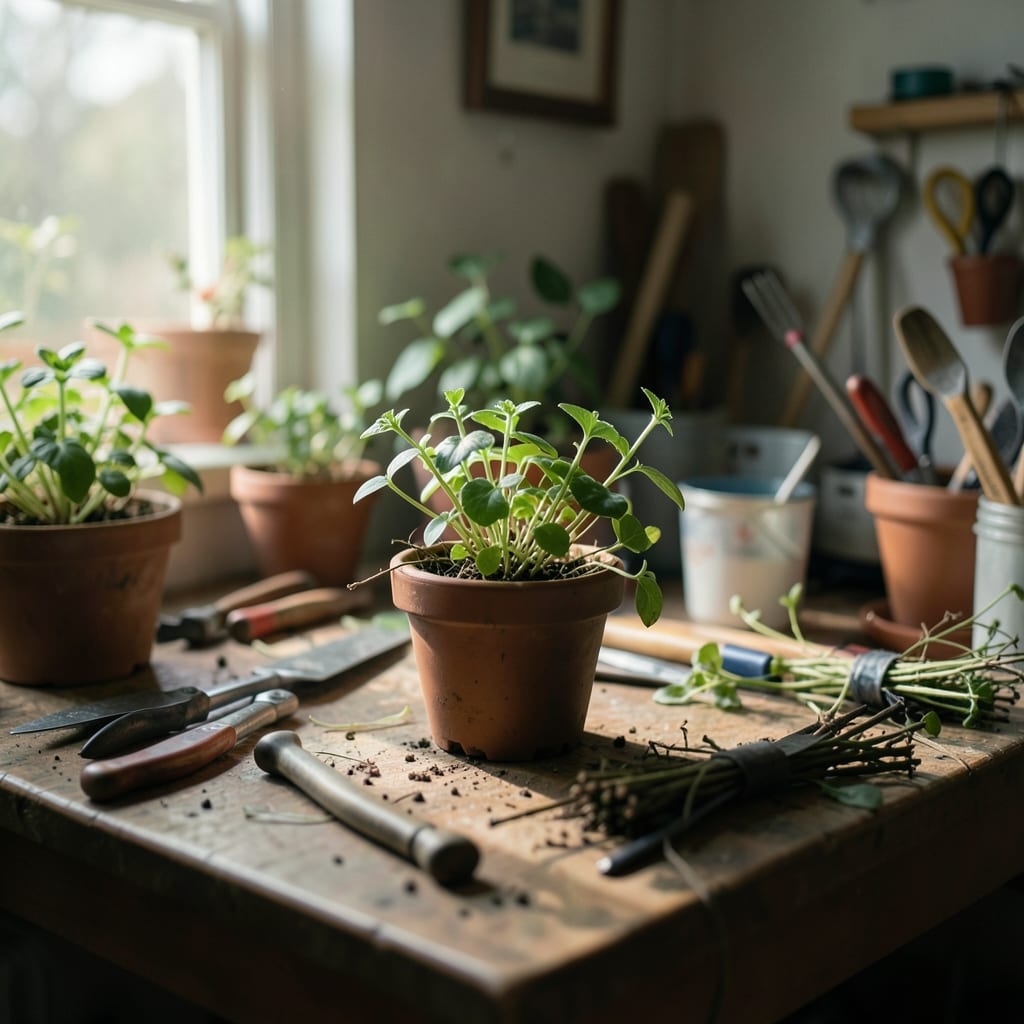
The only tool I still use from those early days is a rusted hand fork my grandpa gave me. It’s bent in three places now, but it’s the one I reach for when the soil’s too hard to break by hand.
I keep it because it reminds me that the best tools aren’t always the shiniest—they’re the ones that’ve earned their scars.
The failure that changed everything was the year I tried growing tomatoes from store-bought seeds. They sprouted fine, but the plants were leggy and weak, and half the fruit cracked open like overripe melons.
That’s when I switched to heirloom seeds and started paying closer attention to sunlight and watering rhythms. Now, my balcony garden gives me more tomatoes than I know what to do with.
I have a habit of talking to my plants when I’m watering them. Not loudly—just enough that my neighbors think I’ve lost it. But I swear the basil grows faster when I tell it *‘You’re doing great, buddy.’* Call it superstition, call it madness. It works.
Meet the mascot
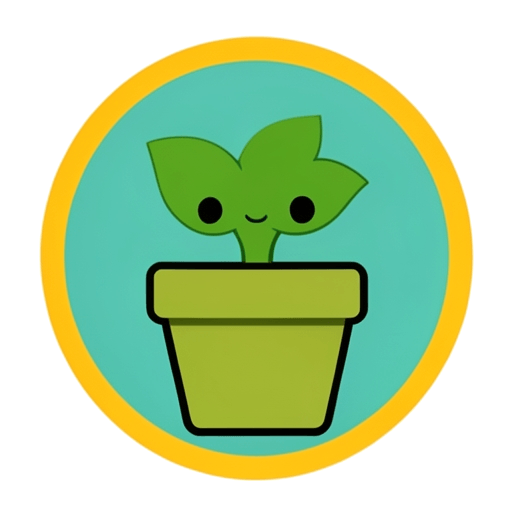
The mascot started as a scribble on a napkin at a diner in Columbus, where I was waiting for a bus.
I’d just spent the morning pulling weeds in the rain, and the first thing I drew was a seedling with arms—because, let’s be honest, plants *do* look like they’re waving at you when they’re happy.
The stem was too straight, the leaves too perfect, and the little face was just a circle with dots for eyes.
The next version was drawn on a legal pad at my kitchen table, where the light was better. I gave it overalls (because gardening is messy work) and a watering can that’s always tipped over just a little, like it’s about to spill.
The name came last: *Sprout.* Because that’s what gardening is—waiting for the first crack in the soil, the first sign that something’s alive under there.
To make it work as a tiny icon, I had to simplify it down to three lines: the stem, a leaf, and a smile that’s more of a squint, like it’s shielding its eyes from the sun.
The overalls became a single stitch down the leg, and the watering can turned into a dot with a wobble. Now it’s the face of this site—small enough to fit on a browser tab, but big enough to recognize when you see it.
What I promise you
You’ll find no ‘plant in full sun’ advice without telling you what *full sun* actually means in your yard. No ‘water regularly’ without a schedule. And no ‘this plant is easy’ unless I’ve grown it three times and can vouch for it.
What you can hold me to
- Every soil tip includes what to do if your dirt is *actually* different from the ‘ideal’ mix in the books.
- Seasonal notes aren’t just ‘spring/summer/fall’—they’re tied to real weather patterns, not just calendar months.
- If a plant is tricky, I’ll tell you up front *why* it’s tricky and how to cheat the system (legally).
- Photos are taken in my own garden, not stock libraries. If the light looks weird, it’s because I was shooting at 7 AM.
How I create a tip
Every tip starts with a season—either the one I’m in right now or the one I’m planning for. If it’s winter, I’m researching what to sow indoors under grow lights. If it’s summer, I’m noting which herbs bolt in the heat and which ones thrive.
The first draft is always scribbled in a notebook while I’m *doing* the work, not sitting at a desk. That’s when the real lessons come: the times I forgot to mulch, the weeds that outsmarted me, the plants that surprised me.
The first stage: watching
The first step is always *waiting*. After planting seeds, I check the soil moisture every 12 hours for the first week—not because the instructions say so, but because that’s when mold or rot starts if you’re not careful. Germination times are written in pencil until I’ve tested them myself.
A carrot seed might take 14 days in cool soil, but in my basement under a heat mat, it’s 7. The ‘rules’ are just starting points.
You know something’s gone wrong when the seedlings lean toward the light like drunkards or when the soil smells sour.
That’s when I pull out the magnifying glass (yes, I have one) to check for damping-off fungus or when I dig up a failed transplant to see if the roots are still white or already turning black. No guesswork—just evidence.
The second stage: fixing
If the soil’s too dense, I add compost and let it sit for a week before replanting. If the pH is off, it’s a matter of mixing in sulfur or lime—and testing it again in two weeks. The key is never assuming the first fix will work.
I once spent a month trying to save a dying azalea bush by adjusting the water, only to realize it needed *less* water, not more. The solution was simpler than the problem.
Pruning is where I learn the most. Cutting back too much can kill a plant, but leaving it alone can make it leggy. I follow the ‘third of the problem’ rule: if half the leaves are yellow, I remove a third of the plant.
If the branches are crowded, I thin them out until light can reach the center. And if all else fails? I talk to the plant some more. Sometimes it helps.
How a page gets onto this site
Every tip is written within 24 hours of the work being done—while the soil is still loose from my fingers, while the scent of fresh mulch is still in the air. The first draft is always messy, full of ‘I’ll explain that later’ notes and crossed-out steps.
The second read is where I cut the fluff: no ‘as you know’ or ‘obviously’ phrases, no assumptions about what you’ve already tried. If a step feels vague to me, it’s vague for you.
Pages get rewritten months later when I realize I missed something—like the time I forgot to mention that marigolds repel nematodes, or that basil needs to be pinched back to keep it bushy. The best tips are the ones that evolve with me, not the ones that stay static.
And if a tip doesn’t hold up after three growing seasons? It gets archived, not deleted. Even the failures have value.
Write to me
I love hearing about the plants that outsmarted you, the gardening hacks that actually work, or the times you swore a seed was dead—only for it to pop up weeks later. Send me your stories, your questions, or even just a photo of your weirdest garden success.
And if you’re stuck on something, ask. I’ve been where you are, and I’d rather admit I don’t know than guess wrong.
You’ll find me on the contact page, ready to trade notes. No question is too small, no plant too strange. Just don’t ask me how to grow avocados indoors—I’ve tried. Twice. Both times, they died.
The guides are grouped by category: Advice, Aphids, Blooming, Companion Plants, Container Gardens and Diseases.