
Vegetables
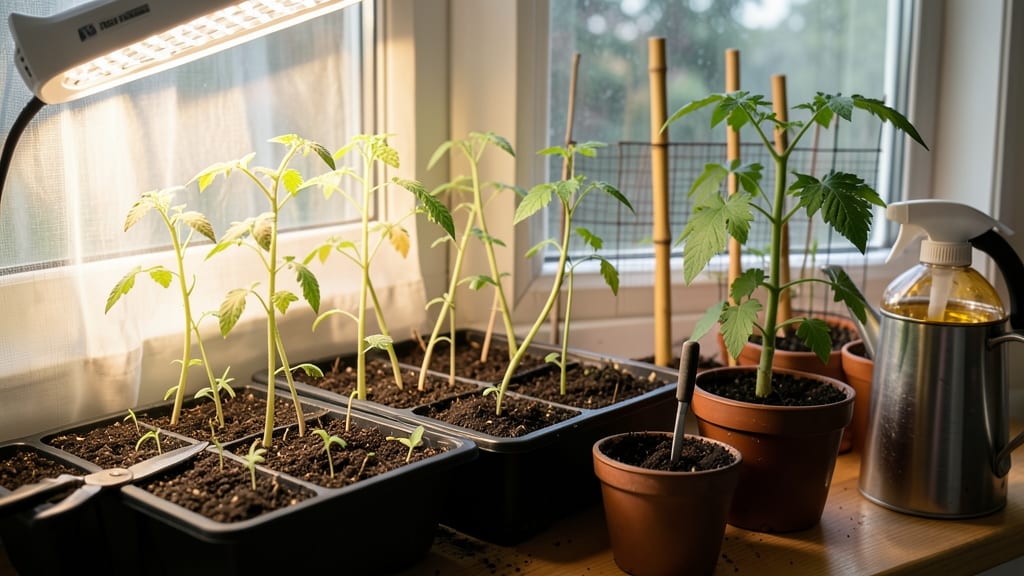
Leggy tomato seedlings are a gardener’s worst nightmare—until you know this quick fix. 🌱 I’ve nursed back dozens of stretched-out seedlings with just a pair of scissors and a repotting tray, and you can too. The secret lies in aggressive pruning and proper light exposure, not wishful thinking.
These seedlings stretch when they’re desperate for light, often because they’re crowded or sitting too far from a window. The good news? You can cut them back by half and still end up with stronger stems than store-bought transplants.
Within a week, you’ll see new growth that’s thick and sturdy, not wimpy and weak.
This method works in 30 minutes or less, with supplies you likely already have. No fancy tools, no complicated steps—just a little elbow grease and the right technique. By the time you’re done, your seedlings will look like they’ve been growing under a grow light for weeks.
Best part? You’ll prevent this problem entirely next season with a few simple adjustments to your seed-starting setup. Let’s turn those spindly stems into powerhouses before it’s too late.
The Hidden Triggers Behind Weak Seedlings
Understanding why your tomato seedlings stretch tall and thin—like overgrown noodles—is the first step to fixing them. Leggy growth isn’t just a cosmetic issue; it’s a survival tactic by seedlings struggling to balance light, energy, and stability.
Let’s break down the real culprits behind this common problem, so you can address the root cause (literally) and grow stockier, healthier plants.
---
🌱 Seedlings are sun-worshippers—but too little light turns them into "light-deprived divas."
When tomato seedlings don’t get enough photosynthetic light (especially blue and red spectrum wavelengths, which are critical for stem strength), they stretch wildly toward any available light source. This is called etiolation, and it’s their desperate attempt to reach sunlight.
- Why it happens: - Indoors: Grow lights are too far away (keep them 6–12 inches from seedlings) or too weak (aim for 12–16 hours of light/day). - Outdoors: Seedlings are planted too early in cool, cloudy weather, limiting sunlight exposure. - Overcrowding: Shady spots under taller plants block light, forcing seedlings to compete.
💡 Pro tip: If your seedlings lean toward a window, they’re already begging for more light. Rotate trays daily to prevent uneven growth.
---
🏃♂️ Too many seedlings in one pot = a competition for survival.
When seedlings are packed too closely together, they compete aggressively for nutrients, water, and light. Without enough space, they grow tall and spindly to escape the competition—even if it means sacrificing stem thickness.
- Why it happens: - Seed spacing: Sowing seeds too close (e.g., ¼ inch apart instead of ½–1 inch) leads to overcrowding. - Small containers: Roots get tangled, limiting nutrient uptake and forcing upward growth. - Thinning too late: Waiting until seedlings are already leggy to thin them out means the damage is done.
📊 Science check: A single tomato seedling needs at least 2–3 square inches of space to grow strong roots and stems.
---
❄️🔥 Too hot or too cold = seedlings go into survival mode.
Tomato seedlings thrive in consistent warmth (ideal daytime temps: 70–80°F). If they experience cold drafts, chilly nights, or sudden temperature drops, their growth slows, and they stretch to escape discomfort.
- Why it happens: - Drafty windowsills or AC vents near seedlings create uneven heating. - Nighttime temps below 60°F stunt growth, leading to leggy stems. - Heating mats set too high can cause uneven heat distribution, encouraging vertical growth.
🌡️ Pro tip: Use a seedling heat mat (set to 70–75°F) and avoid placing trays near cold glass or drafty areas.
---
💪 Nitrogen makes leaves, but not stems.
Leggy seedlings often get a one-sided diet—too much nitrogen (for lush foliage) and not enough phosphorus or potassium (which strengthen stems and roots). This imbalance tricks seedlings into prioritizing leafy growth over structural support.
- Why it happens: - Over-fertilizing with nitrogen-heavy fertilizers (like blood meal) early on. - Weak or depleted soil lacks the calcium and magnesium needed for cell wall strength. - Slow-release fertilizers applied too early can cause a nutrient spike before seedlings are ready.
🍽️ Nutrition fix: Use a balanced fertilizer (e.g., 5-5-5 or 10-10-10) at half-strength when seedlings have 2–3 true leaves.
--- 🌱 Moving seedlings too soon = a stress response.
When seedlings are transplanted too early (before they’ve built strong root systems), they go into survival mode, growing tall and weak to conserve energy. This is especially true if they’re moved from cozy indoor conditions to harsher outdoor environments.
- Why it happens: - Hardening off too quickly (exposing seedlings to cold, wind, or direct sun before they’re ready). - Planting in cold, wet soil slows root growth, forcing above-ground stretching. - Root-bound seedlings (pot-bound roots) struggle to adapt, leading to leggy regrowth.
⏰ Timing tip: Wait until nighttime temps stay above 50°F and seedlings have 4–6 true leaves before transplanting.
Quick Fixes for Tall, Weak Tomato Stems
Now that you know the root causes behind leggy tomato seedlings, let’s roll up our sleeves and get them back on track! The good news? Most fixes are simple, fast, and require minimal tools.
Below, we’ll tackle each common cause with step-by-step solutions—plus pro tips to keep your seedlings sturdy and thriving.
---
If your seedlings are leaning or stretching toward the light because they’re packed too closely, thinning and repotting is your first move.
How to do it: 1. Gently remove seedlings – Use a small trowel or your fingers to carefully lift seedlings from the tray, keeping the soil intact around the roots. 2. Snip at the base – If you’re thinning, cut seedlings at the soil line (not above) to avoid disease. Save the healthiest ones! 3. Repot individually – Plant each seedling in its own 4-6 inch pot (or a larger container if growing multiple). Use a well-draining potting mix rich in compost. 4. Buried stems = stronger roots – Plant slightly deeper than before, burying up to the first set of true leaves. This encourages extra root growth along the buried stem.
💡 Pro Tip: If you don’t have individual pots, use egg cartons or recycled plastic containers (just poke drainage holes first). Just avoid black plastic—it retains too much heat.
---
Leggy seedlings often mean they’re starved for sunlight. If your seedlings are reaching toward a window or grow light, they’re begging for more.
How to fix it: 1. Assess your light source – Seedlings need 12–16 hours of light daily. If using a grow light, position it 2–4 inches above the tallest seedlings (closer = stronger, but not too close to avoid burning). 2. Rotate daily – Turn the tray 180° each day so all sides get even light. This prevents lopsided growth. 3. Supplement with natural light – If using a sunny windowsill, place seedlings on the south-facing side (or west-facing for afternoon sun). 4. Extend daylight artificially – If natural light is weak (common in early spring), add a cheap LED grow light or even a bright white bulb for 2–3 extra hours in the morning/evening.
⚠️ Warning: Avoid placing seedlings near heat sources (like radiators or vents). They need light, not warmth!
---
Heat stress (from warm soil, drafts, or poor airflow) can weaken stems and encourage legginess.
How to cool them down: 1. Lower the thermostat – Ideal seedling temps are 65–75°F during the day and 55–60°F at night. If your home runs hot, move the tray to a cooler spot. 2. Improve airflow – Place a small fan (on low) a few inches away from the seedlings. This mimics outdoor conditions and strengthens stems. 3. Avoid plastic domes – If you’re using a humidity dome, remove it once seedlings have their first true leaves to prevent overheating. 4. Use reflective surfaces – Place a white tray or aluminum foil under the seedlings to bounce light upward and reduce heat absorption.
💡 Pro Tip: If your seedlings are in a sunny window, open the window slightly during the day to cool the air around them.
---
Weak, stretchy stems can also signal nutrient deficiencies or over-fertilization.
How to correct it: 1. Flush the soil – If you’ve been fertilizing, water thoroughly with plain water to rinse out excess salts, which can burn roots. 2. Add balanced fertilizer – Use a low-dose, water-soluble fertilizer (like 5-5-5 or 10-10-10) at half-strength. Look for one with phosphorus (P) to boost root development. 3. Boost organic matter – Mix in compost or worm castings (10–20%) into the soil for slow-release nutrients. 4. Avoid high-nitrogen starters – While nitrogen helps leaves grow, too much can lead to weak stems. Stick to balanced or phosphorus-heavy fertilizers for seedlings.
📊 Nutrition Cheat Sheet: | Problem | Fix | When to Apply | |---------------------------|----------------------------------|----------------------------| | Yellow leaves (N deficiency) | Diluted fish emulsion (5-5-5) | Every 2 weeks | | Purple stems (P deficiency) | Bone meal or compost | At planting or repotting | | Weak, floppy growth | Kelp meal or seaweed extract | Weekly (diluted) |
---
If your seedlings are already 6+ inches tall and floppy, don’t panic—you can still save them!
How to prune and recover: 1. Trim just above a leaf node – Use clean scissors to snip the top 1–2 inches of the stem, just above a set of leaves. This encourages bushier growth. 2. Propagate the cuttings (optional) – Place the top cuttings in water to root, then transplant them later for extra plants! 3. Stake or support immediately – Insert a toothpick, chopstick, or small stake next to the seedling and gently tie it to the stem with a soft strip of cloth or twist tie. 4. Give them a growth boost – After pruning, fertilize lightly (half-strength) and move them to bright, indirect light for a few days to recover.
✨ Bonus Hack: If your seedlings are too tall for pots, try the "buried stem trick"—plant them deeper than before, covering up to half the stem. New roots will form along the buried section, stabilizing the plant.
--- Once you’ve rescued your leggy seedlings, prevent future stretchy stems with these habits: - Start with the right light – Use a grow light from day one if natural light is weak. - Use the proper container depth – Seedlings need at least 2–3 inches of soil depth to develop strong roots. - Sow at the right depth – Plant seeds ¼ inch deep (or as directed on the packet) for consistent germination. - Monitor soil temperature – Keep it warm (70–80°F) for germination, then cool it down (60–70°F) once sprouted. - Hardening off early – Once seedlings are 2–3 inches tall, gradually expose them to outdoor conditions (morning sun, breeze) to toughen them up.
--- Final Thought: Leggy seedlings might look like a lost cause, but with a little pruning, repotting, and light tweaking, they’ll bounce back stronger than ever. And remember—even "failed" seedlings can be saved with the right care! Now grab your shears and get growing! 🌱🔥
Frequently asked questions
Can I still save tomato seedlings that are 8+ inches tall and completely leggy?
Cut them back by half just above a leaf node with clean scissors. This shock will trigger bushier growth from the base. For extra support, bury the remaining stem deeper in soil (up to the first true leaves) to encourage new root development. Within 7-10 days, you'll see thicker stems forming.
What's the best way to tell if my seedlings need more light?
Check for these signs: stems are thin and stretched, leaves are large but sparse, and seedlings lean toward the light source. If they're growing toward a window but not touching it, they're desperate for more. Rotate your trays daily to prevent uneven growth—this is a free way to check light exposure.
Is it better to prune leggy seedlings now or wait until transplanting?
Prune immediately—don't wait! Leggy seedlings waste energy maintaining their height, so cutting them back forces energy into root and stem development. For best results, prune when you repot into individual containers (4-6 inches deep) to give them proper space to regrow. This two-step approach works faster than waiting.
Can I use regular household items to fix leggy seedlings?
Yes! For support, use toothpicks, chopsticks, or even coffee stirrers tied gently to stems with soft cloth strips. For containers, repurpose egg cartons or yogurt cups (poke drainage holes first). And for light, a bright LED bulb or even a reflective aluminum foil tray under seedlings can boost light exposure without special equipment.
Will pruning leggy seedlings delay my harvest?
Not at all! While it takes 5-7 days for new growth to appear, pruned seedlings actually mature faster because they develop stronger root systems. The temporary setback is worth it—you'll end up with sturdier plants that produce more fruit. Just avoid pruning within 2 weeks of transplanting to prevent stress.