
Lawn
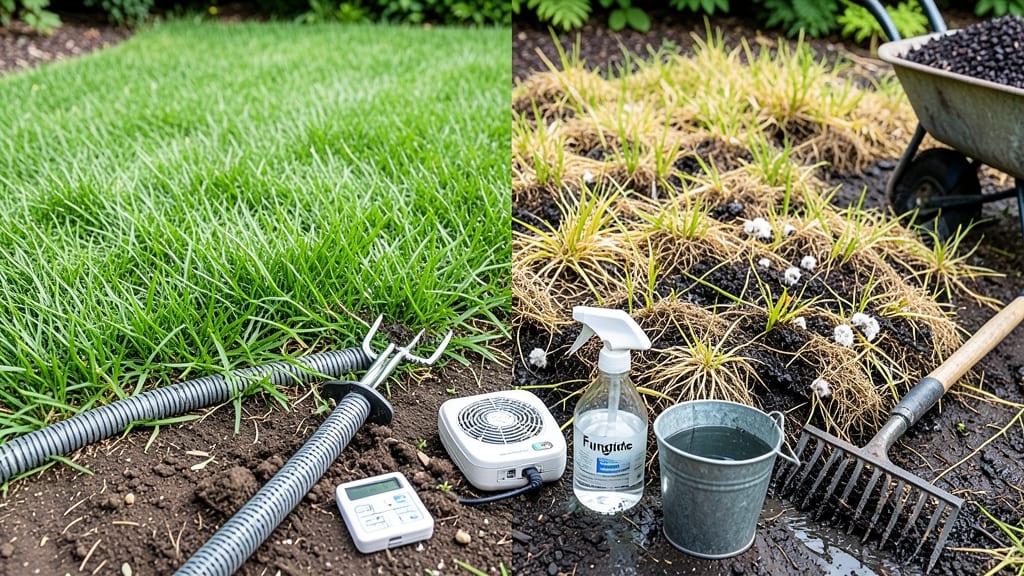
Your how to fix an overwatered lawn isn’t a lost cause—just a root system begging for help. 💧 I’ve nursed back lawns so waterlogged they looked like a swamp, and the key is acting fast before the roots suffocate.
The first step? Stop watering until the soil feels damp 2-3 inches down—not bone-dry, just not drowning.
Drainage is your best friend now. If water pools after rain, your lawn needs aeration to breathe—rent a core aerator or spike it with a garden fork. For fungal issues (that white, fuzzy stuff), rake up the worst patches and treat with a fungicide for lawns—just follow the label.
Most lawns show improvement within 7-10 days of proper care.
Long-term, adjust your watering to deep and infrequent: 1-1.5 inches per week, split into 2-3 sessions. A rain gauge or tuna can (yes, really) helps track how much water your lawn’s actually getting.
The payoff? Grass that stays green, not gray, and roots that stretch deep for drought resistance.
Pro tip: Test your soil’s drainage with a simple jar test—fill a jar with soil and water, then time how long it takes to drain. If it’s slower than coffee brewing, you’ve got work to do.
Prevention is easier than rescue, but even a struggling lawn can bounce back with the right moves.
📚 In This Guide
- What you need
- Instructions
- Tips and common mistakes
- Wrapping up and next steps
What you need
- ● Garden hose or sprinkler – For light watering (if needed) or testing drainage.
- ● Drainage tools: Shovel (flat-edged) – For digging small trenches or adjusting soil.
- ● Drainage pipe (4-inch diameter, 10–20 ft length) – Perforated or slotted PVC pipe for redirecting water.
- ● Gravel (½ inch to 1 inch, 5–10 lbs) – To surround the pipe for proper flow.
- ● Aeration tools: Manual aerator (spike or slicing type) – For small lawns (rent or buy for one-time use).
- ● Core aerator (rental recommended) – For larger lawns (removes soil plugs for better airflow).
- ● Rake (bow or leaf rake) – To level soil and remove debris after aeration.
- ● Lawn mower (with adjustable height) – Set to high to avoid stressing weak grass.
- ○ Soil test kit (optional but helpful) – To check pH and nutrient levels post-repair.
- ● French drain kit – For severe waterlogging (includes landscape fabric and additional piping).
- ● Compost or topsoil (5–10 cubic feet) – To improve soil structure after aeration.
- ● Lawn fertilizer (low-nitrogen, high-potassium) – Helps recover roots (e.g., 5-10-10 ratio).
- ● Waterproof boots or gloves – Because soggy lawns = muddy hands! 🩴
- ● String line & stakes – For marking drainage paths or aeration grids.
Step-by-Step instructions for fixing an overwatered lawn
Here's how I rescue lawns from soggy soil and root rot—fast, without waiting months for recovery.
💧 Step 1: Drain Excess Water Immediately
First, stop watering entirely and let the lawn dry from the top down. You'll know drainage is working when puddles disappear and the top 2 inches of soil feel damp but not saturated. If your yard has poor drainage, use a garden hose to create shallow channels between grass clumps—this redirects water away from roots.
For severely waterlogged areas, consider a manual lawn aerator (rent or borrow one) to create small holes. This lets trapped water escape while also allowing oxygen back to the roots. I've found that even just walking on dry patches helps break up compacted soil slightly—just avoid heavy foot traffic on wet spots.
✂️ Step 2: Mow Higher to Reduce Stress
Set your mower to its highest setting—3 to 4 inches—to shade the soil and prevent further moisture loss. Longer grass blades create a natural barrier that slows evaporation while protecting the crowns of grass plants from sunburn. You'll notice the grass looks less crispy within 24 hours of raising the blade height.
Don't remove the clippings unless they're brown and dying. Healthy clippings return nutrients to the soil and help regulate moisture levels. If you must bag clippings, only do so for the first 1-2 mowings after fixing the water issue.
🌱 Step 3: Aerate and Loosen Compacted Soil
Rent a core aerator to pull 3-4 inch deep plugs of soil across the lawn. This breaks up the compacted layer that's preventing proper drainage. Work in a grid pattern with 6-inch spacing between holes—overlapping passes waste time and damage roots. You'll see immediate improvement as water starts pooling less and grass color brightens within 3-5 days.
After aerating, spread a thin layer of compost or sand (if your soil is clay-heavy) over the holes. This helps maintain the aeration channels while improving soil structure. Avoid heavy mulch—it can suffocate the lawn if applied too thickly.
☀️ Step 4: Adjust Watering Habits Permanently
Once the lawn is dry, establish a deep-and-infrequent watering schedule. Water 1-1.5 inches per week, all at once, rather than light daily sprinkles. You'll know you're doing it right when water penetrates 6 inches deep—stick a screwdriver into the soil to check. Early morning watering (before 10 AM) prevents fungal diseases that thrive in damp grass.
Install a rain gauge or use a tuna can to measure rainfall—this helps you avoid overwatering during wet periods. If your soil stays soggy after rain, consider installing French drains along low-lying edges to redirect water away from the lawn.
🌿 Step 5: Fertilize for Recovery (When Ready)
Wait until the lawn shows new growth (usually 7-10 days after aerating) before applying fertilizer. Use a low-nitrogen, high-potassium formula (like 5-10-10) to strengthen roots without promoting leafy top growth. Spread evenly with a broadcast spreader and water lightly to activate the granules.
Skip fertilizer if the grass looks stressed or yellow—roots need time to recover first. I've seen lawns bounce back completely within 4-6 weeks of proper care, even after severe overwatering. The key is patience and consistency with the new watering routine.
Tips & tricks for reviving an overwatered lawn
Real talk: I've seen lawns go from vibrant green to sad, mushy patches in just a few days of overwatering. Here's how to turn things around without waiting months for recovery.
Drainage Check: After stopping watering in Step 1, test soil moisture by pressing your finger 2 inches deep. If it feels like a damp sponge, you're still holding too much water. For stubborn puddles, create deeper channels with a shovel—aim for 4-6 inches deep to reach the root zone. I've had to dig trenches along property lines to redirect water completely.
Mowing Strategy: When you raise that mower height to 3-4 inches in Step 2, resist the urge to bag clippings right away. Those grass clippings act like a natural mulch, returning moisture to the soil gradually. Only bag if they're brown and dying—healthy clippings actually help regulate moisture better than any synthetic product I've tried.
Aeration Timing: The 3-5 days window mentioned for seeing improvement after aeration can feel like forever when you're eager to see results. Here's the thing: if your soil is particularly compacted (like clay-heavy soil), you might need to aerate twice—once when the soil is dry, then again after a light rain. The second pass opens up those channels even more for better drainage.
Watering Hack: That 6-inch deep water penetration check in Step 4 is your new best friend. Instead of using a screwdriver, try a long screwdriver or even a pencil—it's easier to see where the soil meets the dry part. I keep one marked with tape at 6 inches in my toolbox just for this purpose. Early morning watering (before 10 AM) is non-negotiable—it gives the grass blades time to dry before evening dew sets in.
Pro Tips for Fix Overwatered Lawn
- Real talk: I've seen lawns go from vibrant green to sad, mushy patches in just a few days of overwatering. Here's how...
- Drainage Check: After stopping watering in Step 1, test soil moisture by pressing your finger 2 inches deep. If it fe...
- Mowing Strategy: When you raise that mower height to 3-4 inches in Step 2, resist the urge to bag clippings right awa...
Frequently asked questions
Got questions about fixing an overwatered lawn? You’re not alone!
Here are some of the most common concerns—and quick, actionable answers to get your grass back on track.
How long does it take to fix an overwatered lawn?
Recovery time depends on the severity, but with proper drainage, aeration, and reduced watering, you’ll see improvement in 1–3 weeks. Severe cases (like fungal growth) may take 4–6 weeks. Consistency is key—avoid rewatering until the soil dries out 2–3 inches deep.
Can I just stop watering to fix an overwatered lawn?
Stopping watering helps, but it’s not enough alone. Drainage and aeration are critical to prevent root rot and compaction. Let the soil dry between waterings, but avoid letting it get bone-dry—aim for 1 inch of water per week (including rain).
What are the signs my lawn is still overwatered after fixing it?
Watch for mushy grass, yellowing patches, or a foul smell—these signal lingering issues. If your lawn feels soggy when you walk on it or mushrooms sprout, you may need to improve drainage (e.g., sand top-dressing or French drains).
Should I fertilize an overwatered lawn right away?
Wait 2–4 weeks after fixing drainage before fertilizing. Overwatered grass is stressed, and fertilizer can burn roots or promote fungal growth. Once soil is dry and aerated, use a low-nitrogen, slow-release fertilizer to rebuild strength.
Will my lawn ever fully recover from overwatering?
Yes! With the right steps—drainage, aeration, proper watering, and patience—your lawn can bounce back. Thin or dead patches may need reseeding, but healthy roots will outcompete weeds over time. Think of it as a reset for your grass’s health!
Wrapping up and next steps
Fixing an overwatered lawn is totally doable—you’ve got this! 🌱 By draining excess water, aerating compacted soil, and reviving roots with proper care, your grass will bounce back stronger than ever.
Remember, consistency is key, so keep an eye on moisture levels and adjust your watering schedule to avoid future soggy patches.
Ready to transform your lawn? Start by testing soil moisture weekly and adjusting your routine based on what works best. Soon, you’ll have a lush, healthy yard that’s the envy of the neighborhood! 🌿