
How To
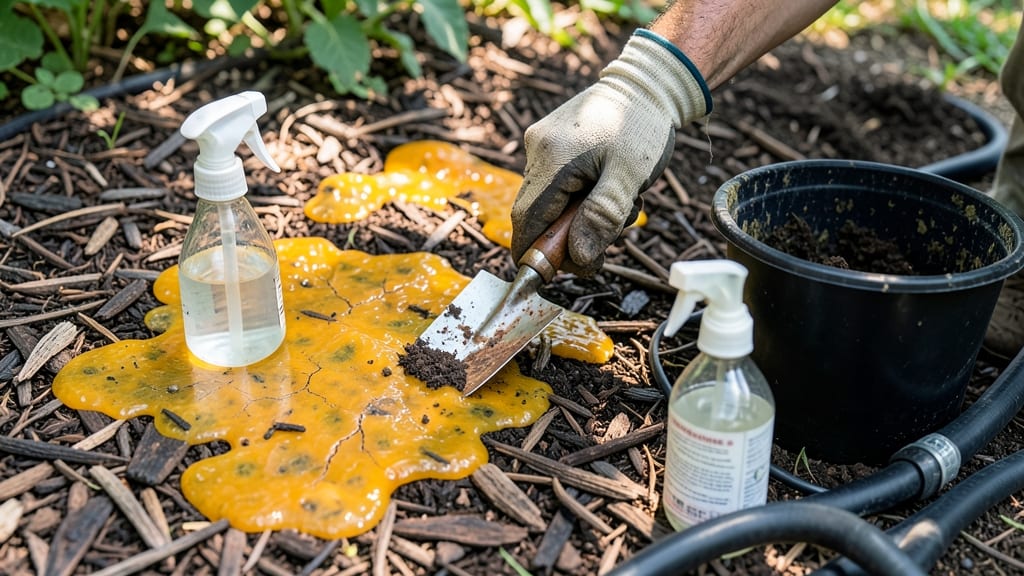
How to get rid of slime mold in mulch—that neon-green slime lurking in your mulch may look alarming, but it’s harmless to your plants. 🌱 I’ve wrestled with it in my own beds, and the boiling water trick actually works better than store-bought sprays. It’s not magic, just science: heat kills fungal spores without harming your soil.
The problem starts when mulch stays too damp and compacted—perfect conditions for slime mold to spread like wildfire. Most people panic and toss the mulch, but you can fix it in 15 minutes with just boiling water and a hose.
The key is getting the moisture balance right afterward to prevent it from coming back.
After treating it, you’ll have clean mulch that stays dry enough to deter regrowth while keeping your soil protected. The slime mold disappears within days, and your garden beds look fresh again—no more slimy surprises lurking under the bark.
Works for any mulch type (wood chips, straw, or shredded leaves) and keeps your garden looking tidy without harsh chemicals. Here’s exactly how to do it—no guesswork involved.
The Hidden Triggers Behind Slime Mold
Slime mold in mulch isn’t just a random nuisance—it’s a sign your garden’s moisture, organic matter, and environment are creating the perfect fungal party. Understanding the root causes is half the battle in stopping it.
Let’s break down the science behind why this slimy invader shows up uninvited in your mulched beds.
Slime molds, particularly Fuligo septica (the "dog vomit" slime mold) and Physarum polycephalum, thrive in high-humidity, damp conditions. Here’s why your mulch becomes their spa:
- Poor drainage: Mulch acts like a sponge, trapping water against the soil. If your garden bed has compacted soil or clay-heavy dirt, water pools instead of draining, creating a soggy layer where slime mold spores germinate.
- Overwatering: While mulch retains moisture, daily watering (especially with sprinklers) keeps the top layer perpetually wet. Slime molds need consistent dampness—not just occasional moisture—to spread.
- Rainfall + thick mulch: A 3–4 inch layer of mulch is ideal for gardens, but during heavy rains, it can act as a waterproof barrier, preventing evaporation and trapping humidity at the soil interface.
Pro tip: 🌡️ Slime mold rarely appears in dry climates—it’s a tropical/subtropical garden problem. If you’re in a humid zone, even "light" rain can trigger outbreaks.
Slime molds are decomposers, meaning they feed on dead plant material. Your mulch is essentially their all-you-can-eat salad bar. Here’s what fuels their growth:
- Fresh, nitrogen-rich mulch: Wood chips from nitrogen-heavy plants (like grass clippings or leaf litter) decompose quickly, releasing ammonia and sugars that slime molds love.
- Old, rotting mulch: After 1–2 years, mulch breaks down into a gelatinous, nutrient-rich sludge. This microbiome party attracts slime molds as much as it does earthworms and fungi.
- Leaf litter and twigs: Fine, partially decomposed leaves create micro-habitats where slime mold spores land and germinate.
Key insight: ⏳ Slime mold outbreaks often spike in spring and fall—when decay accelerates after winter or before summer droughts.
Slime molds are opportunistic—they don’t compete for space. They infiltrate where other organisms can’t survive. Here’s how your garden’s layout helps them:
- Dense mulch layers: A thick, undisturbed mulch (especially straw or wood chips) blocks airflow, creating anaerobic zones (low-oxygen areas) where slime mold thrives.
- Shaded beds: Direct sunlight dries out mulch faster, but dappled or full shade keeps moisture levels consistently high.
- Tightly packed plants: Overcrowded gardens reduce evaporation and trap humidity near the soil. Slime mold spreads via spores carried on air currents—and stagnant air helps them "hitchhike."
Fun fact: 🔥 Slime mold avoids competition—it won’t grow where mycorrhizal fungi (beneficial soil fungi) dominate. That’s why well-aerated, diverse soil resists outbreaks.
Slime mold spores are everywhere—in soil, compost, and even on tools. But they only activate when conditions are right. Common garden activities accelerate their growth:
- Freshly tilled beds: Turning soil exposes buried spores and stirs up organic debris, giving slime mold a nutrient boost.
- Compost pile runoff: If your compost is too wet, it can leach slime mold spores into nearby mulch.
- Leaf blowers or rakes: Physical disturbance spreads spores from hidden pockets in mulch to fresh areas.
Warning: 🚨 If you’ve recently amended soil with compost or planted new perennials, you’re inviting slime mold—the disturbed organic matter is their green light.
Now that you know why slime mold crashes your mulch party, the next step is how to evict it—and keep it from returning. Stay tuned for actionable fixes, including the boiling water barrier method that smothers fungal growth for good.
How to Fix It Fast
Slime mold in mulch might look like a weird, slimy science experiment gone wrong, but don’t panic—there are effective, easy-to-follow solutions to banish it for good. The key is identifying the root cause (moisture, organic buildup, or poor airflow) and applying the right fix.
Below, we’ve mapped practical solutions to each common trigger, plus prevention tips to keep your mulch—and garden—slime-free.
---
Slime mold thrives in damp, soggy conditions, so reducing moisture is often the fastest fix.
How to Fix: - 🍳 Spread Mulch Thinly – If your mulch is piled too thick (over 2–3 inches), it traps moisture. Rake it out to 1–2 inches for better airflow. - 👨🍳 Let It Breathe – Avoid watering directly on mulch. Instead, water the soil at the base of plants to prevent oversaturation. - ⏰ Wait for It to Dry – If the mulch is already wet, hold off on watering for 2–3 days to let excess moisture evaporate naturally. - 🌡️ Boost Sun Exposure – Trim back overhanging branches or move containers to sunny spots to speed up drying.
💡 Pro Tip: If slime mold keeps returning, switch to inorganic mulches (like gravel or rubber chips) in high-moisture areas—they don’t decompose and hold water like wood chips.
---
Slime mold feeds on decaying plant matter, so removing food sources cuts off its supply line.
How to Fix: - 🔪 Scoop Out the Slimy Stuff – Use a gloved hand or stiff brush to gently scrape off visible slime mold. Avoid disturbing it too much—spores can spread! - 🥘 Replace Contaminated Mulch – If the mulch is heavily infested, remove and replace the top 1–2 inches with fresh, dry mulch. - 🌱 Rake Out Dead Leaves & Debris – Clear away fallen leaves, twigs, and old plant matter from the mulch bed to starve the slime mold.
✨ Prevention Hack: Sprinkle a thin layer of diatomaceous earth (DE) over the mulch—it’s a natural fungicide that won’t harm plants but will deter slime mold.
---
Slime mold loves stagnant, humid microclimates. Breaking up dense mulch layers helps.
How to Fix: - 🔥 Fluff It Up – Use a rake or garden fork to loosen compacted mulch, creating air pockets. - 👨🍳 Space Plants Properly – If plants are too crowded, thin them out to allow better airflow around the mulch. - 🌿 Choose Lightweight Mulch – Heavy mulches (like cedar chips) pack down tightly. Opt for pine straw or shredded bark instead for better drainage.
🎯 Long-Term Fix: Install a soaker hose with a timer to water deeply but infrequently, preventing waterlogged mulch.
---
For severe infestations, a boiling water treatment can smother slime mold spores at the source.
How to Fix: - 🔥 Boil 1–2 gallons of water per square foot of infested mulch. - 🍳 Carefully pour the boiling water directly onto the slime mold (wear gloves and eye protection!). - 🥘 Let it cool, then rake the area to break up remaining spores. - ⏰ Repeat weekly until the slime mold disappears (usually 2–3 treatments).
⚠️ Warning: Only use this method on non-organic mulches (like gravel or rocks) or in non-plant areas—boiling water can harm living plants.
---
Once you’ve banished slime mold, keep it from coming back with these low-effort strategies:
- 💡 Mulch in Layers – Apply 1–2 inches of mulch and refresh it every 6–12 months before it breaks down. - 🌡️ Test Moisture Levels – Stick your finger into the mulch—if it’s damp more than 2 inches down, it’s too wet. - 🌿 Use a Mulch Mat – Place a landscape fabric barrier under mulch to block weeds and reduce organic buildup. - 🎯 Rotate Mulch Types – Alternate between wood chips, straw, and inorganic mulches to disrupt slime mold’s food sources.
--- Final Thought: Slime mold is annoying but not dangerous—it won’t harm your plants, but it’s a sign your mulch needs a refresh. With these fixes, you’ll have clean, slime-free mulch in no time! 🚀
Frequently asked questions
Is slime mold in mulch harmful to plants or soil?
No, slime mold is completely harmless to plants and soil! It’s just an opportunistic decomposer that feeds on decaying organic matter. The only issue is the unsightly appearance—it won’t damage your garden or spread to living plants. Think of it as nature’s temporary cleanup crew.
How often should I check my mulch for slime mold?
Check your mulch every 2–4 weeks during humid seasons (spring and fall) when outbreaks are most likely. After heavy rains or when you notice excessive moisture, do a quick visual scan. Early detection makes removal much easier before it spreads.
Can I use vinegar to kill slime mold in mulch?
Yes, but with caution! A 1:1 vinegar-water solution sprayed directly on the slime mold can help kill it, but avoid oversaturating the mulch. The acidity disrupts fungal growth, but vinegar can also alter soil pH if overused. Test a small area first and use sparingly.
Will slime mold come back if I only remove the visible slime?
Very likely—spores remain in the mulch and will regrow if conditions stay damp. To prevent recurrence, remove the top 1–2 inches of mulch and replace it with fresh, dry material. Also, improve airflow by thinning the mulch layer and reducing watering frequency.
What’s the best mulch type to prevent slime mold?
For slime-mold resistance, choose pine straw or inorganic mulches like gravel or rubber chips. These options drain better and don’t decompose as quickly, reducing moisture buildup. If using organic mulch, opt for cedar chips—they resist rot longer than other wood types.