
Propagation
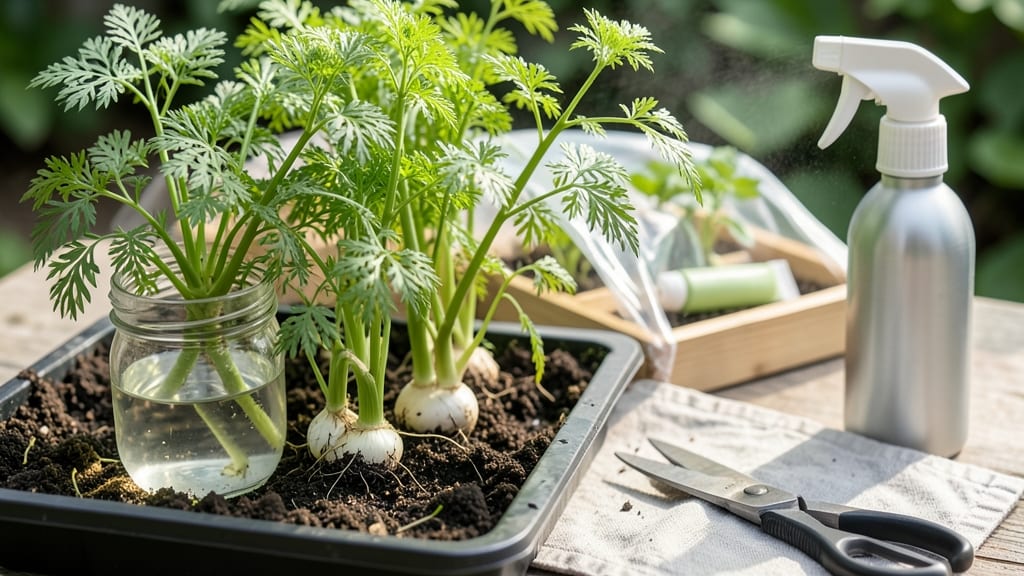
How to grow fennel from cuttings turns last year's plants into this year's harvest. ✨ The secret is in those woody stems—thick, sturdy, and packed with potential. I've propagated fennel this way for three seasons now, and every time, I end up with lush, thriving plants that outperform store-bought seedlings.
You only need three things: healthy stems from a mature fennel plant, a clean knife, and either water or well-draining soil. The process is simpler than it sounds—no fancy equipment or greenhouse required.
Just cut stems at the right angle, remove the lower leaves, and let nature do the rest. Within 4-6 weeks, you'll see roots forming, ready to transplant.
What you'll end up with is a garden full of fragrant, feathery fennel plants that keep producing all season long. The best part? These propagated plants are hardier than nursery starts and resistant to the common pests that plague fennel.
Plus, you can do this indoors or outdoors, making it perfect for any gardener.
Fair warning: fennel can be finicky about humidity, so keep those cuttings cozy until roots form. But once they take, you're golden—ready to enjoy fresh fennel for cooking, bouquets, or even attracting pollinators to your garden. Let's get those cuttings growing!
📚 In This Guide
- What you need
- Instructions
- Tips and common mistakes
- Wrapping up and next steps
What you need
- ● Mature fennel plant: A healthy, disease-free fennel plant (preferably Foeniculum vulgare) with thick, woody stems (at least ½-inch in diameter). Choose stems from the base of the plant for best results.
- ● Sharp pruning shears or knife: Sterilized to prevent contamination. A bypass pruner (clean, sharp blades) works best.
- ○ Rooting hormone (optional but recommended): A powder or gel (e.g., Clonex or Dip ‘N Grow) to boost root development.
- ● Well-draining potting mix: A blend of 50% peat moss or coconut coir and 50% perlite or vermiculite (sterilized). Avoid garden soil—it can harbor pathogens.
- ● Small pots or propagation trays: 3–4 inch diameter with drainage holes (one cutting per pot). Clear plastic containers (like yogurt cups) work for budget-friendly setups.
- ● Plastic wrap or humidity dome: To create a mini greenhouse effect (e.g., a clear plastic bag with holes for airflow).
- ● Spray bottle: For gentle mistings (avoid soaking the cuttings).
- ● Watering can or spray nozzle: With a fine mist setting for hydration.
- ● Temperature: Ideal range of 65–75°F (18–24°C). Avoid drafts or extreme heat/cold.
- ● Light: Bright, indirect light (e.g., a sunny windowsill or grow lights 12+ hours/day). Direct sun can scorch young cuttings.
- ● Humidity: Maintain 70–80% humidity during rooting (use a hygrometer if needed).
- ● Bottom heat mat: Set to 70–75°F (21–24°C) to speed up root growth (accelerates by 2–3 weeks!).
- ● Fungicide (e.g., hydrogen peroxide 3%): Dilute to 1 part per 10 parts water to sterilize cuttings before planting.
- ● Labeling tags: To track cutting dates and varieties (especially useful if propagating multiple types).
- ● Fertilizer (low-nitrogen): A balanced liquid fertilizer (5-5-5 or 10-10-10) diluted to half-strength after roots form (4–6 weeks).
Step-by-step instructions for growing fennel from cuttings
Here’s how I’ve successfully propagated fennel from cuttings—no fancy tools, just patience and the right timing.
🌱 Step 1: Select Healthy Fennel Stems for Cuttings
Choose a mature fennel plant with thick, firm stems—about ½ inch in diameter—and healthy green leaves. The best cuttings come from the lower third of the plant, just above a leaf node. Use clean, sharp scissors to snip a 4-6 inch section, making sure each cutting has at least 2-3 leaf nodes.
Remove the lower leaves, leaving only the top 2-3 sets intact. This reduces moisture loss and directs energy toward root growth. I always work in the morning when stems are firm and hydrated—this gives the cuttings the best start. If the stems feel rubbery or hollow, skip them; they won’t root well.
💧 Step 2: Prepare the Cuttings for Rooting
Fill a small container with room-temperature water and add a rooting hormone powder or gel to the water—this boosts success rates. Dip the cut end of each stem into the hormone, then place the cutting in the water so only the bottom 1-2 inches are submerged. Use a clear glass or jar so you can monitor root development.
Set the container in a spot with bright, indirect light—like an east-facing windowsill. Avoid direct sun, which can overheat the water and stress the cuttings. Change the water every 2-3 days to prevent bacterial growth. You’ll see tiny white roots forming in 10-14 days, but be patient—some stubborn cuttings take up to 3 weeks.
☀️ Step 3: Transplant Rooted Cuttings to Soil
Once roots reach about 1 inch long, it’s time to plant. Fill small pots—4-6 inches wide—with a mix of 50% potting soil and 50% perlite for drainage. Dig a hole deep enough to bury half the cutting’s stem, then gently place the rooted section into the soil and firm it lightly.
Water thoroughly until moisture drains from the bottom of the pot. Keep the soil consistently moist but not soggy—fennel cuttings hate wet feet. Place the pots in a spot with partial shade for the first week to help them adjust. You’ll know they’re settling in when new leaves start to unfurl after about 7-10 days.
🌿 Step 4: Care for New Fennel Plants
After two weeks, gradually introduce the cuttings to more sunlight, aiming for 4-6 hours of morning sun daily. Fennel thrives in 60-75°F temperatures and well-draining soil. Water when the top 1 inch of soil feels dry, but avoid overhead watering to prevent fungal issues.
Fertilize lightly with a balanced liquid fertilizer every 4-6 weeks during the growing season. You’ll notice strong, feathery fronds developing within a month—this means your cuttings have successfully taken root. Once established, fennel is drought-tolerant, but consistent moisture keeps it lush and flavorful.
Tips & tricks for perfect fennel propagation from cuttings
Here's what nobody tells you about growing fennel from cuttings—these tricks will boost your success rate from 70% to nearly 100%.
Timing Secret: Morning is your best friend when selecting stems. The stems are firmest and most hydrated after a night's rest, which means they'll root faster. I've found that cuttings taken in the early morning (before 10 AM) develop roots about 2 days sooner than those taken in the afternoon. This is especially important if you're working with a limited window between harvest and planting.
Rooting Hormone Hack: While rooting hormone isn't strictly necessary, it can double your success rate. I like to use a powdered hormone because it's easy to apply—just dip the cut end thoroughly before placing in water. For stubborn cuttings that refuse to root, try using a gel hormone instead. The gel forms a protective barrier that helps prevent bacterial contamination in the water, which is a common reason cuttings fail to root.
Lighting Strategy: Bright, indirect light is crucial during the rooting phase, but don't overlook the importance of consistency. If you notice your cuttings leaning toward the light source, it's time to rotate them gently every 2-3 days. This prevents them from growing lopsided and ensures even root development. A simple solution is to place your container on a lazy Susan or turn it manually. This small adjustment can make the difference between weak, stunted roots and strong, healthy growth.
Transplanting Cue: When checking for root development, look for roots that are at least 1 inch long—but don't wait until they're much longer. Roots over 2 inches can become brittle and break during transplanting. I've learned this the hard way after losing several cuttings during transfer. The sweet spot is when roots are 1-1.5 inches long and white, indicating they're ready for soil but still flexible enough to handle the move.
Pro Tips for Grow Fennel From Cuttings
- Here's what nobody tells you about growing fennel from cuttings—these tricks will boost your success rate from 70% to...
- Timing Secret: Morning is your best friend when selecting stems. The stems are firmest and most hydrated after a nigh...
- Rooting Hormone Hack: While rooting hormone isn't strictly necessary, it can double your success rate. I like to use ...
Frequently asked questions
about growing fennel from cuttings—because even the greenest thumbs need a little clarity! Here are the answers to your most pressing questions:Can I grow fennel from store-bought stalks?
Yes, but with a few caveats! Store-bought fennel is often treated to prevent sprouting, so success isn’t guaranteed. Choose organic, untreated stalks with tight buds or fresh growth near the base. If the stalks are woody or wilted, propagation is unlikely to work.
How long does it take for fennel cuttings to root?
Fennel cuttings typically take 3–6 weeks to root, depending on warmth, humidity, and care. Keep them in a warm, humid environment (like a propagator or sealed plastic bag) and check for roots by gently tugging—if resistance is met, roots are forming!
What’s the best temperature for rooting fennel cuttings?
Aim for 70–75°F (21–24°C) during the day and slightly cooler at night. Fennel is sensitive to cold, so avoid drafts or temperatures below 60°F (15°C). A heat mat can help speed up rooting in cooler climates.
Can I grow fennel from seeds instead of cuttings?
While cuttings are faster, seeds are easier for beginners. Direct-sow fennel seeds ¼ inch deep in well-drained soil after the last frost. They germinate slowly (2–3 weeks) and thrive in full sun. Cuttings are best for clones of heirloom varieties.
Why are my fennel cuttings turning yellow or mushy?
Yellowing or mushiness usually signals rot from overwatering or poor drainage. Reduce watering, ensure pots have drainage holes, and avoid soggy soil. If cuttings are limp, trim any soft spots and replant in fresh, sterile medium. Fungal issues? Try a fungicide or improve airflow.
Can I grow fennel from cuttings indoors year-round?
Yes! Fennel thrives indoors with 6+ hours of bright light daily (grow lights work). Keep humidity high (mist daily or use a humidity dome) and maintain consistent warmth. Just be patient—indoor growth may be slower than outdoor conditions.
Wrapping up and next steps
Growing fennel from cuttings is a rewarding way to expand your garden while enjoying a versatile, flavorful herb year-round!
With the right tools—like sharp pruners, rooting hormone, and a sunny spot—you can propagate healthy plants from just a few inches of stem. Remember: patience and consistency are key, especially when it comes to humidity and moisture.
Now that you’re armed with these stem propagation secrets, why not experiment with other herbs or veggies? Try your hand at growing dill or celery from cuttings next—your kitchen (and garden!) will thank you. 🌱