Picking
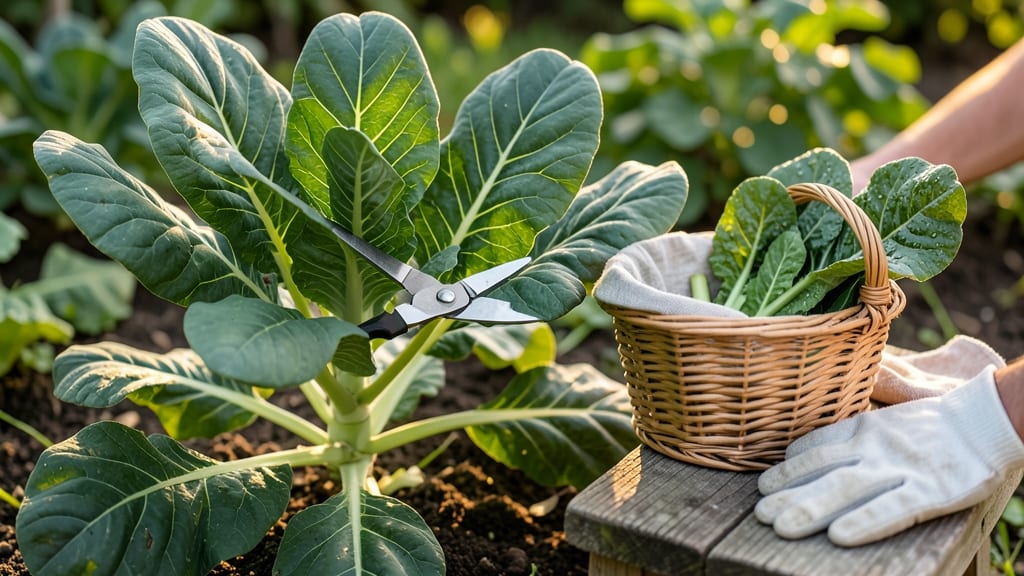
Harvesting collard greens the right way means learning how to harvest collard greens so it keeps growing—more leaves, not fewer. 🌱 I learned this the hard way after chopping down entire plants—only to watch them bolt instead of regrow.
The secret is cutting strategically, leaving enough foliage to keep the plant fed and happy.
Start by harvesting outer leaves first, leaving the inner ones intact. Aim for about one-third of the plant at a time, and always cut above a leaf node where new growth emerges. This method keeps your collards producing for months—even through fall and winter—while store-bought greens wilt in bags.
Feed your plants with compost or balanced fertilizer every 4-6 weeks to fuel regrowth. Mulch around the base to retain moisture, and avoid overwatering—soggy soil leads to rot, not more leaves. With this approach, I’ve had collards keep producing until first frost, sometimes even longer in mild climates.
Skip the whole-plant harvest unless you’re done for the season. Common mistakes include cutting too close to the stem or harvesting too aggressively—both stunt regrowth. Patience pays off: a single plant can yield pounds of tender greens all season long if you treat it right.
📚 In This Guide
- What you need
- Instructions
- Tips and common mistakes
- Wrapping up and next steps
What you need
- ● Sharp pruning shears or garden scissors – A pair with bypass blades (not anvil) to make clean cuts without crushing stems. Recommended size: 5-7 inches.
- ○ Gloves (optional but helpful) – Lightweight gardening gloves to protect your hands from thorns or rough edges. Look for breathable, flexible material (e.g., cotton or nitrile-coated).
- ● Watering can or hose with a gentle spray nozzle – For post-harvest hydration. A 1-gallon capacity is ideal for small patches.
- ○ Compost or mulch (optional but recommended) – A small bag of aged compost or straw mulch to replenish nutrients after harvest. Aim for 1-2 cups per plant if needed.
- ● Label or marker (if applicable) – If your garden has multiple varieties, use a waterproof garden marker to track harvest dates or plant stages.
- ● Mature collard greens – Plants should be at least 6-8 inches tall with 4-6 fully formed leaves before first harvest.
- ● Warm, sunny day – Harvest in the morning after dew has dried to reduce stress on the plant.
- ● Well-drained soil – Ensure your collards are planted in loamy, slightly acidic soil (pH 6.0-7.0) for optimal regrowth.
- ○ Fertilizer (optional but ideal) – A balanced, organic fertilizer (10-10-10) or compost tea applied 2-3 days post-harvest boosts regrowth.
Tips & tricks for harvesting collard greens without stunting growth
Here's what nobody tells you about keeping your collard plants thriving after every harvest.
Visual Maturity Cues: In Step 1, those 6-8 inch leaves should have prominent veins that are still tender when you gently press them. The key is looking for leaves that are fully unfurled but haven't started to yellow at the edges—this means they've reached peak tenderness without sacrificing the plant's energy reserves. I always check the underside for crispness as my final test before harvesting.
Precision Cutting Technique: When practicing the "Cut-and-Come-Again" method in Step 2, use a slight upward angle when cutting just above the stem. This prevents tearing and creates a cleaner cut that heals faster. I've found that using a dedicated pair of pruning shears for harvesting (rather than kitchen scissors) gives me more control and reduces accidental damage to the stem. The goal is to make the cut so cleanly that you can barely see where the leaf was attached within a week.
Recovery Timeline: Those 7-10 days for new growth to appear can vary dramatically based on your climate. In my Southern garden, I see new leaves within 5-7 days during summer, but in cooler spring or fall, it can take up to 14 days. The trick is to watch for the first hint of new leaf formation at the center of the plant rather than relying strictly on the calendar. This visual cue tells you exactly when the plant is ready for another harvest.
Seasonal Adjustments: The 1-2 week harvest window in Step 3 is your baseline, but don't treat it as a rigid rule. In my experience, plants in containers recover faster than in-ground plants because they have less root competition. I've successfully harvested container-grown collards every 10 days during peak summer growth, while my in-ground plants needed the full 2 weeks. The key is to monitor the plant's energy reserves rather than sticking to a schedule.
Pro Tips for Harvest Collard Greens So It Keeps Growing
- Here's what nobody tells you about keeping your collard plants thriving after every harvest.
- Visual Maturity Cues: In Step 1, those 6-8 inch leaves should have prominent veins that are still tender when you gen...
- Precision Cutting Technique: When practicing the "Cut-and-Come-Again" method in Step 2, use a slight upward angle whe...
Frequently asked questions
Got questions about keeping your collard greens thriving while harvesting? You’re not alone!
Here are answers to the most common ones—so you can enjoy fresh greens all season long without stress.
How often should I harvest collard greens to keep them growing?
Harvest collard greens every 2–3 weeks once they reach 8–12 inches tall. For continuous growth, pick outer leaves first, leaving the inner ones to keep producing. In warm climates, you can harvest year-round—just avoid heavy frosts (<30°F) to prevent bolting.
Can I harvest collard greens in the winter, or will they stop growing?
Collards are cold-hardy and thrive in winter! They grow slower in chilly temps but keep producing as long as temps stay above 20°F. Mulch with straw or leaves to protect roots, and harvest less frequently (every 3–4 weeks) to avoid stressing the plant.
What’s the best way to cut collard greens without damaging the plant?
Use clean, sharp pruning shears or scissors to snip leaves 1–2 inches above the base. Avoid tearing—this can invite pests. For bushier growth, never remove more than ⅓ of the plant at once, and always leave the central stem intact.
Will harvesting collard greens make them bolt or stop producing?
No—if done right, harvesting encourages more growth! Bolting (flowering) usually happens from heat stress, drought, or old age (over 6 months). To prevent it, keep soil moist, harvest young leaves, and plant successive crops every 2–3 weeks for a steady supply.
Can I harvest collard greens when they’re small, or do they need to be full-sized?
You can! Baby collards (4–6 inches) are tender and great for salads or stir-fries. Just harvest outer leaves first to let the inner ones mature. Full-sized leaves (12+ inches) are tougher but ideal for cooking—balance your harvest based on how you plan to use them.
What do I do if my collards stop growing after harvesting?
Check for nutrient deficiencies (yellow leaves = nitrogen; purple stems = phosphorus). Fertilize with compost or balanced 10-10-10 if soil is depleted. Also, ensure 6+ hours of sun, consistent watering (1–1.5 inches/week), and no overcrowding—thin plants to 12–18 inches apart for airflow.
Wrapping up and next steps
Harvesting collard greens the right way doesn’t just give you a bountiful harvest—it keeps your plants thriving for months! By cutting leaves strategically, spacing harvests, and giving your plants the care they need, you’re setting yourself up for a continuous supply of nutritious greens.
The key? Patience and consistency—your plants will reward you with lush, flavorful growth all season long.
Now that you’ve got the know-how, grab those shears and get harvesting! 🌱 Start small, observe your plants, and adjust as you go. Before you know it, you’ll be enjoying homegrown collards straight from your garden—and sharing the bounty with friends and family. Happy growing!