
Pests
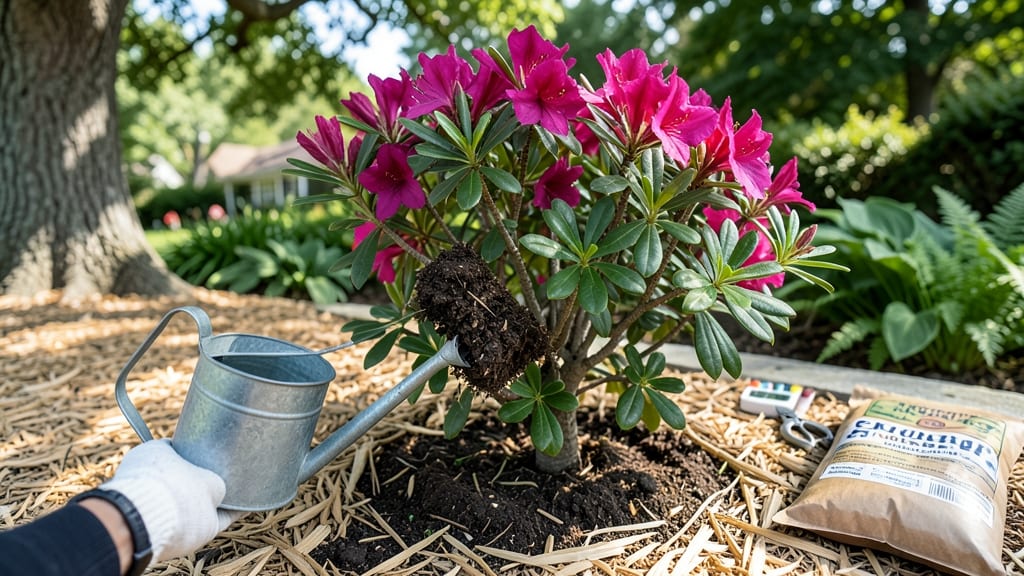
How to keep azaleas alive—it starts with understanding what they really need (hint: it’s not just water). Most gardeners overlook the silent killers: soil pH, sunlight balance, and those sneaky pests hiding in the foliage.
The first rule: acidic soil is non-negotiable. Test your pH—azaleas crave 4.5-6.0. If it’s off, amend with sulfur or peat moss. Watering’s tricky too—drown them and roots rot; neglect them and buds drop.
Aim for 1-1.5 inches per week, keeping soil moist but never soggy. And yes, that means checking the soil, not just eyeballing your watering can.
Watch for these red flags: yellowing leaves (often iron deficiency), bud drop (stress from heat/drought), or sticky sap (aphids!). Early intervention saves the plant. Prune dead blooms promptly, mulch heavily in summer, and spray neem oil at the first sign of pests.
With these tweaks, your azaleas will reward you with months of vibrant blooms—not just a single flush.
Works for both in-ground and container azaleas. The same principles apply whether you’re dealing with a mature shrub or a new transplant. Let’s turn those struggling shrubs into showstoppers—step by step.
📚 In This Guide
- What you need
- Instructions
- Tips and common mistakes
- Wrapping up and next steps
What you need
- ● Azaleas: Healthy nursery-grown plants (choose Rhododendron varieties suited to your USDA hardiness zone).
- ● Well-draining acidic soil: Mix 3 parts peat moss or pine bark with 1 part perlite/sand (pH 4.5–6.0).
- ● Organic mulch: 2–3 inches of pine bark, wood chips, or pine straw (avoid cedar—it’s toxic!).
- ● Watering can or hose: With a gentle spray nozzle (azaleas hate soggy roots!).
- ● Fertilizer: Acid-loving plant food (e.g., Miracle-Gro Azalea, Camellia & Rhododendron) or osmocote (slow-release granules).
- ● Pruning shears: Sharp, clean (sterilize with rubbing alcohol between cuts).
- ● Gloves: Heavy-duty to protect from thorns and soil.
- ● Soil pH test kit: To monitor acidity levels (aim for 5.0–6.0).
- ● Aluminum sulfate or sulfur: For lowering soil pH if needed.
- ● Landscape fabric: To suppress weeds while allowing water drainage.
- ● Pest control: Neem oil or horticultural oil for aphids/spider mites.
- ● Drip irrigation system: For consistent moisture (great for large plantings!).
Year-round care secrets for keeping azaleas thriving
Azaleas reward patience with vibrant blooms—but only if you meet their precise needs year-round. Here’s how I’ve kept mine lush for decades.
Master the Soil and Planting Location
Azaleas demand acidic soil with a pH between 4.5 and 6.0. If your garden soil tests higher, amend it with 2-3 inches of peat moss or pine bark fines mixed into the top 12 inches. These plants also need partial shade—morning sun and afternoon shade in hot climates, or dappled light in cooler zones. I always plant mine where they get 3-4 hours of direct sun daily—any more risks leaf scorch, and too little stunts blooms.
Dig a hole twice as wide as the root ball but no deeper. Loosen the roots slightly if they’re circling, then place the plant so the top of the root ball sits 1 inch above ground level. Backfill with amended soil and water deeply to settle it. Azaleas hate soggy roots, so ensure the planting site has well-draining soil—they’ll sulk in clay or compacted earth.
Water Deeply and Consistently
Azaleas need 1-1.5 inches of water per week, delivered deeply rather than superficially. I water mine twice weekly in summer—early morning or late evening to reduce evaporation—and check soil moisture by sticking my finger 2 inches down. If it feels dry, water again. Mulch with 2-3 inches of pine bark or wood chips to retain moisture and protect roots from temperature swings. Never let the soil dry out completely, especially during bloom season.
Overwatering is just as deadly as underwatering. Yellowing leaves or wilting despite damp soil? You’re likely suffocating the roots. Azaleas signal thirst by drooping slightly in the afternoon—this is normal if they perk up after watering. But if leaves stay limp overnight, you’ve gone too far.
Feed with Acid-Loving Fertilizer
Azaleas need acidic, slow-release fertilizer applied in early spring as new growth appears. I use a 10-10-10 or 8-3-9 formula with added iron and sulfur to maintain soil acidity. Follow package rates—overfeeding burns roots. In late fall, top-dress with 1 inch of sulfur or peat moss to prepare for winter. Avoid high-nitrogen fertilizers in summer; they promote leafy growth at the expense of blooms.
Watch for pale yellow leaves—a classic sign of iron deficiency. If this happens, apply chelated iron according to label instructions. Azaleas also appreciate a foliar spray of seaweed extract every 4-6 weeks for micronutrients. But here’s the thing: Less is more. Over-fertilizing leads to weak stems and fewer flowers.
Prune Strategically After Blooming
Prune azaleas right after flowers fade—never in fall or winter. Remove dead, crossing, or weak branches first, then shape the plant by cutting back 1/3 of the oldest stems to encourage new growth. Use clean, sharp pruners and make cuts just above a leaf bud or lateral branch. Avoid heavy pruning—it stresses the plant and reduces next year’s blooms.
If your azalea blooms poorly, it’s often due to over-pruning. I leave most stems intact, only trimming to open the center for airflow. Deadheading spent blooms isn’t necessary, but if you do, cut back to the first set of leaves below the flower to encourage bushier growth.
Protect Through Winter and Spring
In Zone 6 and colder, mulch heavily with 4-6 inches of pine straw or shredded leaves after the first frost. This insulates roots from freeze-thaw cycles. Water sparingly in winter—just enough to prevent soil from drying out completely. In spring, remove mulch gradually as temperatures rise to avoid sudden root shock.
Watch for buds forming in late winter—this is your cue to reduce watering slightly to prevent early blooms from frost damage. If a hard freeze is forecast, cover the plant with burlap or frost cloth, securing it tightly. Azaleas are surprisingly cold-hardy, but late spring frosts after buds swell can ruin the show.
Tips & tricks for perfect azalea care
Azaleas are sensitive divas that demand attention to detail—here's how to keep them thriving without losing your patience.
Soil Science Matters: That 4.5-6.0 pH range isn't just a suggestion—it's non-negotiable for azaleas. I've seen plants wither when planted in garden soil with pH 7.0 or higher. If your soil test comes back neutral or alkaline, don't just add sulfur—mix in 2-3 inches of pine bark fines into the top 12 inches of soil first. This creates the ideal acidic environment while improving drainage. The key is patience: retest soil pH again in 6-8 weeks after amendments to ensure you've hit that sweet spot.
Watering Wisdom: The 1-1.5 inches weekly guideline assumes average rainfall—adjust for your climate. In my dry Arizona garden, I water twice weekly during summer heat. Here's the trick: use a rain gauge or tuna can to measure water depth. Pour water slowly at the base until it runs out the bottom of the pot (for containers) or seeps into the surrounding soil. Overwatering causes root rot faster than underwatering stunts growth—azaleas are more forgiving when thirsty than when soggy.
Pruning Precision: When you see those 10-20% oldest stems to remove, don't guess—actually count them. I measure my azalea's total stems first, then calculate 10% as my minimum. Cutting at a 45-degree angle above an outward-facing bud isn't just aesthetics; it directs new growth outward for a fuller plant. And here's what nobody tells you: sterilize your pruners between each cut with rubbing alcohol, especially if your plant shows signs of disease. I keep a small spray bottle of 70% isopropyl alcohol handy during pruning season—it's worth the extra 30 seconds per cut to prevent bacterial spread.
Winter Protection Strategy: For those 20°F nights, don't just pile on mulch—create a microclimate. I wrap young azaleas in burlap after the ground freezes, leaving the top exposed. The secret? Add a layer of straw mulch (not shredded bark) over the root zone—it insulates better against temperature swings. And if you're in a snowy climate, embrace the snow: a 6-inch blanket provides better insulation than any synthetic cover. Just make sure to remove heavy snow accumulation from branches to prevent breakage.
Pro Tips for Keep Azaleas Alive
- Azaleas are sensitive divas that demand attention to detail—here's how to keep them thriving without losing your pati...
- Soil Science Matters: That 4.5-6.0 pH range isn't just a suggestion—it's non-negotiable for azaleas. I've seen plants...
- Watering Wisdom: The 1-1.5 inches weekly guideline assumes average rainfall—adjust for your climate. In my dry Arizon...
Frequently asked questions
Got questions about keeping your azaleas thriving? You’re not alone! Here are answers to the most common concerns—from pests to pruning—so you can enjoy those stunning blooms year after year.
Why are my azaleas losing leaves, even though I’m watering them?
Leaf drop is often a sign of overwatering or root rot. Azaleas prefer moist (not soggy) soil—water deeply 1–2 times per week, then let the top inch dry out. If roots smell foul or look mushy, repot in fresh, acidic soil and reduce watering. Pro tip: Ensure pots have drainage holes!
When’s the best time to prune azaleas to encourage more blooms?
Prune right after flowering (late spring to early summer) to shape the bush and remove dead wood. Avoid heavy pruning in fall/winter—it cuts off next year’s buds! Use clean shears to trim back overgrown branches by ⅓, but never prune more than ⅓ of the plant at once. Bonus: Prune in dry weather to prevent fungal spread.
How do I get rid of azalea lace bugs without harming the plant?
Lace bugs leave yellow stippling on leaves? Blast them off with a strong spray of water first, then apply neem oil or insecticidal soap (follow label rates). For severe infestations, use a systemic insecticide like acephate. Preventative tip: Mulch with pine bark to deter them naturally!
Can azaleas survive indoors? What’s the trick?
Azaleas thrive outdoors but can struggle indoors due to low humidity and dry air. If bringing them inside, place near a bright, east-facing window and use a pebble tray with water to boost humidity. Mist leaves lightly, but avoid soggy soil—indoor azaleas need consistent moisture without waterlogging. Warning: Watch for spider mites in dry conditions!
What’s a low-maintenance alternative to azaleas for busy gardeners?
If azaleas seem high-maintenance, try camellias (similar care but slightly more drought-tolerant) or hydrangeas (thrive in partial shade and varied soil). For zero-fuss blooms, abutilon (faux orange tree) or butterfly bush are hardy and pest-resistant. Quick pick: Dwarf gardenias—fragrant, shade-loving, and drought-tolerant!
Wrapping up and next steps
Keeping your azaleas thriving is all about consistency—from well-draining soil and the right sunlight to smart watering and seasonal care. With these year-round secrets, you’ll enjoy vibrant blooms that turn heads in your garden. 🌸
Now that you’re armed with the know-how, roll up your sleeves and give your azaleas the love they deserve! Start by inspecting your plants this weekend—check for pests, adjust watering, and trim if needed. Every little effort adds up to a lush, long-lasting display.