
Blooming
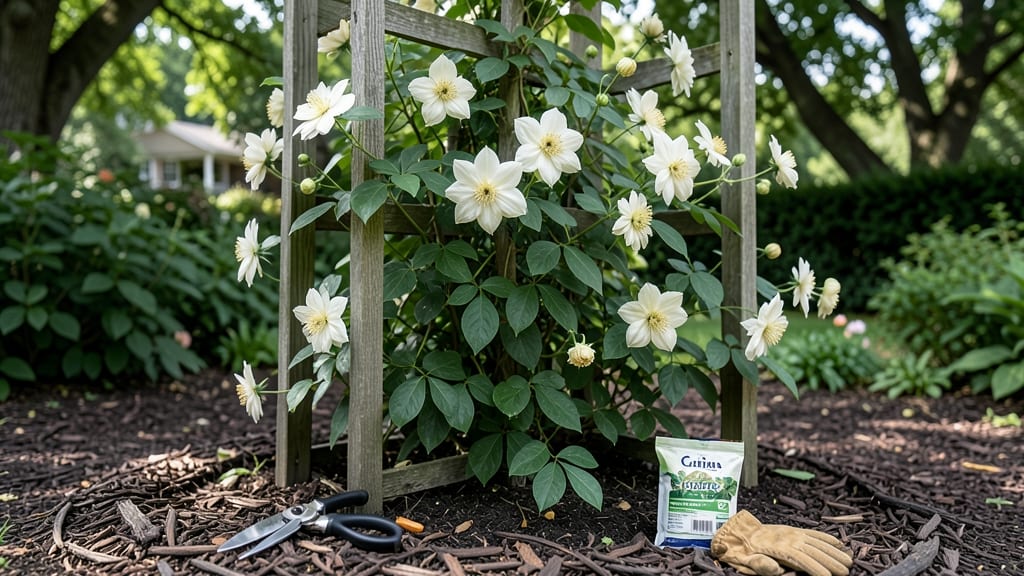
Your clematis could be covered in blooms by next summer. ✨ I’ve watched mine go from sparse flowers to vibrant cascades by mastering just three key moves: pruning at the right time, feeding with the right nutrients, and deadheading like a pro. The biggest mistake? Pruning at the wrong season.
Group 1 clematis (early bloomers) need light pruning after flowering, while Groups 2-3 thrive with a harder cut in late winter. Most people skip the soil test—yet poor nutrition is why many struggle. A balanced fertilizer in spring and summer makes all the difference.
By summer’s end, you’ll see thicker stems, more buds, and flowers that last weeks longer. The secret isn’t complicated—it’s consistent care. Even my first-year attempts produced double the blooms after adjusting just these three things. Works for trellises, arbors, or ground covers. Let’s get those flowers popping!
📚 In This Guide
- What you need
- Instructions
- Tips and common mistakes
- Wrapping up and next steps
What you need
- ● Pruning shears or secateurs – Sharp, clean, and sterilized (to avoid spreading disease). Quantity: 1 pair.
- ● Gloves – Garden gloves (to protect hands from thorns and sap). Quantity: 1 pair.
- ● Balanced, slow-release fertilizer – Look for one with a 10-10-10 or 5-10-5 NPK ratio (e.g., Miracle-Gro All-Purpose Plant Food). Quantity: 1–2 lbs (depending on plant size).
- ● Organic mulch – Shredded bark, compost, or pine needles (to retain moisture and regulate soil temp). Quantity: 2–3 inches per plant.
- ● Watering can or hose with a gentle spray nozzle – For deep, even watering (avoid overhead sprinklers). Quantity: 1.
- ● Stakes or trellis supports – If your clematis needs guidance (bamboo stakes, wire cages, or arbor frames). Quantity: Varies by plant size.
- ● Epsom salt (magnesium sulfate) – 1 tbsp dissolved in 1 gallon of water (boosts blooms for magnesium-deficient plants).
- ● Clematis-specific fertilizer – Like Espoma Clematis & Rose-Tone (high in phosphorus for flowers).
- ○ Pruning sealant – Optional for large cuts (to prevent disease entry).
- ● Soil moisture meter – To track hydration levels (clematis hate soggy roots!).
- ● Plant ties or soft twine – For securing vines to supports (gentler than wire).
Tips & tricks for perfect clematis blooms
These pro techniques will transform your clematis from lackluster to showstopping—no guesswork, just results.
Pruning Precision: The ¼-inch rule above outward-facing buds is non-negotiable—this ensures new growth emerges in the right direction. I use a small whiteboard to mark each group's pruning schedule (Group 1 after blooms, Group 2 in early spring, Group 3 post-flowering) to avoid mix-ups. That tapered cone shape isn't just aesthetic; it creates better airflow and light penetration throughout the plant.
Fertilizer Timing Secret: That mid-summer fertilization cutoff for Group 3 isn't arbitrary—it's when days shorten and temperatures drop. I set calendar reminders for spring (10-10-10) and bloom phases (5-10-5) to never miss the window. The key is always watering fertilizer in deeply; I use a watering wand to create gentle pressure that helps it penetrate the mulch layer.
Deadheading Hack: For Group 3 varieties, I wait until the seed head forms before cutting—this visual cue tells me exactly when to prune for next year's blooms. The first set of healthy leaves below the flower is your target; I count them to ensure consistency. This redirects energy precisely where you want new growth to emerge.
Support System: That 6-12 inch spacing for plant ties isn't just about aesthetics—it prevents stem damage from wind while allowing natural flexibility. I use soft fabric ties because they won't cut into the stems as they thicken. The goal is vertical growth; any floppiness means the plant is putting energy into supporting itself rather than flowering.
Pro Tips for Make Clematis Bloom
- These pro techniques will transform your clematis from lackluster to showstopping—no guesswork, just results.
- Pruning Precision: The ¼-inch rule above outward-facing buds is non-negotiable—this ensures new growth emerges in the...
- Fertilizer Timing Secret: That mid-summer fertilization cutoff for Group 3 isn't arbitrary—it's when days shorten and...
Frequently asked questions
Got questions about coaxing those stunning clematis blooms? You’re not alone! Here are answers to the most common concerns—so you can enjoy a garden bursting with color.
Why isn’t my clematis blooming this year?
Clematis often skip blooms due to pruning mistakes (cutting at the wrong time) or nutrient deficiencies. Check your variety: Group 1 (early bloomers) needs minimal pruning, while Groups 2-3 thrive with hard pruning in late winter. Also, ensure it gets 6+ hours of sun and well-draining soil.
When is the best time to prune clematis for more flowers?
Timing depends on your variety:
- Group 1 (early spring bloomers): Prune right after flowering to avoid cutting off next year’s buds.
- Groups 2-3 (late summer/fall bloomers): Prune in late winter/early spring (before new growth starts).
Can I make clematis bloom without deadheading?
Deadheading (removing spent blooms) encourages repeat blooming, but some varieties (like Group 1) naturally produce fewer flowers. If you skip deadheading, focus on fertilizing (high-phosphorus for blooms) and watering deeply during dry spells. Just don’t expect as many flowers!
What should I do if my cleatis has black spots or wilted leaves?
Black spots or wilting often signal fungal diseases (like clematis wilt) or root rot from overwatering. Act fast:
- Trim affected stems below the damage with sterilized tools.
- Improve airflow by spacing plants 3–5 feet apart.
- Water at the base (not leaves) and avoid soggy soil.
Are there any easy-to-grow cleatis varieties for beginners?
Try these low-maintenance picks:
Variety
Bloom Time
Care Level
Clematis montana (Mountain Clematis)
Early spring
Very easy (Group 1)
Clematis viticella (Purple Clematis)
Summer to fall
Moderate (Group 2)
Clematis ‘Jackmanii’
Mid-to-late summer
Moderate (Group 3)
Wrapping up and next steps
With the right care, your clematis can transform into a burst of vibrant blooms that brighten up any garden! 🌸 Remember, the key lies in pruning at the right time, feeding with balanced nutrients, and deadheading spent flowers to encourage new growth.
A little patience and consistency will reward you with stunning, repeat blooms all season long.
Now that you’re armed with these tips, grab your pruners and get to work! Start small—pick one section of your clematis to practice pruning or feeding—and watch your garden flourish. Happy gardening! 🌿