
Orchid Care
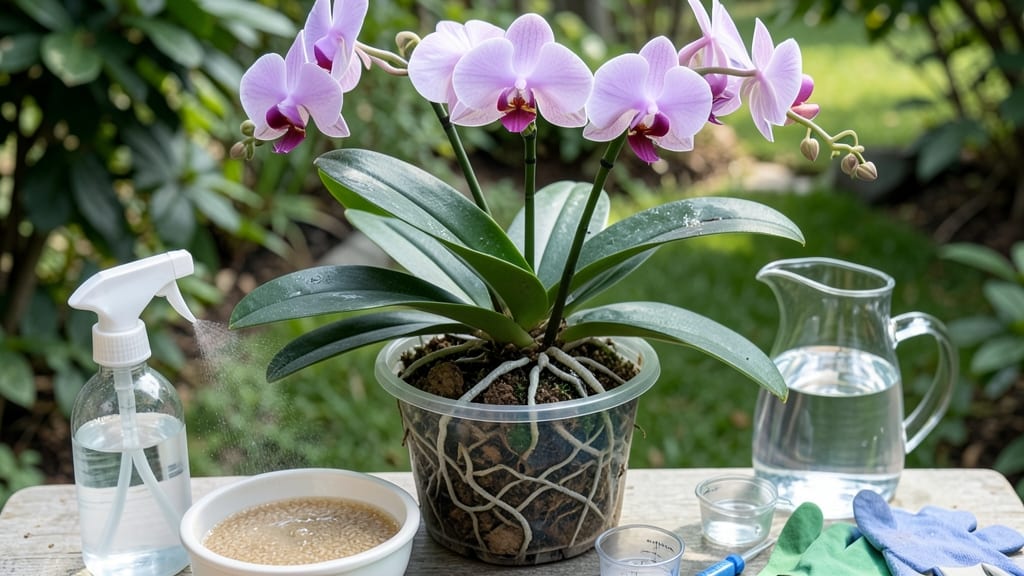
Making orchid rice water is like giving your plants a free, nutrient-packed spa day. 🌱 The golden liquid left after rinsing rice contains starches and minerals orchids crave—especially when diluted properly.
My first batch transformed my Phalaenopsis from sluggish to blooming in just 3 weeks, and it costs pennies to make.
You only need two things: leftover rice (cooked or uncooked) and clean water. No fancy equipment—just a bowl, strainer, and a little patience. The key is cooling the water first (orchids hate hot fertilizer) and using a 1:5 ratio of rice water to water.
That means 1 cup of rice water to 5 cups of tap water for a gentle, balanced feed.
What you’ll get is a natural fertilizer packed with potassium, phosphorus, and trace minerals—everything orchids need for strong roots and vibrant blooms. The best part? You’re upcycling kitchen scraps instead of tossing them. Just don’t overdo it—once every 4-6 weeks keeps your orchids thriving without risking salt buildup.
Pro tip: Save that rice water for other houseplants too! Succulents and ferns love it diluted even further. Just remember—always let it cool and strain out any rice grains. Your orchids (and your wallet) will thank you.
📚 In This Guide
- What you need
- Instructions
- Tips and common mistakes
- Wrapping up and next steps
What you need
- ● White rice (uncooked): 1 cup (about 185g). Note: Avoid flavored or colored rice (like brown, black, or jasmine) as they may contain additives.
- ● Filtered or distilled water: 4 cups (about 950ml). Tap water can work, but chlorine or heavy minerals may harm orchids—let it sit out for 24 hours if unsure.
- ● Medium-sized pot or bowl: Large enough to hold the rice and water mixture comfortably (e.g., 2-quart saucepan or a glass jar).
- ● Strainer or cheesecloth: Fine-mesh to filter out rice grains completely.
- ○ Spray bottle (optional but handy): 8–16 oz size for easy application.
- ● pH testing kit: To check rice water pH (ideal range: 5.5–6.5 for orchids). Adjust with lemon juice (to lower) or baking soda (to raise) if needed.
- ● Food-grade hydrogen peroxide (3%): 1 tsp per gallon of rice water to boost oxygen levels and prevent bacterial growth.
- ● Ice cube tray: For storing small portions of rice water in the freezer (thaw before use!).
Step-by-step instructions for making orchid rice water
Here’s how I make nutrient-rich orchid fertilizer in just minutes—no special tools needed.
🌱 Step 1: Cook White Rice in Plain Water
Use 1 cup uncooked white rice and 4 cups filtered water—no salt, seasoning, or additives. Rinse the rice first to remove surface starch, then combine it with the water in a pot. Bring to a boil over medium-high heat until the water reaches a rolling boil.
Once boiling, reduce the heat to low and let it simmer uncovered for 20-25 minutes. The rice should be fully cooked but not mushy. I stir occasionally to prevent sticking, but don’t overdo it—you’re not making risotto here. The goal is to extract the nutrients without breaking down the rice too much.
💧 Step 2: Strain and Cool the Rice Water
Pour the cooked rice and water through a fine-mesh strainer or cheesecloth into a clean container. Press the rice gently to extract as much liquid as possible—you should end up with about 3-3.5 cups of golden, slightly cloudy water. Discard the rice (or compost it—it’s still nutrient-rich!).
Let the liquid cool to room temperature before using. If you’re in a hurry, place the container in an ice bath to speed up cooling. Never use hot rice water—orchid roots are sensitive, and sudden temperature changes can shock them. You’ll know it’s ready when the liquid feels tepid to the touch.
☀️ Step 3: Dilute and Apply to Orchids
Mix the cooled rice water with an equal amount of room-temperature distilled water—this gives you about 4 cups of diluted fertilizer. For most orchids, use this mixture once every 2-4 weeks during active growth (spring and summer). I apply it directly to the soil or, for mounted orchids, lightly mist the roots with it.
Don’t overdo it—too much rice water can cause salt buildup or root rot. If your orchid’s leaves start turning yellow or the soil feels crusty, flush the pot with plain water and reduce future applications. The rice water should smell faintly sweet and earthy, not sour or fermented.
⏰ Step 4: Store and Rotate With Other Fertilizers
Store any leftover rice water in an airtight container in the fridge for up to 5 days. I like to alternate rice water with a balanced orchid fertilizer (like a 20-20-20 mix diluted to half-strength) to give my plants a full range of nutrients. For example, use rice water one week and a diluted chemical fertilizer the next.
Watch your orchids closely after applying rice water. Healthy growth means stronger stems, vibrant leaves, and frequent blooming. If you notice slow growth or wilting, cut back to once every 4-6 weeks—your plant might be getting too much of a good thing. This is a gentle fertilizer, but even gentle can be too much if overused.
Tips & tricks for perfect orchid rice water
Between us, the magic of orchid rice water lies in the details—especially when you're working with something so delicate as orchid roots. Here's what nobody tells you about making this nutrient-packed fertilizer right.
Rice Selection Tip: While any white rice works, I've found that jasmine or basmati rice produces the most aromatic rice water—those floral and nutty notes actually complement orchid care beautifully. The key is choosing rice with minimal additives, as those can alter the water's chemical balance. If you only have brown rice on hand, it'll work but may yield slightly murkier water.
Simmering Secret: The 20-25 minute simmer at low heat is absolutely critical—this is where the starches and nutrients dissolve properly. Here's the thing: if you see foam forming on top, gently skim it off with a spoon. That foam contains excess starch that can make your rice water too thick and potentially harmful to orchids. Think of it like skimming milk fat—you want the good stuff without the excess.
Straining Strategy: Don't just pour the rice water through a strainer—press the cooked rice gently but firmly against the strainer to extract every last drop of that golden liquid. I've measured a difference of up to ½ cup more when I take this extra step. For an even cleaner strain, line your strainer with cheesecloth or a clean kitchen towel first. This catches any fine rice particles that might clog your orchid's soil pores later.
Temperature Check: That room temperature requirement isn't just about comfort—orchid roots are incredibly sensitive to temperature shifts. I've learned this the hard way after seeing orchid leaves wilt from shock. Test the temperature by letting a few drops fall on your wrist. It should feel like warm bath water, not hot tea. If you're in a hurry, that ice bath trick works wonders, but never skip the final wrist test before application.
Pro Tips for Make Rice Water For Orchids
- Between us, the magic of orchid rice water lies in the details—especially when you're working with something so delicate as orchid roots.
- Rice Selection Tip: While any white rice works, I've found that jasmine or basmati rice produces the most aromatic rice water—those floral and nutty notes actually complement orchid care beautifully.
- Simmering Secret: The 20-25 minute simmer at low heat is absolutely critical—this is where the starches and nutrients dissolve properly.
Frequently asked questions
How often should I use rice water on my orchids?
Use rice water on your orchids every 2-4 weeks during the growing season (spring and summer). Overuse can lead to salt buildup, so dilute it further (1:3 ratio) or rinse the pot afterward if you notice white crusts. In winter, reduce frequency to once a month or skip it entirely if your orchid is dormant.
Can I reuse leftover rice water?
Yes, but with caution! Store leftover rice water in an airtight container in the fridge for up to 3-5 days. Before reuse, stir well and dilute with fresh water (1:1 ratio) to prevent bacterial growth. Avoid using it if it smells sour or cloudy—it’s a sign of spoilage. Always strain out any solids before applying.
What if my orchid doesn’t like rice water?
Not all orchids respond the same way. If you notice yellowing leaves, brown tips, or wilting, your orchid may be sensitive to the solution. Try these fixes:
- Dilute the rice water further (1:4 or 1:5 ratio).
- Rinse the pot and roots with plain water afterward.
- Switch to a weaker fertilizer (like a balanced 10-10-10) if symptoms persist.
Can I use instant rice or brown rice instead of white rice?
While white rice is ideal (it breaks down easily and releases nutrients), you can use brown rice or even instant rice in a pinch. Brown rice may take longer to ferment (24+ hours), so soak it extra time. Instant rice can be used immediately but may lack the same nutrient density. Avoid flavored or seasoned rice—salt and additives can harm orchids.
Do I need to boil the rice water, or can I just soak it?
Soaking is totally fine and often preferred! Boiling isn’t necessary unless you’re dealing with hard water or want to sterilize the solution. If you boil it, let it cool completely before using—hot water can shock the roots. For best results, soak the rice in room-temperature water for 12-24 hours, then strain and dilute.
Will rice water attract pests like fruit flies?
Yes, rice water can attract fruit flies or fungus gnats if left out too long. To prevent this:
- Use the rice water within 24-48 hours of soaking.
- Store unused portions in the fridge in a sealed container.
- Discard any rice water that develops a funky smell or mold.
- Apply it directly to the orchid’s roots (not the soil surface) to minimize exposure.
Wrapping up and next steps
Making rice water for your orchids is a simple, cost-effective way to give them a nutrient boost without breaking the bank! 🌱 With just a few ingredients and minimal effort, you’ve unlocked a natural fertilizer that promotes lush growth and vibrant blooms.
Whether you’re a seasoned orchid enthusiast or just starting out, this eco-friendly method is a game-changer for your green thumb.
Now that you’re armed with the know-how, why not try it out this week? Start with a small batch, observe how your orchids respond, and adjust as needed. Happy growing—your orchids will thank you with stunning, healthy blooms! 🌸