
Propagation
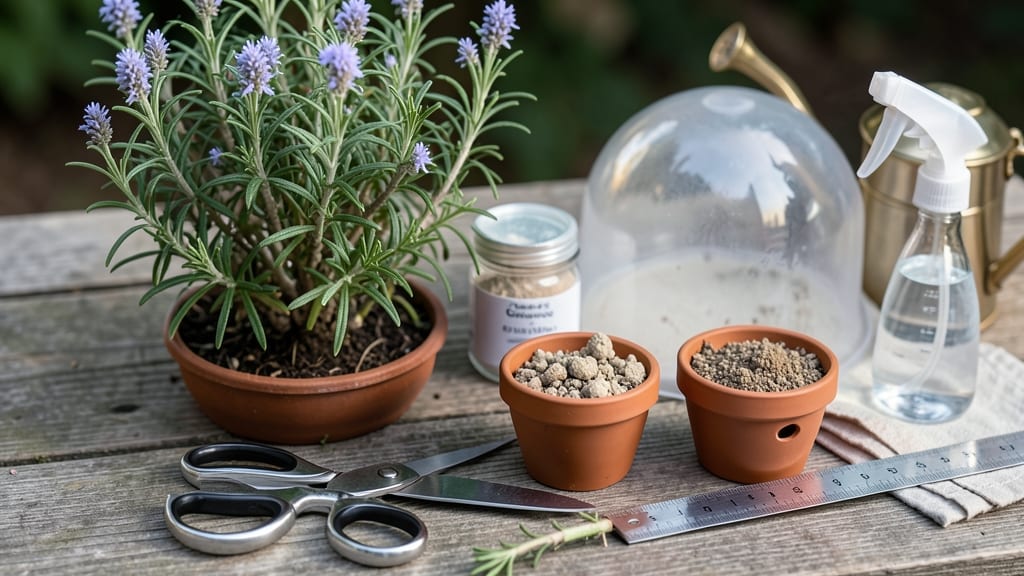
Cloning rosemary from cuttings turns a single plant into a whole garden. ✨ The secret lies in sharp cuts, patience, and just the right amount of water—no fancy equipment needed. My first attempt rooted in 3 weeks, and now I’ve got rosemary plants everywhere without spending a dime.
You’ll need just a few things: healthy rosemary stems, clean scissors, a jar of water, and a sunny windowsill. The magic happens when you cut stems at a 45-degree angle—this increases surface area for roots to form.
Avoid overwatering; change the water every 2-3 days to keep it fresh and bacteria-free.
In about 4-6 weeks, you’ll see tiny roots sprouting, and your new plants will be ready to transplant. The best part? These clones grow just as fragrant and hardy as their parent, with the same woody stems and piney scent.
Perfect for filling gaps in your herb garden or sharing with friends.
Works just as well with soil propagation if you prefer—just dip the cuttings in rooting hormone first. Either way, you’ll end up with more rosemary than you know what to do with. Ready to multiply your harvest?
📚 In This Guide
- What you need
- Instructions
- Tips and common mistakes
- Wrapping up and next steps
What you need
- ● Healthy rosemary plant: Choose a mature stem (at least 4-6 inches long) with no flowers or buds—non-flowering tips root best!
- ● Sharp pruning shears or scissors: Sterilized to prevent disease (rubbing alcohol wipe works!).
- ● Clean glass or jar: A 16-20 oz size (like a mason jar) with a wide mouth for easy access.
- ● Room-temperature water: Filtered or tap water left out for 24 hours to remove chlorine.
- ○ Rooting hormone (optional but helpful): A powder or gel (like Clonex or Dip 'N Grow) to speed up root growth.
- ○ Small pebbles or marbles: 3-5 to weigh down the stem and keep it submerged (optional but recommended).
- ● Bright, indirect light source: A sunny windowsill or a grow light (12+ hours/day).
- ● Spray bottle with water: For misting leaves to maintain humidity.
- ● Hydrogen peroxide (3%): A few drops in water to prevent bacterial growth.
- ● Plant food: A diluted liquid fertilizer (like fish emulsion) for water changes after 2-3 weeks.
- ● Humidity dome or plastic bag: To create a mini greenhouse effect (great for humid climates!).
- ● Notebook & pen: To track progress (root growth speed, water changes, etc.).
Step-by-step instructions for cloning rosemary from stem cuttings
Here's how I get rosemary cuttings rooted and thriving in just a few weeks.
🌱 Step 1: Select and Prepare Healthy Stems
Choose non-flowering stems from the current season's growth—they root best. Look for 4-6 inch sections with at least 3-4 leaf nodes (those little bumps where leaves attach). Use clean, sharp scissors or pruners to cut just below a node at a 45-degree angle—this gives more surface area for roots to form.
Strip all but the top 2-3 leaves from the stem. Too many leaves mean the cutting will use up too much energy before roots develop. If leaves are large, trim them in half to reduce moisture loss. I always work in the morning when plants are well-hydrated for the best results.
💧 Step 2: Root in Water with Hormone Boost
Fill a clean glass or jar with room-temperature water—rosemary hates cold water. Add 1 tablespoon of honey or a rooting hormone powder to encourage faster growth. Submerge the cut end of the stem until about 2 inches are underwater, leaving the leaves above. Use a rubber band to secure the stem if it keeps floating.
Place your cutting in bright, indirect light (no harsh sun). Change the water every 3-4 days to prevent bacteria buildup. You'll see tiny white roots emerging from the cut end in 2-3 weeks—sometimes faster if you used hormone. Don't rush this step; patience here means stronger roots later.
☀️ Step 3: Transition to Soil When Roots Form
Once roots reach 1-2 inches long, it's time to plant. Fill a 4-inch pot with well-draining potting mix (I mix regular potting soil with 20% perlite). Make a hole deep enough so the roots don't bend when you insert the cutting—about 2 inches is perfect.
Gently remove the cutting from water, shake off excess moisture, and plant it at the same depth it was in water. Press the soil lightly around the stem to remove air pockets. Water lightly right after planting—just enough to settle the soil. Place the pot in bright light (but not direct sun) for 1 week while the cutting adjusts.
🌿 Step 4: Care for Newly Planted Cuttings
After that first week, gradually introduce morning sun to help the cutting toughen up. Water when the top inch of soil feels dry—rosemary hates soggy roots. You'll know it's thriving when new growth appears at the top in 3-4 weeks. That's your signal everything's working!
Once the cutting has 4-5 new leaves, it's ready to move to a larger pot or garden bed. I always fertilize lightly with half-strength balanced fertilizer after the first month to encourage strong growth. With this method, you'll have 4 healthy rosemary plants in just a few months—fast and foolproof!
Tips & tricks for perfect rosemary stem-cuttings
Here's what nobody tells you about rooting rosemary—these little tricks make all the difference between success and sad, wilted stems.
Timing is Everything: Morning is the absolute best time to take your cuttings. That's when rosemary is fully hydrated from the night's moisture, making the stems more resilient during the cutting process. If you must work later in the day, give your cuttings a quick 10-minute soak in water before starting—they'll thank you with stronger roots later.
The Angle Matters: That 45-degree angle cut isn't just decorative—it's science. The angled cut exposes more vascular tissue, which is where roots will emerge. Make sure your cut is clean and sharp; jagged edges can introduce bacteria. I've found that using a fresh razor blade for this step gives the cleanest cuts possible, though sharp scissors work in a pinch.
Lighting Strategy: Bright, indirect light is crucial during the water rooting phase. A north-facing window works perfectly, but if that's not an option, place your cuttings under a grow light for 12-14 hours a day. Direct sunlight will scorch those delicate leaves before roots even have a chance to form. I've seen cuttings fail completely when placed in hot afternoon sun—don't make that mistake!
Rooting Accelerator: While honey and rooting hormone both work, I've found that adding a pinch of cinnamon to your water can help prevent bacterial growth. Just a sprinkle is enough—too much will cloud the water. The cinnamon's natural antimicrobial properties give your cuttings an extra layer of protection during those critical 3-4 days between water changes.
Pro Tips for Clone Rosemary
- Here's what nobody tells you about rooting rosemary—these little tricks make all the difference between success and sad, wilted stems.
- Timing is Everything: Morning is the absolute best time to take your cuttings.
- The Angle Matters: That 45-degree angle cut isn't just decorative—it's science.
Frequently asked questions
Got questions about cloning rosemary?
You’re not alone! Here are answers to the most common concerns—from timing to troubleshooting—so you can propagate like a pro.
Can I clone rosemary from any part of the plant?
Stick to healthy, non-flowering stems (4–6 inches long) for the best results. Avoid woody or overly mature growth—these root poorly. Look for flexible, green stems with leaf nodes (the bumps where leaves grow). These are your sweet spots for cloning success!
How long does it take for rosemary cuttings to root in water?
Patience is key! Most rosemary cuttings show roots in 2–4 weeks, but some may take up to 6 weeks. Change the water every 3–4 days to prevent bacteria. Once roots hit 1–2 inches, they’re ready to transplant. Pro tip: Place cuttings in bright, indirect light to speed things up.
Should I use water or soil for rosemary propagation?
Both work, but water is beginner-friendly because you can track root growth. For soil, use a mix of perlite, sand, and peat to keep it airy. Water-rooted cuttings may need a week of acclimation before transplanting to soil—just mist them daily to avoid shock.
Why aren’t my rosemary cuttings rooting?
Common culprits: old cuttings (use fresh stems), low humidity (try a plastic bag over the jar), or impure water (use filtered or rainwater). If leaves yellow or wilt, trim them slightly to reduce stress. Give it time—some varieties (like Prostratus) root slower than others.
Can I clone rosemary from a grocery store plant?
Yes, but check for pests first! Inspect leaves for spider mites or aphids before propagating. If the plant looks healthy, take cuttings as usual. Just know store-bought rosemary may be treated with growth inhibitors—soak cuttings in room-temperature water for 24 hours to help them wake up.
Wrapping up and next steps
Cloning rosemary through stem cuttings is a rewarding way to expand your herb garden with minimal effort! By following these simple steps—selecting healthy stems, rooting in water, and transitioning to soil—you’ll soon enjoy fresh, thriving rosemary plants. Your green thumb is growing stronger with every cutting!
Now that you’re ready to propagate, why not share the love? Gift your new rosemary clones to friends or experiment with growing other herbs like thyme or basil. Happy gardening! 🌱✨