
Pruning
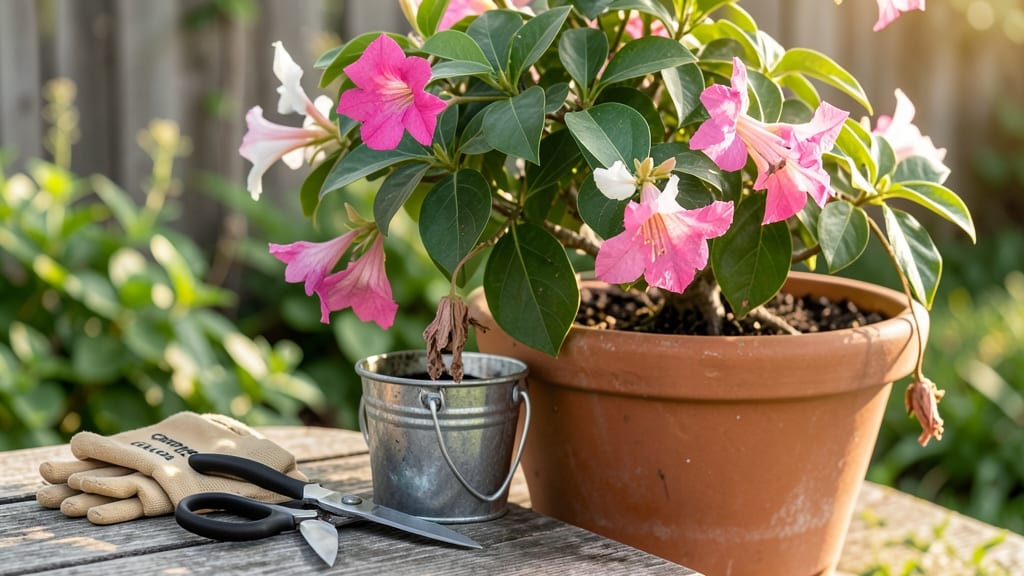
Deadheading mandevilla turns a single bloom into a bush full of flowers. ✂️ The trick is simple: snip spent blooms at the right spot, and your plant rewards you with nonstop color all season. I’ve turned my once-sparse mandevilla into a flowering powerhouse using this method—here’s exactly how.
You’ll need just three things: sharp pruning shears, a clean cloth (to wipe between cuts), and a sunny morning to work. The key is timing—deadhead right after blooms fade, before seed pods form.
This redirects energy from seed production to new growth, keeping your plant lush and blooming longer than ever.
After a few sessions, you’ll notice something magical: fresh buds forming at the base of every cut stem. The plant stays compact, grows fuller, and flowers more prolifically. My mandevilla now blooms from early summer until frost—no expensive fertilizers or fancy tricks, just consistent deadheading.
Works for container plants, hanging baskets, or in-ground shrubs. Even if you’ve missed a few blooms, don’t stress—just start now and watch the difference in weeks. Here’s the step-by-step process to get you started.
📚 In This Guide
- What you need
- Instructions
- Tips and common mistakes
- Wrapping up and next steps
What you need
- ● Clean, sharp pruning shears – Bypass pruners (4-6 inch blades) work best for precise cuts.
- ● Hand pruners or small pruning saw – For thicker stems (½ inch or larger).
- ● Rubbing alcohol (70% or higher) – 1 small bottle to disinfect tools before and after use.
- ○ Gloves (optional but recommended) – Garden gloves to protect hands from thorns and sap.
- ● Trash bag or bucket – For collecting pruned stems and debris.
- ○ Garden twine or plant ties – Small roll (optional, for supporting new growth if needed).
- ● Horticultural oil or neem oil – Small spray bottle to treat cuts and prevent disease.
- ● Plant food or fertilizer – Balanced liquid fertilizer (10-10-10 or similar) to nourish your Mandevilla post-pruning.
- ● Spray bottle with water – To mist fresh cuts and encourage faster healing.
- ● Notebook & pen – To jot down pruning notes or track growth progress!
Step-by-step instructions for deadheading mandevilla
Here’s how to keep your mandevilla blooming all season while encouraging thicker, fuller growth.
✂️ Step 1: Identify the Right Blooms to Prune
Deadheading means removing spent flowers—but only when they’re completely faded and brown. Wait until the bloom wilts and its petals drop naturally. Cutting too early can stress the plant and reduce future blooms. I like to do this in the morning when the flowers are dry and easy to spot.
Look for blooms with dried petals or buds that have opened but now look limp. These are ready for removal. Avoid cutting healthy buds or flowers that are still vibrant—they’ll keep blooming without intervention. Use sharp pruners to make clean cuts just above the next set of leaves or where the flower stem meets the main branch.
✂️ Step 2: Use the Right Tools for Clean Cuts
Never use your fingers or dull scissors to snip spent blooms. Instead, grab your sharp pruning shears (or clean, sharp scissors in a pinch). A clean cut prevents tearing and reduces the risk of disease entering the plant through jagged edges. I keep a small bottle of rubbing alcohol nearby to wipe down my tools between cuts—this keeps bacteria at bay.
Make your cuts at a 45-degree angle, about ¼ inch above a leaf node or where the flower stem meets the main stem. This angle helps water run off the cut, preventing rot. If you’re unsure where to cut, look for the small bump where a new leaf or branch could grow—that’s your target spot.
🌿 Step 3: Encourage Bushier Growth with Strategic Pruning
Deadheading isn’t just about removing old blooms—it’s also about shaping your mandevilla for denser growth. After pruning spent flowers, take a moment to check the plant’s overall shape. If stems look leggy or sparse, pinch back the tips of new growth to encourage branching. This is especially helpful if your plant has grown tall but not bushy.
Focus on cutting back the topmost set of leaves on leggy stems. This signals the plant to send out new shoots from lower nodes, creating a fuller, more compact shape. Avoid over-pruning—never trim more than ⅓ of the plant’s height at once. You’ll see new growth within 2-3 weeks, and your mandevilla will start filling out beautifully.
☀️ Step 4: Maintain Aftercare for Continued Blooms
After deadheading, give your mandevilla a little extra care to keep it thriving. Water deeply at the base, ensuring the soil stays evenly moist but not soggy. Mandevillas love bright, indirect light, so if your plant is indoors, move it near a sunny window or under a grow light for 6-8 hours daily. Outdoors, keep it in a spot with morning sun and afternoon shade to prevent leaf scorch.
Fertilize lightly with a balanced, water-soluble fertilizer (like 10-10-10) every 4-6 weeks during the growing season. This gives your plant the nutrients it needs to produce more blooms. Avoid over-fertilizing—too much can lead to lush foliage but fewer flowers. If you notice yellowing leaves, cut back on fertilizer and focus on watering instead.
⏰ Step 5: Time Your Deadheading for Season-Long Blooms
Deadhead your mandevilla every 2-3 days during peak bloom season to keep it looking its best. Consistent pruning trains the plant to produce more flowers instead of going to seed. I set a reminder on my phone to check my mandevilla in the morning—it only takes a few minutes and makes a huge difference.
As seasons change, adjust your approach. In fall, reduce deadheading and let some flowers go to seed if you want to collect seeds for next year. In winter, if your mandevilla is dormant, hold off on pruning until new growth appears in spring. This gives the plant time to rest and recharge for another vibrant season.
Tips & tricks for perfect mandevilla pruning
These little tricks will help you transform your mandevilla into a lush, blooming powerhouse without the guesswork.
Timing Secret: Early morning is the best time to deadhead because the flowers are fully dry and easy to identify. The morning light also helps you spot faded blooms more clearly. If you must prune later in the day, wait until the flowers have completely dried out—this prevents stressing the plant by cutting too early. I’ve found that consistent morning pruning every 2-3 days keeps my mandevilla looking fresh all season long.
Tool Technique: Don’t just grab any scissors! Use sharp pruning shears (or clean scissors) and always make cuts at a 45-degree angle about ¼ inch above a leaf node. This angle helps water run off the cut, preventing rot and keeping your plant healthy. Pro tip: Keep rubbing alcohol nearby to wipe down your tools between cuts—it prevents bacteria buildup that could harm your mandevilla.
Growth Strategy: When you notice leggy stems, pinch back the topmost set of leaves to encourage bushier growth. This simple technique signals the plant to send out new shoots from lower nodes, creating a fuller shape. Just remember: never trim more than ⅓ of the plant’s height at once—this keeps your mandevilla from getting stressed. You’ll start seeing new growth within 2-3 weeks!
Seasonal Adjustments: Your pruning routine should change with the seasons. During peak bloom season, stick to the 2-3 day schedule. In fall, reduce deadheading to let some flowers go to seed if you want to collect seeds. And in winter, when your mandevilla is dormant, hold off on pruning until you see new growth in spring. This seasonal approach keeps your plant healthy year-round.
Pro Tips for Deadhead Mandevilla
- These little tricks will help you transform your mandevilla into a lush, blooming powerhouse without the guesswork.
- Timing Secret: Early morning is the best time to deadhead because the flowers are fully dry and easy to identify.
- Tool Technique: Don’t just grab any scissors!
Frequently asked questions
Got questions about deadheading your Mandevilla? You’re not alone!
Here are some of the most common queries—plus quick, actionable answers to keep your plant thriving.
When is the best time to deadhead Mandevilla?
Deadhead after a flower wilts or fades—usually within a day or two. For continuous blooms, aim to prune regularly during the growing season (spring to fall). Avoid deadheading in winter when the plant is dormant, as it won’t benefit from the pruning.
Do I need special tools to deadhead Mandevilla?
Not necessarily! While clean, sharp bypass pruners or scissors make the job easier, you can also pinch flowers off with your fingers. Just ensure your tools are sterilized (wipe with rubbing alcohol) to prevent disease. A glove helps if your Mandevilla has thorns.
What if I skip deadheading? Will my Mandevilla still bloom?
Yes, but less vigorously. Deadheading redirects the plant’s energy toward new growth and flowers instead of seed production. Without it, you’ll see fewer blooms and may notice leggy, sparse foliage. Think of it like trimming your hair—skipping it won’t stop growth, but it’ll look wild!
My Mandevilla leaves are yellowing after deadheading—what’s wrong?
Yellowing leaves can signal over-pruning or stress. If you’ve cut too aggressively, give the plant time to recover (2–4 weeks). Ensure it’s getting bright, indirect light and well-draining soil. If the issue persists, check for pests (like spider mites) or root rot from overwatering.
Can I propagate Mandevilla from cuttings after deadheading?
Use healthy, 4–6 inch cuttings from pruned stems. Dip the cut end in rooting hormone (optional), plant in moist potting mix, and keep in bright, indirect light with humidity. Roots should form in 2–4 weeks—a great way to expand your Mandevilla collection!
Wrapping up and next steps
Deadheading your Mandevilla is a simple yet powerful way to keep your plant thriving with vibrant blooms and lush growth! By removing spent flowers regularly, you encourage more blossoms and a fuller, healthier plant.
With just a little effort, you’ll enjoy a stunning display all season long—so grab those pruners and get pruning!
Ready to take your Mandevilla care to the next level? Try experimenting with different pruning techniques or explore fertilizing tips to maximize those gorgeous flowers. Happy gardening! 🌸