
Flowers
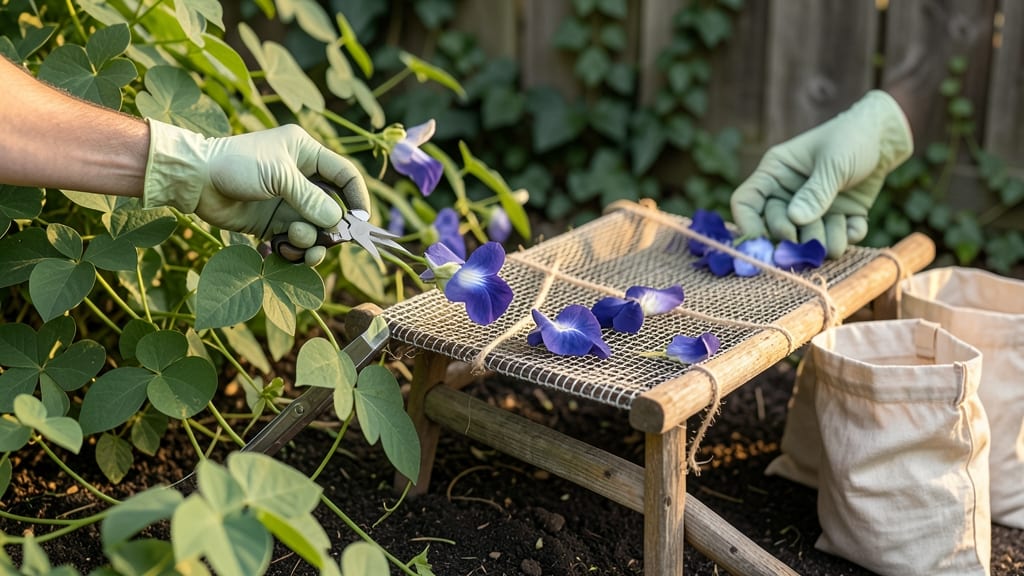
Drying butterfly pea flowers unlocks their magical color-changing tea potential. ✨ The secret lies in preserving their delicate petals—whether you air-dry them on screens or gently dehydrate them—so they retain that vibrant blue-green hue when steeped.
I’ve perfected this process after experimenting with wilting blooms and tea batches that turned muddy instead of mesmerizing.
Harvest flowers on a dry morning when petals are fully open but still crisp. Spread them in a single layer on breathable mesh screens or paper towels, away from direct sunlight.
For faster drying, use a dehydrator at 95°F for 2-3 hours, or a low oven (170°F) with the door cracked open. The goal is to dry them completely—3-5 days for air-drying—to prevent mold or color loss.
Once fully dry, store petals in airtight containers away from light and moisture. A little goes a long way: 1 teaspoon of dried flowers makes a stunning cup of tea that shifts from blue to purple with lemon.
The key is patience—rushed drying ruins the color-changing magic, but when done right, you’ll have a pantry staple for vibrant, mood-altering tea.
Common pitfalls? Overcrowding flowers during drying or storing them in humid spaces. Test a small batch first to dial in your method. With the right approach, you’ll turn your garden’s fleeting blooms into a year-round tea treasure—no green thumb required.
📚 In This Guide
- What you need
- Instructions
- Tips and common mistakes
- Wrapping up and next steps
What you need
- ● Fresh butterfly pea flowers (Clitoria ternatea) – Aim for 1 to 2 cups (about 20-40 grams, depending on flower size). Choose fully bloomed, vibrant flowers without blemishes.
- ● Clean, dry paper towels or parchment paper – A 12x12-inch sheet or enough to cover your drying surface.
- ● Drying method of your choice: Air-drying: A cool, dark, well-ventilated space (like a mesh screen, drying rack, or even a clean windowsill with indirect sunlight).
- ● Oven-drying: A low-temperature oven (95°F/35°C or below) or a food dehydrator (115°F/46°C).
- ● Air-tight storage container – A glass jar with a lid (8 oz or larger) or a resealable plastic bag with a zip-lock to preserve freshness.
- ● Pruning shears or clean scissors – For trimming stems to ½ inch for easier drying.
- ● Mesh drying screen or screen tent – Ensures airflow and prevents mold (especially for air-drying).
- ● Small fan or dehumidifier – Speeds up air-drying in humid climates.
- ● Food-grade silica gel packets – Helps absorb moisture in storage (place 1-2 packets in the container).
- ● Label and marker – To note the drying date and best-before date (typically 6-12 months for dried flowers).
Step-by-step instructions for harvesting and drying butterfly pea flowers
Turn fresh butterfly pea blooms into vibrant tea with this simple drying method—preserving their signature color-changing magic.
🌿 Step 1: Harvest Flowers at Peak Freshness
Pick butterfly pea flowers in the early morning when their petals are fully unfurled but still crisp. Look for buds with vibrant blue-purple hues—these yield the richest infusion. Use clean, sharp scissors or fingers to avoid damaging stems, and gather only fully open flowers. Avoid wilting or rain-dampened blooms, as they’ll lose color intensity during drying.
Work quickly to preserve freshness. If you can’t process immediately, store harvested flowers in a paper bag in the refrigerator for up to 24 hours—plastic traps moisture and accelerates spoilage. The goal is to dry flowers that retain their natural pigment, so speed matters.
🌱 Step 2: Prepare Flowers for Drying
Remove any green calyxes (the leafy base) and damaged petals, as these can impart bitterness. Spread flowers in a single layer on a clean, dry surface—parchment paper or a silicone baking mat works best. Avoid overcrowding; petals need airflow to dry evenly. I like to fan them out gently with my fingers to ensure no two petals touch.
For best results, dry flowers in a cool, dark, and well-ventilated space. A dehydrator set to 95°F is ideal, but a screen over a fan or even a sunny windowsill (if humidity is low) works in a pinch. Avoid direct sunlight—it fades the delicate blue hues faster. You’ll know they’re ready when petals crumble slightly between fingers but still hold their shape.
⏰ Step 3: Dry Flowers Completely
Check flowers after 4-6 hours—they should feel dry to the touch but not brittle. If using a dehydrator, rotate trays halfway through. For air-drying, flip petals occasionally to ensure even exposure. Overdrying turns petals brown and dull; underdrying leaves them prone to mold. Aim for a paper-thin, papery texture that still retains color.
Once fully dry, store flowers in an airtight glass jar away from light and heat. Label with the date—they’ll keep their vibrant color for up to 12 months if sealed properly. For tea, use 1-2 teaspoons of dried petals per cup of hot water. Steep for 5-7 minutes to release full flavor without bitterness.
☀️ Step 4: Test and Store for Long-Term Use
Before storing, brew a small test batch to verify color and flavor. The infusion should yield a soft blue-gray hue that deepens with lemon or vinegar. If the tea tastes bitter, flowers may have been overheated during drying. Adjust future batches by reducing drying time slightly. For best results, store dried flowers in a cool pantry—heat and light degrade their anthocyanin pigments over time.
To extend shelf life, add a silica gel packet to the jar for extra moisture control. Reuse dried petals 2-3 times before discarding—each steeping weakens their potency. For a longer-lasting supply, dry flowers in small batches and rotate storage jars monthly.
Tips & tricks for perfect butterfly pea flower tea
Preserving those stunning blue-purple hues and vibrant flavor takes a few key strategies—here's what I've learned after experimenting with batches.
Harvesting Precision: The 24-hour refrigerator storage window is your safety net, but don't let it become a crutch. If you're harvesting more than you can process immediately, spread the flowers on a clean kitchen towel in a single layer and place them in the fridge uncovered. This allows airflow while preventing condensation buildup that can accelerate spoilage. I've found that flowers stored this way maintain their pigment intensity better than those stuffed in plastic bags.
Drying Environment Secrets: That 95°F dehydrator setting is perfect, but humidity is your silent enemy. If your kitchen feels damp (like after a shower), prop open a window or run a small fan nearby while drying. For air-drying, place a small dish of silica gel near your drying surface—it absorbs moisture without affecting the flowers. The goal is to mimic a desert climate where these tropical flowers naturally dry in their native habitat.
Color Preservation Test: Before storing your dried flowers, perform this quick acid test: steep a small amount in hot water with a splash of lemon juice. If the color deepens to a rich indigo, your drying process preserved the anthocyanins perfectly. If it stays pale, you may need to reduce drying time slightly next batch. This test takes just 30 seconds and saves you from discovering faded tea later.
Storage Extension Hack: For that 12-month shelf life promise to hold, add a tiny pinch of citric acid (about 1/8 teaspoon per jar) along with the silica gel packet. The acid helps stabilize the color compounds, preventing them from degrading over time. I've had jars last nearly 18 months with this trick—though the flavor does mellow after 12 months, the visual magic remains stunning.
Pro Tips for Dry Butterfly Pea Flower For Tea
- Preserving those stunning blue-purple hues and vibrant flavor takes a few key strategies—here's what I've learned aft...
- Harvesting Precision: The 24-hour refrigerator storage window is your safety net, but don't let it become a crutch. I...
- Drying Environment Secrets: That 95°F dehydrator setting is perfect, but humidity is your silent enemy. If your kitch...
Frequently asked questions
Got questions about drying butterfly pea flowers for tea? Here are answers to the most common ones—so you can brew like a pro!
How long does it take to dry butterfly pea flowers completely?
Drying time varies based on humidity and airflow, but most flowers are fully dry in 3 to 7 days. Check for dryness by gently crumbling a petal—if it snaps easily and feels brittle, they’re ready! Store in an airtight container to preserve freshness for up to 6 months.
Can I speed up the drying process?
Use a dehydrator (set to 95°F/35°C for 2–3 hours) or a low oven (170°F/77°C with the door cracked open for 1–2 hours). Just avoid high heat—it can turn the petals brown or bitter. For best results, spread them in a single layer first to ensure even drying.
What if my flowers mold or smell funky?
Mold or bad odors mean excess moisture. Discard affected flowers immediately—they’re unsafe to use. To prevent this, ensure your drying area is well-ventilated, dry, and free of humidity. If storing, add a silica gel packet to your container to absorb moisture.
Can I use dried butterfly pea flowers instead of fresh ones?
Yes! Dried flowers work just as well—just steep 1–2 teaspoons per cup of hot water (200°F/93°C) for 5–10 minutes. Dried petals may release their vibrant blue-purple hue more slowly, so let them soak longer if you want a deeper color. Pro tip: Crush them lightly before steeping for a stronger infusion!
What’s the best way to store dried butterfly pea flowers?
Keep them in an airtight glass jar or container away from direct sunlight and heat. For extra freshness, store in the fridge (up to 1 year) or freezer (up to 2 years). Label your container with the drying date to track freshness—old flowers may lose potency or develop a duller color.
Wrapping up and next steps
Drying butterfly pea flowers for tea is a simple yet rewarding process that unlocks a world of vibrant, health-boosting flavors.
With just a few tools and a little patience, you can transform fresh petals into a versatile ingredient for teas, cocktails, and culinary creations. Now that you’re equipped with the know-how, why not experiment with your first batch today?
Start small—try a single batch to perfect your technique, then scale up as you gain confidence. Share your creations with friends or treat yourself to a soothing cup of homemade butterfly pea tea. Happy drying, and cheers to your new tea adventure! ☕✨