Propagation
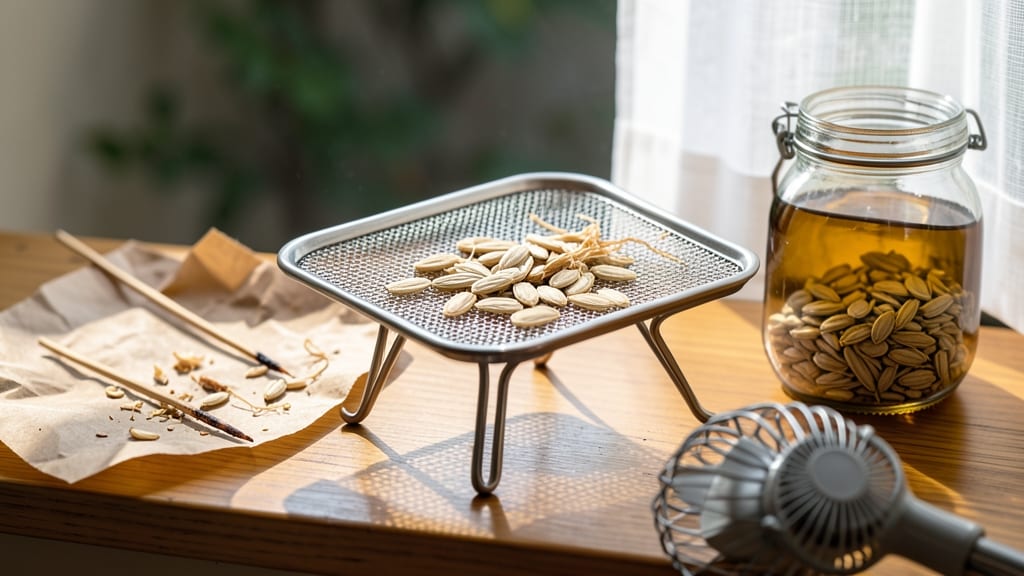
How to dry cantaloupe seeds unlocks next year’s harvest potential. ✨ I’ve saved seeds for years, and the difference between fresh, viable seeds and brittle failures comes down to proper drying—no shortcuts needed. The process is simple but requires patience, especially when dealing with cantaloupe’s thick, sticky pulp.
Start by scooping seeds from fully ripe fruit (they should be plump and easy to extract) and rinsing them in cool water to remove the fibrous pulp. Let them soak for 24 hours to ferment—this removes the natural coating that prevents germination.
After soaking, rinse again and spread seeds on a paper towel to air-dry for 2–3 days in a warm, dry spot.
For faster results, oven-dry seeds at 135°F for 2–3 hours, stirring occasionally. Test viability by placing a few seeds in a damp paper towel—if they sprout within a week, they’re ready for storage.
Store dried seeds in an airtight container in a cool, dark place for up to 5 years.
Pro tip: Label containers with the variety and date—this saves confusion when replanting. The key is consistency: whether sun-drying or oven-drying, keep seeds evenly exposed to prevent mold. Your future garden starts with these tiny, sun-cured treasures.
📚 In This Guide
- What you need
- Instructions
- Tips and common mistakes
- Wrapping up and next steps
What you need
- ● Fresh cantaloupe: 1 fully ripe, organic cantaloupe (avoid store-bought if possible—pesticides can harm germination).
- ● Knife or spoon: A sharp knife or a sturdy spoon for scooping out the seed pulp.
- ● Colander or fine-mesh strainer: To rinse and separate seeds from the fibrous pulp.
- ● Water: Enough to rinse seeds thoroughly (lukewarm or cool).
- ● Paper towels or clean cloth: For patting seeds dry after rinsing.
- ● Baking sheet or tray: Line with parchment paper (unbleached, if possible).
- ● Sunny, dry location: A well-ventilated spot with indirect sunlight (or a dehydrator set to 95–110°F).
- ● Small envelope or airtight container: For storing dried seeds (e.g., a paper seed packet or glass jar).
- ● Dehydrator: Speeds up drying time (set to low heat, ~95°F).
- ● Fine-mesh sieve: For extra-clean seeds if you want to remove all pulp residue.
- ● Desiccant packets: To keep moisture out of seed storage containers.
- ● Labeling tags: To track seed varieties and harvest years.
Step-by-step instructions for drying cantaloupe seeds
Here's my foolproof method for saving cantaloupe seeds—no fancy equipment, just patience and a sunny spot.
🌱 Step 1: Select and Extract Ripe Cantaloupe Seeds
Choose a fully ripe cantaloupe with a golden yellow-orange color, slightly soft rind when pressed, and a sweet fragrance at the stem end. Cut the melon open and scoop out the seeds along with the surrounding jelly-like pulp. I always use a spoon to avoid damaging the seeds.
Rinse the seeds gently under cool water to remove any excess pulp, then spread them on a clean paper towel to air-dry briefly. This prevents mold from forming during the drying process. You'll notice the seeds are encased in a fibrous coating—don't remove it yet, as it protects the seed during drying.
💧 Step 2: Ferment the Seeds for Viability Testing
Place the rinsed seeds in a clean glass jar and add enough water to cover them by about 1 inch. Let them ferment at room temperature (70-75°F) for 2-3 days. You'll see bubbles forming and a slight foul odor—this is normal and helps separate viable seeds from non-viable ones.
After fermentation, stir the mixture and pour it through a fine-mesh strainer. The viable seeds will sink to the bottom of the jar, while empty or non-viable seeds will float. Discard the floating seeds and rinse the remaining seeds with clean water. This step ensures you're only saving the healthiest seeds for next year.
☀️ Step 3: Dry the Seeds in Sunlight
Spread the cleaned seeds on a piece of unbleached paper or a clean screen in a single layer. Place them in a warm, dry, and sunny location where they can receive indirect sunlight for 3-5 days. Avoid direct sunlight, which can overheat and damage the seeds.
Check the seeds daily. They're ready when they're completely dry and the fibrous coating has turned hard and brittle. You'll know they're dry enough when they rattle slightly in the container and feel light to the touch. Store them in a cool, dry place in a sealed envelope or small paper bag.
⏰ Step 4: Store Seeds for Long-Term Viability
Label your seed envelope with the cantaloupe variety and the year saved. Store the seeds in a cool, dark place with consistent humidity, ideally between 35-45°F. A refrigerator works well for short-term storage, while a sealed container in the freezer can extend viability for several years.
Test a few seeds every year to ensure they remain viable. Plant them in small pots with moist seed-starting mix and keep them in a warm location. If they sprout within 7-10 days, your seeds are still good. This step ensures you always have fresh, high-quality seeds for your next cantaloupe harvest.
Tips & tricks for perfect sun-cured cantaloupe seeds
Here's what I've learned after saving seeds for years—these little details make all the difference between viable seeds and wasted effort.
Selection Matters: The ripeness of your cantaloupe directly impacts seed viability. Look for melons with a golden yellow-orange hue and a slightly soft rind when pressed—this indicates peak ripeness. The sweet fragrance at the stem end is the final telltale sign. I've found that overripe melons produce seeds with lower germination rates, so timing your harvest is crucial.
Fermentation Precision: During the 2-3 day fermentation at 70-75°F, the slight foul odor is normal and essential for separating viable seeds. If your kitchen runs cooler, consider placing the jar in a slightly warmer spot like near a sunny window. The bubbles indicate active fermentation—if you don't see them after 24 hours, gently stir the mixture to encourage the process. This step is where many beginners lose good seeds!
Drying Strategy: For the 3-5 day drying period, indirect sunlight is key—direct sun can overheat and damage the seeds. I've had the best results using a mesh screen elevated slightly off the ground, allowing airflow on all sides. Check daily by gently shaking the container; properly dried seeds will rattle slightly and feel light. If they stick together, they need more time.
Storage Wisdom: The ideal 35-45°F storage range is critical for long-term viability. A refrigerator works well for short-term, but for maximum longevity, use a sealed container in the freezer. I label my seed envelopes with the variety and year, then test a few seeds annually by planting them in moist seed-starting mix. If they sprout within 7-10 days, your seeds are still good to go!
Pro Tips for Dry Cantaloupe Seeds
- Here's what I've learned after saving seeds for years—these little details make all the difference between viable see...
- Selection Matters: The ripeness of your cantaloupe directly impacts seed viability. Look for melons with a golden yel...
- Fermentation Precision: During the 2-3 day fermentation at 70-75°F, the slight foul odor is normal and essential for ...
Frequently asked questions
Got questions about drying cantaloupe seeds?
You’re not alone! Here are some of the most common queries—plus quick, practical answers to help you save those seeds like a pro.
Can I dry cantaloupe seeds without a dehydrator?
If you don’t have a dehydrator, sun-drying is the easiest alternative. Spread seeds on a paper towel or screen in a warm, dry, and well-ventilated spot (like a windowsill or balcony). Just avoid direct sunlight for too long—it can overheat and crack the seeds. Aim for 3–5 days of gentle drying.
How long should I dry cantaloupe seeds for best results?
Patience is key! Seeds are fully dry when they’re hard, dark, and rattly inside the pod. Typically, this takes 5–7 days in a dehydrator (at 95°F/35°C) or 1–2 weeks if air-drying. Test a few: Crush one between your fingers—if it feels brittle and doesn’t stick, they’re ready!
What if my seeds mold or smell bad during drying?
Mold or funky odors mean too much moisture or humidity. If this happens, discard the batch immediately—moldy seeds won’t sprout. To prevent it, store seeds in a sealed container with silica gel packets or use a fan for airflow. Also, avoid high humidity areas like basements.
Can I reuse cantaloupe seeds from store-bought fruit?
Technically yes, but germination rates may be low because store-bought melons are often hybrid varieties (seeds won’t produce identical fruit). For better results, save seeds from heirloom or homegrown cantaloupes. If you must use store-bought seeds, soak them in water for 24 hours before drying to boost viability.
How should I store dried cantaloupe seeds long-term?
Proper storage keeps seeds viable for 3–5 years! Place them in an airtight container (like a glass jar) with a silica gel packet or uncooked rice to absorb moisture. Store in a cool, dark place (like a fridge or root cellar). Label with the date and variety—you’ll thank future-you!
Wrapping up and next steps
Drying cantaloupe seeds is a simple yet rewarding process that ensures a thriving garden for seasons to come!
With just a few tools and a bit of patience, you’ll have healthy, viable seeds ready for planting. Now that you’re equipped with the know-how, why not take the next step? Whether you’re a seasoned gardener or just starting out, grab those seeds, find a sunny spot, and let nature do the rest—your future harvest will thank you! 🌱