
How To
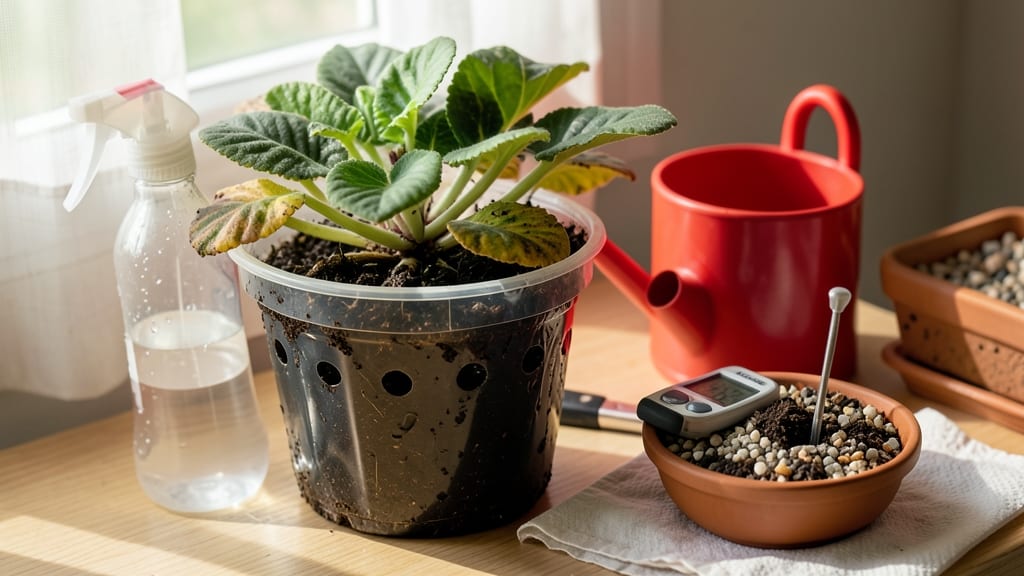
How to fix an overwatered African violet—your drooping leaves can bounce back faster than you think. 🌱 I've nursed plenty of soggy violets back to health, and the secret starts with understanding the symptoms—yellowing leaves, mushy stems, and that heavy, sad feeling when you lift the pot.
First, stop watering immediately and let the soil dry out completely. If the roots look black or smell rotten, trim them with clean scissors (sterilize with rubbing alcohol). Repot in fresh, well-draining soil mixed with perlite or sand—this plant hates soggy feet.
Within 24 hours, you'll see the difference: leaves perk up, roots firm up, and that vibrant green returns. The key is adjusting your watering routine—only when the top inch of soil is bone dry, and always from the bottom up to avoid drowning the crown.
Prevention is simple: use pots with drainage holes, choose a well-draining African violet mix, and water less often. These plants thrive on neglect almost as much as they suffer from overcare—just keep them happy and dry between drinks.
Root Causes of Overwatering
African violets (Saintpaulia) are delicate beauties that thrive in balanced conditions, but when their care tips too far, overwatering becomes a silent killer. Understanding why this happens is the first step to prevention—and revival. Let’s break down the science behind the soggy soil.
African violets are epiphytes in the wild, meaning they naturally grow in moist but well-drained environments. When you water them too often, their roots suffocate from lack of oxygen. Here’s the breakdown:
- Soil Saturation: Most potting mixes retain moisture for days, but African violets prefer the top inch to dry out between waterings.
Overwatering keeps the soil perpetually damp, triggering anaerobic conditions (oxygen deprivation) in the roots. - Root Rot: The fungus Pythium and bacteria like Erwinia thrive in soggy soil, breaking down root cell walls.
Within 48–72 hours of constant moisture, roots turn mushy and black. - Human Error: Many gardeners assume "more water = happier plant," but African violets are succulent-leaved and store water efficiently. A quick check: Stick your finger 1 inch deep—if it’s damp, wait.
Even with perfect watering habits, bad drainage turns every watering session into a drowning risk. Look for these red flags:
- No Drainage Holes: Pots without holes trap water at the bottom, creating a hydroponic-like environment that roots hate. Without airflow, roots rot faster than a forgotten milk carton. - Compacted or Dense Soil: Heavy mixes (like garden soil or clay-based blends) don’t allow water to escape.
African violets need airy, peat-based mixes (or cactus/succulent soil with perlite). - Trapped Water: Saucer buildup is a classic mistake. Leaving standing water under pots for hours rewets dry soil from the bottom up, confusing the plant into thinking it’s thirsty again.
African violets are tropical but not swamp-dwellers. When humidity or temps swing wildly, their water needs change—and so does their tolerance for moisture.
- High Humidity (>60%): In humid climates (like bathrooms or kitchens), water evaporates slower, keeping soil damp longer. Solution: Use a hygrometer and reduce watering by 30–50%. - Cold Drafts: Temperatures below 60°F (15°C) slow root activity, making roots less efficient at absorbing water.
Overwatering in cool conditions = root asphyxiation. - Sudden Heat Spikes: If your violet sits near a heater or sunny window, it’ll drink more water. But if the soil stays cold (e.g., on a concrete floor), roots can’t keep up, leading to waterlogging.
Size and material matter more than you think. Here’s how pots backfire:
| Pot Problem | Why It Causes Overwatering | Fix It With |
|---|---|---|
| Too Large | Extra soil stays wet for weeks, mimicking a swamp. | Repot in a container 2–3 inches wider than the root ball. |
| Terracotta Pots | While breathable, they dry out unevenly—edges may stay damp while the center stays soggy. | Switch to plastic pots (retain moisture better) or glazed ceramic. |
| No Aeration | Dense pots (like some plastic varieties) trap moisture against roots. | Choose pots with vertical ribs or slits for airflow. |
Not all water is created equal. Hard water, chemicals, and salts can disrupt root function, making plants appear overwatered when they’re actually struggling to absorb moisture.
- Chlorine/Flouride: These chemicals accumulate in soil, reducing osmotic pressure in roots.
The plant can’t uptake water efficiently, so you compensate by watering more—leading to rot. - High Mineral Content: Hard water leaves white crust on soil and pot rims, clogging pores and suffocating roots. Test your water: If it leaves spots on coffee mugs, it’s too mineral-heavy. - Solution: Use filtered, rainwater, or distilled water.
Or, let tap water sit 24 hours before using to off-gas chlorine.
African violets are not year-round water hogs. Their growth slows in winter, but many gardeners keep watering on the same schedule—a recipe for disaster.
- Winter Dormancy: In cooler months, reduce watering by 50%. Roots grow slower, so they need half the moisture. - Summer Growth Spurt: With longer daylight, violets drink more.
But if your home is AC-cooled, the soil may dry faster—check daily in peak heat. - Blooming Phase: Flowering plants divert energy to blooms, reducing root activity. Overwatering here = dropped buds and rot.
Sometimes, what looks like overwatering is actually underwatering in disguise. Confusing signs include:
- Wrinkled leaves (thirsty) vs. soft, yellow leaves (rot).
- Drooping in the morning (normal!) vs. drooping that stays all day (rot or root stress).
Pro Tip: 💡 The Toothpick Test – Gently insert a toothpick into the soil. If it comes out clean, water; if it’s damp, wait. This beats guesswork!
Revive Your Plants Fast
Now that you know the signs and causes of overwatering, let’s get your African violets back on track with these practical, step-by-step solutions. Each fix targets a specific issue—whether it’s soggy soil, root rot, or wilting leaves—so you can act quickly and prevent further damage.
Plus, we’ll share prevention tips to keep your violets thriving long-term.
Problem: Compacted, waterlogged soil suffocates roots, cutting off oxygen and nutrients.
How to Fix It:
- 🔥 Drain the Excess Water
- Remove the plant from its pot and gently shake off excess soil to expose roots.
- If the soil feels like a damp sponge, place the root ball on a paper towel or clean cloth to absorb moisture for 10–15 minutes.
- 🍳 Refresh the Soil Mix
- Discard the old, soggy soil (don’t reuse it—it’s a breeding ground for rot).
- Repot in a well-draining African violet mix (combine 50% peat moss, 30% perlite, and 20% vermiculite). Avoid garden soil—it compacts and holds too much water.
- ⏰ Let It Dry Between Waterings
- Stick your finger 1 inch deep into the soil. If it’s damp, wait another 2–3 days before watering again.
- Pro Tip: Use a moisture meter for accuracy—aim for the "slightly dry" zone, not bone-dry.
Prevention:
- ✨ Use a pot with drainage holes (terracotta is ideal—it breathes!).
- 🌡️ Water only when the top inch of soil feels dry (never on a schedule).
- 💡 Elevate pots to avoid sitting in saucers of water.
Problem: Dark, mushy roots mean fungal or bacterial rot has set in. Act fast—this is a silent killer!
How to Fix It:
- 👨🍳 Trim the Damaged Roots
- Rinse the roots gently under lukewarm water to remove old soil.
- Use sterilized scissors to snip off black, slimy, or mushy roots (healthy roots are firm and white-tan).
- ⚠️ Warning: If more than 50% of roots are rotten, your plant may not recover. Start fresh with a cutting.
- 🔪 Apply a Fungicide (If Needed)
- Dip the trimmed roots in a fungicide solution (like hydrogen peroxide 3% or a commercial root rot treatment) for 5 minutes to kill lingering pathogens.
- Let them air-dry for 10–15 minutes before repotting.
- 🥘 Repot in Sterile Soil
- Use a fresh, sterile potting mix (never reuse old soil).
- Plant at the same depth as before—burying the stem encourages rot.
- 💡 Pro Tip: Add a thin layer of perlite at the bottom of the pot for extra drainage.
Prevention:
- 🎯 Avoid watering from above—use the bottom-watering method (place the pot in a tray of water for 10 minutes, then drain).
- 🌡️ Keep humidity moderate (40–50%)—high humidity + overwatering = rot paradise.
- 🔄 Repot every 6–12 months to refresh the soil.
Problem: Droopy, yellowing leaves signal stress from overwatering, but they can bounce back with the right care.
How to Fix It:
- 💧 Adjust Your Watering Habits
- Bottom-water only (no more top-watering unless the soil is completely dry).
- 📊 Rule of thumb: Water when the soil feels like a wrung-out sponge—not dripping wet.
- 🌿 Improve Airflow
- Move your violets to a bright, indirect spot (east or north-facing windows are best).
- 💡 Pro Tip: A small fan on low (2–3 hours/day) mimics natural airflow and speeds up recovery.
- 🍎 Feed Lightly After Recovery
- Wait 2–3 weeks before fertilizing—stressed plants can’t process nutrients.
- Use a balanced, water-soluble fertilizer (20-20-20) diluted to half-strength once a month.
Prevention:
- 🌡️ Monitor temperature—keep it between 65–75°F (avoid cold drafts or heaters).
- 🚫 Avoid misting leaves—water droplets can cause fungal issues.
- ✨ Prune yellow leaves to redirect energy to healthy growth.
Once your African violet is back in shape, lock in these habits to prevent future overwatering:
| Do This | Avoid This |
|---|---|
| ✅ Use a moisture meter | ❌ Water on a schedule |
| ✅ Bottom-water only | ❌ Let plants sit in saucers |
| ✅ Repot every 6–12 months | ❌ Overcrowd the pot |
| ✅ Choose terracotta pots | ❌ Use plastic without holes |
| ✅ Fertilize lightly | ❌ Over-feed stressed plants |
💡 Bonus Tip: If your violets are chronically soggy, try the "soak and dry" method:
- Water thoroughly.
- Let the pot drain completely (empty the saucer!).
- Wait until the top inch is dry before watering again.
Remember: African violets are forgiving if you catch overwatering early. With these fixes, your plants should perk up within 24–48 hours—just give them time and consistent care! 🌟
Frequently asked questions
How quickly can I revive an overwatered African violet?
With immediate action, you'll often see improvement within 24 hours. Remove the plant from soggy soil, trim any mushy roots, and repot in fresh, dry mix. Within 48 hours, leaves should perk up if the root system is still salvageable. The key is stopping all watering until the soil is completely dry.
Can I save an African violet with completely black, mushy roots?
If more than 50% of the roots are black and mushy, recovery is unlikely. However, try trimming all damaged roots, treating with 3% hydrogen peroxide for 5 minutes, and repotting in sterile soil. If the remaining roots are healthy, there's a 30% chance of revival. For severe cases, propagate from healthy leaves instead.
Why does my African violet droop after watering?
This usually means you're watering from above, causing the heavy soil to press down on delicate stems. Try bottom-watering (place pot in 1 inch of water for 10 minutes, then drain) and avoid saucers that trap moisture. Drooping from overwatering differs from natural morning droop—it stays wilted all day.
What's the best soil mix to prevent future overwatering?
Use a blend of 50% peat moss, 30% perlite, and 20% vermiculite. This creates an airy, fast-draining mix that mimics their natural habitat. Add a thin layer of charcoal at the bottom to prevent bacterial growth. Avoid garden soil—it compacts and holds too much moisture.
How often should I water African violets after fixing overwatering?
Wait until the top inch of soil is completely dry—usually every 7-10 days in winter and 5-7 days in summer. Use the toothpick test: Insert a toothpick—if it comes out clean, water. In humid conditions, reduce frequency by 30%. Always water in the morning for best results.