
Watering
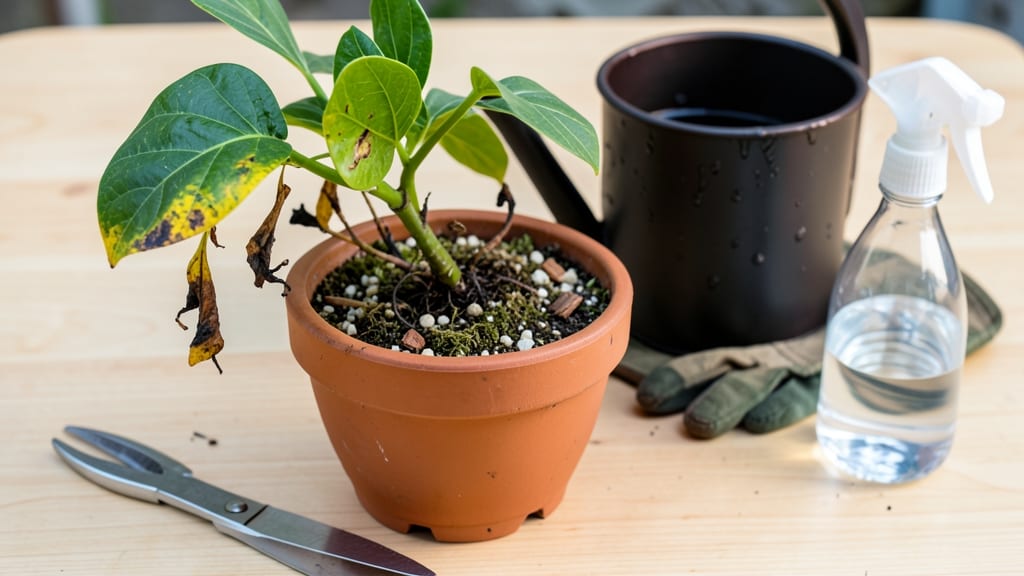
Your fiddle leaf fig’s drooping leaves are screaming for help—how to fix an overwatered fiddle leaf fig is critical—root rot is silent but deadly. 🌱 I’ve nursed more than a few back from the brink, and the key is acting fast before the roots turn to mush.
The good news? Even severely stressed plants can bounce back with the right care, and you won’t need to sacrifice a single leaf in the process.
First, stop watering immediately and check the soil—it should smell fresh, not like a swamp. If the top 2-3 inches are damp, your plant’s been drowning.
Gently remove it from the pot and inspect the roots: healthy ones are firm and white, while rotten ones are brown, slimy, and smell foul. Trim the bad ones with clean scissors, then repot in fresh, well-draining soil with perlite or orchid bark.
Once repotted, give your fig a dry-out period—wait until the top 1-2 inches of soil feel bone-dry before watering again. Place it in bright, indirect light and avoid cold drafts.
Within 2-4 weeks, you’ll see new growth signaling the roots are healing. The secret? Consistency—overwatering is a habit, not a one-time mistake.
Long-term, upgrade to a pot with drainage holes and use a moisture meter to avoid guesswork. I swear by the “finger test”: stick your finger in the soil—if it’s wet past your first knuckle, wait another day.
Your fiddle leaf fig will thank you with glossy leaves and steady growth, proving even the most neglected plants can make a comeback.
Root of the Problem
Your fiddle leaf fig isn’t just picky—it’s delicate when it comes to water. Overwatering isn’t a sudden accident; it’s usually a chain reaction of well-meaning (but misguided) care habits.
Understanding the why behind the soggy soil is the first step to saving your plant. Let’s dig into the science—and the mistakes—behind those droopy, yellowing leaves.
Fiddle leaf figs (Ficus lyrata) are tropical plants, but their roots aren’t built for swampy conditions. When soil stays too wet for too long, it triggers a cascade of issues:
- Oxygen starvation: Roots need air to breathe. Water fills the pore spaces in soil, suffocating root cells and cutting off their oxygen supply. Without oxygen, roots can’t respire (yes, plants "breathe" too!), leading to anaerobic conditions—a toxic environment that produces harmful byproducts like ethanol and acetic acid.
- Fungal infections: Damp soil is a buffet for Pythium and Phytophthora, fungi that rot roots faster than you can say "leaf drop." These pathogens thrive in moisture levels above 60% for prolonged periods, turning healthy roots into mush.
- Nutrient lockout: Waterlogged soil binds nutrients like nitrogen and phosphorus, making them unavailable to the plant. Even if your fertilizer is top-tier, the roots can’t access it—like having a full fridge but no way to open the door.
💡 Pro Tip: Test your soil’s moisture retention with the "squeeze test." Grab a handful of soil—if water drips out or it feels like a damp sponge, it’s holding too much. Ideal soil should crumble slightly when pressed, like a slightly damp cookie.
Not all soil is created equal, and neither are pots. If your fiddle leaf fig is sitting in a container without proper drainage, water has nowhere to go but down—and by "down," we mean straight to the roots’ doom.
- Clogged drainage holes: Even the fanciest pot with holes can become a death trap if the holes are too small or blocked by debris (like old roots or gunk). Water pools at the bottom, creating a permanent wet zone where roots drown.
- Compacted or heavy soil: Clay-heavy or non-porous mixes (like straight garden soil) don’t allow water to escape. These soils act like a sponge, absorbing water and holding it hostage. Fiddle leaf figs need aerated, chunky soil—think perlite, pumice, or orchid bark—to prevent suffocation.
- No reservoir for excess water: Some pots lack a cache to collect overflow, so water seeps into the saucer or cache pot below, turning your plant’s home into a root-level swamp.
✨ Quick Fix: If your pot has no drainage holes, it’s time for an upgrade. Even a DIY solution—like drilling holes in a ceramic pot—can save your plant. And always use a cache pot with a tray to catch excess water, not a sealed saucer.
This is the human error culprit—watering on a schedule instead of by the plant’s needs. Fiddle leaf figs are drought-tolerant natives of West African rainforests, where they experience dry seasons. They’re adapted to short bursts of rain, not a daily misting.
- Ignoring the soil’s dry-down time: Sticking to a "every Tuesday and Friday" routine is a recipe for disaster. Soil should dry out 2–3 inches deep between waterings. Use your finger or a moisture meter to check—if the top layer feels damp, wait.
- Overcompensating after wilting: If your plant looks thirsty, it’s tempting to drown it in water. But this can worsen root rot by shocking the system. Instead, water lightly and gradually to coax roots back to health.
- Humidity vs. hydration confusion: Mistaking humidity (air moisture) for hydration (soil moisture) leads to overwatering. A humidifier helps the leaves, but it doesn’t mean the roots are getting less water. They’re two separate needs!
🎯 Golden Rule: When in doubt, underwater. Fiddle leaf figs would rather have dry soil than soggy roots. If you’re unsure, let the top 50% of the soil dry out before watering again.
Your home’s climate can silently sabotage your watering routine. Factors like temperature, humidity, and even airflow play a huge role in how quickly soil dries.
- Low humidity + high heat: Dry air (common in homes with AC or heaters) makes soil evaporate faster, but it also tricks you into overwatering. You might think the plant needs more water because the air feels arid, but the roots are already struggling from previous overwatering.
- Cold drafts or temperature swings: Roots are sensitive to temperature changes. If your plant sits near a window that’s too cold (below 60°F) or in a spot with hot/dry air (like near a vent), it can’t regulate moisture uptake properly, leading to waterlogging.
- Lack of airflow: Stagnant air around the plant (like in a closed terrarium or crowded shelf) increases humidity around the leaves but doesn’t help the soil dry faster. Poor airflow also encourages fungal growth, which thrives in damp, still conditions.
🌡️ Ideal Conditions: Keep your fiddle leaf fig in 65–75°F temperatures, 40–50% humidity, and indirect, bright light. A small fan nearby (not blowing directly on the plant) can improve airflow without stressing the roots.
Now that you know why your fiddle leaf fig is drowning, the next step is action. The good news? Roots are resilient—with the right adjustments, you can revive them without losing a single leaf. Let’s roll up our sleeves and get to fixing!
Revive Your Fiddle Leaf Fig
Your fiddle leaf fig is showing signs of distress, but don’t lose hope—there’s still time to save it! Overwatering can be tricky, but with the right steps, you can nurse your plant back to health.
Below are targeted solutions based on the most common causes of overwatering, along with practical fixes and prevention tips to keep your plant thriving.
If your fiddle leaf fig is suffering from root rot, the first step is to stop watering immediately and assess the damage.
🔥 Step 1: Remove the Plant from the Pot
Gently take your plant out of its container and inspect the roots. Healthy roots are firm and white, while rotted roots will be mushy, brown, or black.
🍳 Step 2: Trim the Damaged Roots
Using sterilized scissors or pruning shears, snip off any soft, discolored, or slimy roots. Cut back to healthy tissue—this helps prevent further spread of rot.
👨🍳 Step 3: Repot in Fresh Soil
Choose a well-draining potting mix (a blend of peat, perlite, and orchid bark works well). Repot your fiddle leaf fig in a clean pot with drainage holes to prevent future waterlogging.
🥘 Step 4: Let It Dry Out
Place your plant in a bright, indirect light spot but avoid watering for at least 1-2 weeks. This allows the roots to recover and dry out completely before reintroducing moisture.
💡 Pro Tip: If repotting isn’t an option, you can try the "dry-out method"—place the plant in a dry, shaded area and monitor closely for signs of recovery.
If your fiddle leaf fig has yellow or drooping leaves but no severe root rot, the issue might be excessive moisture retention.
🔥 Step 1: Adjust Your Watering Schedule
Fiddle leaf figs prefer soil to dry out between waterings. Stick your finger 1-2 inches into the soil—if it’s damp, wait before watering again.
🍳 Step 2: Improve Drainage
Ensure your pot has drainage holes and use a fast-draining soil mix. If your current soil is too dense, consider amending it with perlite or sand.
👨🍳 Step 3: Water Deeply but Less Often
When you water, soak the soil thoroughly until water runs out the drainage holes. Then, let excess water drain completely before placing the pot back in its saucer.
🥘 Step 4: Monitor Humidity and Light
Fiddle leaf figs thrive in moderate humidity (40-50%) and bright, indirect light. If your home is too dry, consider using a humidifier or placing a tray of water near the plant.
💡 Pro Tip: A moisture meter can help track soil moisture levels accurately, preventing guesswork.
Once your fiddle leaf fig is on the mend, take these steps to keep it healthy long-term:
- ✅ Use the "Finger Test" – Always check soil moisture before watering.
- ✅ Choose the Right Pot – Terracotta pots dry out faster than plastic.
- ✅ Avoid Soggy Saucer Trays – Empty excess water after watering to prevent root suffocation.
- ✅ Fertilize Sparingly – Over-fertilizing can worsen water retention issues.
- ✅ Rotate Your Plant – Ensures even light exposure and prevents one-sided growth.
By following these steps, your fiddle leaf fig should bounce back stronger—and with a little care, it’ll be back to its lush, leafy self in no time! 🌿✨
Frequently asked questions
How do I know if my fiddle leaf fig has root rot?
Check the roots by gently removing the plant from its pot. Healthy roots are firm and white, while rotten roots are brown, mushy, and may smell foul. If you see black or slimy roots, that’s a clear sign of root rot caused by overwatering. Act fast by trimming the damaged roots and repotting in fresh, well-draining soil.
Can I save a fiddle leaf fig if all the leaves are yellow?
Yes! Yellow leaves often signal overwatering, but your plant can recover if the roots are still healthy. Trim any severely yellowed leaves and adjust your watering habits immediately. Let the soil dry out completely between waterings and ensure your pot has drainage holes. With proper care, new growth should appear within a few weeks.
What’s the best soil mix to prevent overwatering?
A well-draining mix is key! Use a blend of peat moss, perlite, and orchid bark (in equal parts) to improve aeration. Avoid heavy garden soil or mixes without perlite/sand, as they retain too much moisture. Terracotta pots also help, since they wick away moisture faster than plastic.
How often should I water my fiddle leaf fig after fixing overwatering?
Wait until the top 2-3 inches of soil are completely dry before watering again. Use the "finger test"—stick your finger into the soil. If it feels damp below the top layer, wait another day. Once recovered, water every 10-14 days in winter and every 7-10 days in summer.
Will my fiddle leaf fig grow back if I’ve overwatered it for months?
Even long-term overwatering damage can be reversed if the roots aren’t completely dead. Trim any rotten roots, repot in fresh soil, and give your plant a dry-out period. With patience and consistent care, you’ll see new growth in 4-8 weeks. The key is stopping watering immediately and improving drainage.