
Propagation
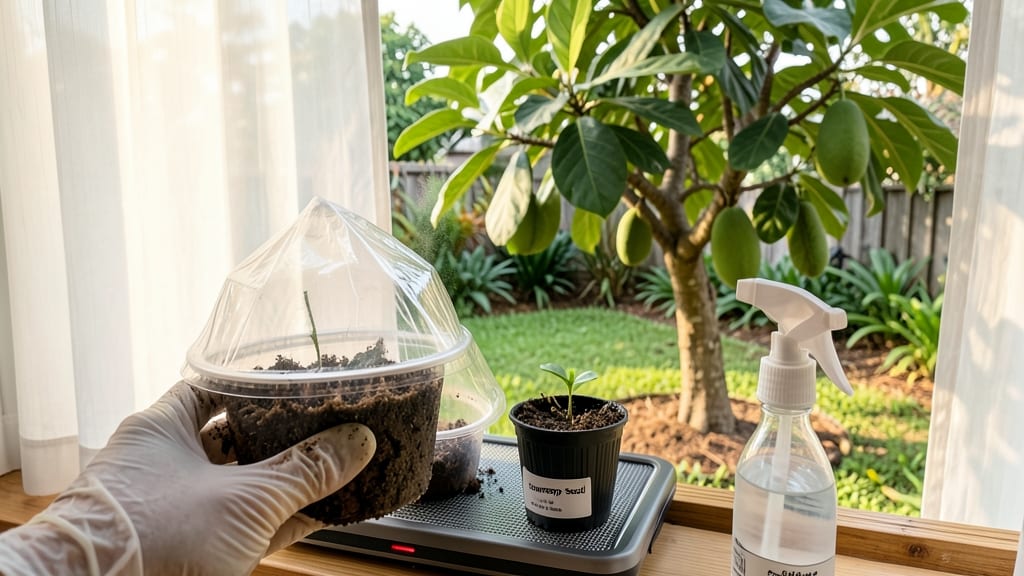
Germinating soursop seeds feels like waiting for a slow-motion miracle—until you crack the code. 🌱 The right prep turns weeks of waiting into 2-4 weeks of watching those first green cracks appear. My first batch took 6 weeks because I skipped the soaking step (don't make that mistake).
The secret isn't complicated: warm, moist conditions mimic the tropical soil where soursop thrives naturally. You'll need a heat mat, plastic wrap, and patience—no fancy equipment, just the right balance of moisture and warmth. Most people overthink it, but the process is simpler than you'd imagine.
Once those seedlings break through, you'll have plump, dark-green leaves within weeks, ready to transition from their cozy propagation setup to bigger pots. The key is keeping the soil consistently damp (not soggy) and protecting them from drafts.
Works in any warm climate, but even cooler zones can try this with a sunny windowsill. Here's exactly how to get those seeds sprouting faster than you'd expect.
📚 In This Guide
- What you need
- Instructions
- Tips and common mistakes
- Wrapping up and next steps
What you need
- ● Fresh soursop seeds – 3–5 viable seeds (harvested from ripe fruit; avoid dried or shriveled seeds).
- ● Well-draining potting mix – 2–3 cups of a lightweight blend (e.g., 50% coco coir, 30% perlite, 20% vermiculite).
- ● Small seed trays or pots – 2–4 containers (3–4 inches deep) with drainage holes.
- ● Spray bottle – For gentle moisture application (avoid over-saturating).
- ● Plastic wrap or humidity dome – To maintain warmth and moisture.
- ○ Heating mat (optional but helpful) – A seedling heat mat (70–85°F range) to speed up germination.
- ● Grow lights or sunny windowsill – Indirect sunlight or 12+ hours of artificial light post-germination.
- ● Fungicide (e.g., neem oil or cinnamon powder) – 1 tsp to prevent mold in moist conditions.
- ● Seedling labels – To track planting dates.
- ● Humidifier or pebble tray – For extra humidity if your climate is dry.
- ● Transplant pots (4–6 inches) – For moving seedlings once roots develop.
Step-by-step instructions for germinating soursop seeds
Warmth and moisture are your secret weapons—here's how to coax those stubborn soursop seeds to sprout.
🌱 Step 1: Extract and Prepare the Seeds
Start by carefully removing the seeds from a fresh, ripe soursop fruit. I like to scoop out the pulp and rinse the seeds under cool water to remove any remaining fruit residue. The seeds have a tough outer shell, so I soak them in warm water for 24 hours—this softens the shell and speeds up germination. Real talk: don't skip this step, or you'll wait weeks for sprouts.
After soaking, gently rub the seeds between your fingers to remove any remaining pulp. Place them on a paper towel and let them air-dry for 1-2 hours—this prevents mold from forming when we add moisture later. You'll know they're ready when the outer shell feels slightly rough but not sticky.
💧 Step 2: Set Up the Germination Container
Line a shallow container (like a plastic takeout tray) with a damp paper towel. I use distilled water to moisten it—tap water can introduce chlorine or minerals that slow germination. The towel should feel damp but not soaking wet; squeeze it gently to check. Place the soaked seeds about 1 inch apart on the towel, ensuring they lie flat.
Cover the container with another damp paper towel and secure it with a rubber band or plastic wrap. This creates a humid, warm environment that mimics the tropical conditions soursop seeds need to sprout. I place mine on top of my fridge (where it stays around 75-80°F)—the warmth is key here. If your home runs cooler, consider using a seedling heat mat set to 70-75°F.
☀️ Step 3: Monitor Moisture and Wait for Sprouts
Check the container daily to ensure the paper towels stay damp. If they dry out, mist them lightly with warm water—never soak them again. You'll see the first signs of germination in 7-14 days, though some seeds take up to 3 weeks. Watch for a tiny white root (radicle) to emerge first, followed by a small shoot. Here's the thing—don't move the container once sprouts appear, or you'll shock the delicate roots.
Once the sprouts reach 1-2 inches tall, carefully transfer them to small pots filled with a light, airy seed-starting mix. I use a mix of 50% peat moss and 50% perlite to prevent compaction. Plant each seedling ½ inch deep and water gently to settle the soil. Keep the pots in bright, indirect light (no direct sun yet) and maintain 70-75°F temperatures.
🌿 Step 4: Transplant and Support Early Growth
After 4-6 weeks, when the seedlings have 2-3 sets of true leaves, it's time to transplant them into 4-inch pots. Use the same light, airy mix and plant them 1 inch deeper than before—this encourages stronger root development. I like to firm the soil gently around the base to eliminate air pockets, which can stunt growth. Water thoroughly after transplanting, but avoid soggy soil.
Soursop seedlings grow slowly at first, so patience is key. Keep them in bright, indirect light for the first month, then gradually introduce morning sun over 2 weeks. You'll know they're thriving when new leaves emerge every 2-3 weeks. This is the moment that matters—consistent growth means your seeds are happy and healthy.
Tips & tricks for germinating soursop seeds
Here's what nobody tells you about getting those stubborn seeds to sprout—these little details make all the difference.
Soaking Secret: The 24-hour warm water soak isn't just about softening the shell—it's also about activating the seed's enzymes. Use water that's warm to the touch (around 80°F) rather than boiling or cold. I've found that adding a pinch of cinnamon to the soaking water can prevent mold while still allowing germination. Just don't exceed the 24 hours, or you risk weakening the seed.
Container Hack: Instead of a plastic takeout tray, I use small glass jars with damp paper towels folded inside. The seeds sit on the towel, and the jar lid creates that perfect humid environment without needing plastic wrap. This also makes it easier to monitor individual seeds without disturbing others. The key is keeping that 1-inch spacing between seeds—crowding them slows germination.
Temperature Troubleshooting: If you don't have a heat mat, try placing your container on top of your refrigerator or near a sunny window (but not in direct sun). The ideal 75-80°F range is crucial—below 70°F and germination slows dramatically. I've even used a small electric heating pad set to low under the container in winter months. Just be careful not to exceed 85°F, which can cook the seeds.
Transplant Timing: When your sprouts reach 1-2 inches, don't rush the transplant. The delicate roots are still developing, so handle them like you would a newborn—gently! I like to use chopsticks to carefully lift each seedling from the paper towel and place it in the soil. This prevents root damage that could set back growth by weeks. The ½-inch depth is perfect—any deeper and they'll struggle to push through the soil.
Pro Tips for Germinate Soursop Seeds
- Here's what nobody tells you about getting those stubborn seeds to sprout—these little details make all the difference.
- Soaking Secret: The 24-hour warm water soak isn't just about softening the shell—it's also about activating the seed's enzymes.
- Container Hack: Instead of a plastic takeout tray, I use small glass jars with damp paper towels folded inside.
Frequently asked questions
Got questions about germinating soursop seeds? You’re not alone! Here are answers to the most common concerns—so you can grow your tropical tree with confidence.
How long does it take for soursop seeds to germinate?
With the right conditions (warmth, moisture, and patience!), soursop seeds typically sprout in 2–4 weeks. Some may take up to 6–8 weeks, especially if the seeds are older or stored improperly. Keep the soil consistently moist and warm (around 75–85°F) to speed things up.
What if my soursop seeds aren’t sprouting? Troubleshooting tips?
If your seeds aren’t germinating, check these fixes:
Cold soil? Move them to a warmer spot (like near a sunny window or under a heat mat).
Too dry? Mist the soil daily or use a spray bottle to keep it damp but not soggy.
Old seeds? Soursop seeds lose viability over time—try fresh seeds if possible.
Hard shell? Lightly scratch the seed coat with sandpaper to help water penetrate.
If all else fails, they may not be viable—start fresh!Can I germinate soursop seeds in water instead of soil?
Yes! You can try the water germination method for faster results:
- Place seeds in a jar of warm water (change daily).
- Wait 3–7 days—roots should sprout first.
- Once roots are 1–2 inches long, transplant into soil.
Where’s the best place to grow a soursop tree from seed?
Soursop trees thrive in tropical or subtropical climates (USDA zones 10–11) with:
- Full sun (6+ hours daily).
- Well-draining, slightly acidic soil (pH 5.5–6.5).
- Protection from strong winds (young trees are delicate!).
How many seeds should I plant at once?
Start with 3–5 seeds per pot (6+ inches deep) to increase your chances of germination. Once sprouts appear, thin them to the strongest 1–2 seedlings per pot. Soursop seeds have a low success rate, so planting extra gives you backup!
Wrapping up and next steps
Germinating soursop seeds is a rewarding journey that unlocks the potential of growing your own tropical fruit tree! By following these steps—soaking, prepping, planting, and nurturing with warmth and patience—you’ll give your seeds the best chance to sprout into a thriving sapling. 🌱
Now that you’re armed with the know-how, why not take the next step? Start with just a few seeds, experiment with different methods, and track your progress. Soon, you could be enjoying the sweet, creamy fruit of your labor—right from your backyard!