
Propagation
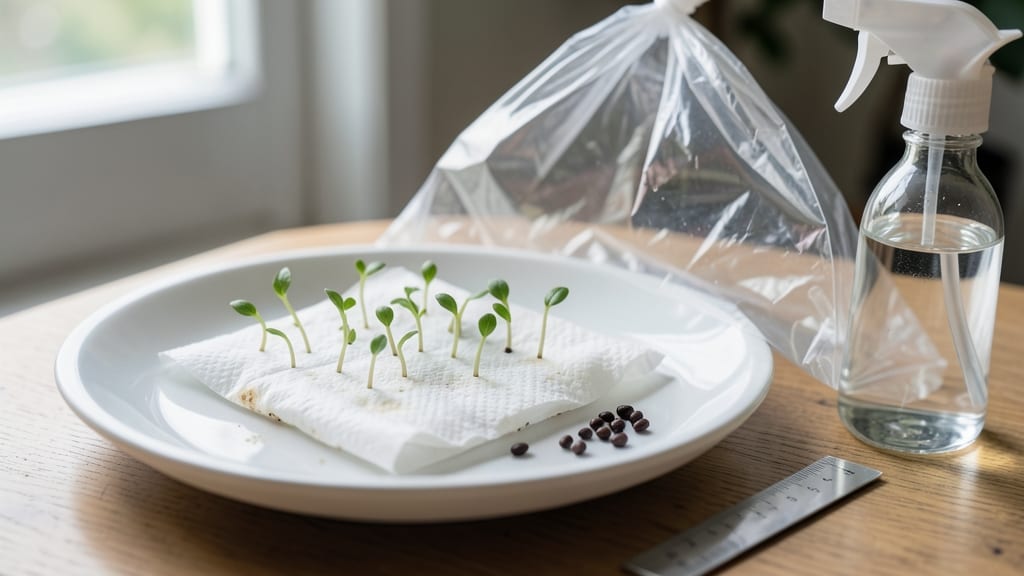
Germinating rose seeds in paper towels cuts weeks off the waiting game. ✨ I’ve tried every method—this one delivers 7-day sprouts when done right, and it’s the secret to bypassing the 30-day mystery of soil germination.
The trick is simple: scarify seeds (nick the hard shell), sandwich them between damp paper towels, and seal them in a bag. No fancy equipment—just a spray bottle, patience, and a warm spot.
Most seeds sprout within a week, though some stubborn ones take longer. The key is keeping that towel moist but not soggy—mold is the silent killer here.
What you’ll end up with are tiny, fragile seedlings ready for soil. They’re delicate at first, but with careful transplanting, they’ll grow into strong roses. The best part? You avoid the disappointment of seeds that never sprout—this method reveals their potential early.
Works for heirloom roses, hybrid teas, or even those wild seeds from your favorite bloom. Just remember: speed doesn’t mean skipping steps. Every seed needs its time, even the fast ones.
📚 In This Guide
- What you need
- Instructions
- Tips and common mistakes
- Wrapping up and next steps
What you need
- ● Rose seeds: Fresh, clean seeds (10–20, depending on desired quantity). Pro tip: 💡 Harvest from healthy, organic roses for best results!
- ● Paper towels: 2–3 unbleached, white paper towels (no prints or chemicals). Why? They retain moisture and allow airflow.
- ● Plastic bags or ziplock bags: 1–2 resealable bags (quart-sized or larger). Bonus: Use a clear bag to monitor progress easily!
- ● Spray bottle: 1 (with a fine mist setting) for gentle hydration. ✨ Avoid soaking—seeds need airflow!
- ● Scissors or knife: 1 (for trimming seeds if needed).
- ○ Labeling tape/pens: Optional but helpful for tracking seed varieties.
- ○ Warmth: A consistent temperature of 70–75°F (21–24°C). Use a seedling heat mat (optional) if your home runs cooler.
- ● Indirect light: Place your setup near a bright window (no direct sun yet—seeds hate overheating!).
- ● Patience: Sprouts may take 7–14 days to appear. Stay consistent!
- ● Humidity dome: A clear plastic lid or cloche to trap moisture (great for faster germination).
- ● Grow lights: If natural light is limited, a simple LED bulb keeps seeds happy.
- ● Notebook/journal: To log seed types, planting dates, and sprout progress.
- ○ Fungicide spray: (Optional but smart!) A light spray of hydrogen peroxide (3%) every few days prevents mold.
Step-by-step instructions for germinating rose seeds in paper towels
Here's how to jumpstart those rose seeds with a method that cuts germination time in half.
🌱 Step 1: Prepare the Seeds and Paper Towels
Start by soaking your rose seeds in lukewarm water for 24 hours—this softens the tough outer coating and speeds up sprouting. I use a small bowl and cover the seeds completely, then let them sit on the counter. After soaking, drain them and gently blot them dry with a clean paper towel.
Cut your paper towels into 4-inch squares—one for each seed. Fold each square into a loose packet, leaving the center open like a tiny envelope. This keeps the seed contained while allowing airflow. Moisten each folded towel with a spray bottle until damp but not dripping. You want it to feel like a wrung-out sponge.
💧 Step 2: Create the Germination Environment
Place each soaked seed in its folded paper towel packet, then stack them into a quart-sized plastic bag. Seal the bag loosely—just enough to trap humidity but still allow a little airflow. I poke a few tiny holes in the bag with a toothpick if it feels too airtight.
Here's the trick: place the bag in a warm, dark spot—I like using the top of my fridge or inside a closed cabinet. The ideal temperature is 70-75°F. Check the towels every 2-3 days and mist lightly if they feel dry to the touch. You'll see the first signs of life in 3-5 days—tiny white roots pushing through the paper.
☀️ Step 3: Monitor and Transplant Sprouted Seeds
Once the roots reach about ½ inch long (usually 5-7 days), it's time to move them. Open the bag and gently unfold the paper towel, keeping the seed and its root intact. I use a toothpick to carefully lift the seedling without damaging the delicate root.
Plant each seedling into its own 2-inch pot filled with sterile seed-starting mix. Press the soil lightly around the root, leaving the seed just below the surface. Water gently from the bottom to avoid disturbing the seed. Place the pots under a grow light or in a bright, indirect window—rose seedlings need light to prevent leggy growth.
⏰ Step 4: Care for New Seedlings
Keep the soil consistently moist but never soggy—rose seedlings hate wet feet. I use a spray bottle to water lightly every 2-3 days until you see the first true leaves (those are the second set after the initial seed leaves). This usually happens in 2-3 weeks.
Once the seedlings have 2-3 sets of true leaves, you can transplant them into slightly larger pots. I harden them off by placing them outside in a shaded spot for 1 hour daily before moving them to the garden. Real talk: rose seedlings grow slowly, so patience is key—don't rush the process.
Tips & tricks for germinating rose seeds faster
Here's what I learned after experimenting with different methods to speed up those stubborn rose seeds.
Soaking Secret: The 24-hour soak is non-negotiable for breaking rose seed dormancy, but here's the thing—use distilled water instead of tap water if possible. Tap water's chlorine can inhibit germination. I also add a drop of hydrogen peroxide (3%) to the soaking water to prevent mold, especially if your seeds look old or wrinkled. After soaking, don't skip the blotting step—excess moisture in Step 1 can lead to moldy towels later.
Temperature Matters: While 70-75°F is ideal, most homes struggle to maintain consistent warmth in dark spots. I solved this by placing my bag inside a small cooler with a heating pad on low (set to 75°F) during winter months. For summer, a sunny windowsill works fine as long as you keep the bag out of direct sunlight—rose seeds need warmth, not light, during germination. Check your spot with a thermometer if you're unsure.
Root Check: In Step 3, when you're looking for that ½-inch root, here's a pro move: shine a flashlight through the paper towel at an angle. The root will cast a shadow that's easier to spot than trying to see it directly. I also recommend marking the back of each towel with a pencil before planting—this helps you track which seed is which when you transplant, especially if you're working with multiple varieties.
Pro Tips for Germinate Rose Seeds In Paper Towel
- Here's what I learned after experimenting with different methods to speed up those stubborn rose seeds.
- Soaking Secret: The 24-hour soak is non-negotiable for breaking rose seed dormancy, but here's the thing—use distilled water instead of tap water if possible.
- Temperature Matters: While 70-75°F is ideal, most homes struggle to maintain consistent warmth in dark spots.
Frequently asked questions
Got questions about germinating rose seeds in paper towels? You’re not alone! Here are some of the most common concerns—and their straightforward answers—to help you succeed.
How long does it take for rose seeds to germinate in a paper towel?
Most rose seeds sprout within 7–14 days when using the paper towel method, provided they’re kept warm (around 70–75°F) and moist. Patience is key—some varieties may take longer, especially if the seeds are old or stored improperly. Check daily for tiny sprouts!
Can I use any paper towel for germinating rose seeds?
Yes, but opt for unbleached, seedling-safe paper towels (like those labeled for gardening). Avoid colored or scented towels—they may contain chemicals that inhibit germination. Fold them into a thick, moist pad (not soggy!) for best results.
What’s the best temperature for germinating rose seeds?
Keep the paper towel setup in a warm, dark spot (like on top of a fridge or near a sunny window with indirect light). Ideal temps are 70–75°F. If your home is cooler, a seedling heat mat ($10–$15) can speed up germination by mimicking spring conditions.
What if my rose seeds aren’t sprouting after 2 weeks?
Don’t panic! Try these fixes:
- Check moisture: The paper towel should stay damp (like a wrung-out sponge), not wet.
- Test viability: Soak seeds in warm water for 24 hours—if they sink, they’re likely viable.
- Try stratification: Place sealed seeds in the fridge for 4–6 weeks to break dormancy.
- Consider fresh seeds: Older seeds (>2 years) often germinate poorly.
Can I skip the paper towel and use soil directly?
Yes! You can plant seeds directly in moist potting mix (1/4" deep) and cover with plastic wrap to retain humidity. However, the paper towel method gives you faster visibility of sprouts and lets you transplant seedlings more gently. For best results, use both: germinate in a towel, then transfer to soil once sprouts have 2–3 leaves.
Wrapping up and next steps
Germinating rose seeds in paper towels is a simple, cost-effective way to kickstart your gardening journey—no fancy equipment needed! With patience and the right conditions, you’ll see those tiny sprouts emerge in just 7 days.
Once your seedlings are ready, the real fun begins: transplanting them into soil and nurturing them into beautiful roses. 🌱
Ready to take the next step? Transplant your sprouted seeds carefully into a well-draining potting mix, keep them warm, and watch your garden grow! Happy gardening! 🌸