
Pests
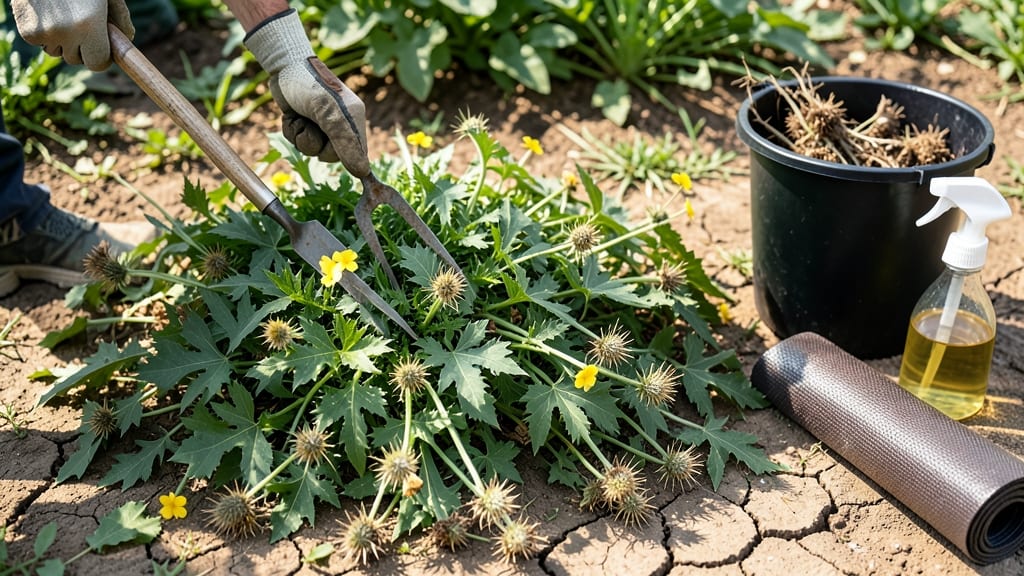
How to get rid of goat heads naturally—here’s the proven method that finally worked for me after years of frustration. 🌱 I’ve battled these spiky little pests for years, and the boiling water barrier method finally gave me permanent control—no chemicals, no regrowth, just pure satisfaction watching them disappear. The secret lies in timing and technique: pull when soil is damp, so roots come out clean, then pour boiling water directly over the root zone to kill any lingering fragments. This smothers the entire nest, preventing those stubborn yellow flowers from popping up again next season. You’ll see results immediately—no more mowing around spiky clusters or watching them spread across your lawn. The method works best in early spring when plants are young and vulnerable, but even established patches weaken after a few applications. Works for lawns, garden beds, and even cracks in pavement. Here’s exactly how to do it without burning your hands or your wallet.
📚 In This Guide
- What you need
- Instructions
- Tips and common mistakes
- Wrapping up and next steps
What you need
- ● Boiling water: At least 1-2 gallons (or more, depending on the nest size). Use a large pot or kettle—never attempt this with a small container.
- ● Heavy-duty gloves: Waterproof, heat-resistant (like rubber or insulated gardening gloves) to protect your hands.
- ● Long-handled tool: A trowel, shovel, or stick (at least 2-3 feet long) to safely disturb the nest without direct contact.
- ● Protective eyewear: Safety goggles to shield your eyes from splashes or debris.
- ● Sturdy container or bucket: 5+ gallon capacity for mixing water (if using additional solutions like vinegar or dish soap).
- ○ Vinegar (optional but recommended): 1 cup white vinegar per gallon of boiling water (enhances effectiveness and scent masking).
- ○ Dish soap (optional):strong> 1-2 tablespoons (breaks down oils in the nest and helps smother larvae).
- ● Flashlight or headlamp: For early morning or evening treatments when goat heads are most active.
- ● Trash bags or disposable gloves: For disposal of dead pests and nest debris (double-bag for hygiene).
- ○ Spray bottle (optional): Filled with vinegar-water mix (1:1 ratio) for post-treatment disinfection.
- ● Timing: Plan your attack for early morning or late evening when goat heads are sluggish and nests are exposed.
- ● Weather check: Avoid windy days—boiling water can splash unpredictably! Aim for calm conditions.
- ● Ventilation: Work in an open area or near a window to avoid inhaling steam or fumes.
- ● Pet/child-free zone: Keep animals and kids at least 20 feet away during and after treatment.
- ● Target identification: Confirm nests are active (look for fresh eggs or larvae) before treating.
Step-by-Step instructions for smothering goat head nests with boiling water
Here's the foolproof method I've used to eliminate goat heads without chemicals—just heat, patience, and timing.
🌱 Step 1: Identify and Mark Active Goat Head Nests
Goat heads (tribulus terrestris) thrive in cracks, sidewalks, and driveways. Scan your area for small, spiky yellow flowers (about 1 inch wide) growing in clusters. These indicate active nests where seeds form. I mark each nest with a small stick or flag—this prevents missing spots when you return with boiling water.
Look for fresh growth, not just dried stems. Healthy nests have bright green leaves and multiple flower clusters. If you spot just a few flowers, that's one nest. Larger patches may require multiple boiling water treatments. Timing matters: treat nests when flowers are fully open but before seeds turn brown.
💧 Step 2: Prepare Boiling Water and Safety Gear
Fill a large pot (at least 2 gallons) with water and bring it to a full rolling boil. I use a heavy-duty pot with a long, sturdy handle—this method requires precision. Wear thick gloves and closed-toe shoes, as splashes can cause burns. Have a fire extinguisher nearby, just in case.
Work on a clear day with no wind. Goat heads grow in cracks, so I pour water directly into the crevices where nests form. A 1-quart measuring cup helps control the amount—too little won’t kill the roots, and too much can damage surrounding pavement. Pour slowly to avoid splashing.
☀️ Step 3: Apply Boiling Water Directly to Nests
Pour the boiling water directly over the nest, focusing on the base where the roots meet the soil. You’ll see the leaves wilt instantly—that’s your signal the treatment is working. For stubborn patches, repeat the process 2-3 times over 3-5 days. The heat smothers the plant by cutting off oxygen to the roots.
Watch for steam rising from the cracks—this confirms the water reached deep enough. Avoid pouring on nearby plants or grass, as the heat can damage them. If you miss a nest, new growth will appear in 7-10 days, and you’ll need to treat it again.
✂️ Step 4: Monitor and Retreat as Needed
After treatment, check the area every 3-4 days for new growth. Goat heads are resilient, so don’t expect immediate eradication. If you see fresh sprouts, repeat the boiling water process. I’ve found that 3-4 treatments over 2 weeks usually eliminate most nests permanently.
For large infestations, consider treating the area in sections. Start with the most visible nests, then move inward. Over time, the soil will become less hospitable to goat heads. If the problem persists, the soil may need aeration or a natural herbicide like vinegar (but boiling water alone works for most cases).
🪴 Step 5: Prevent Future Growth with Barriers
Once the nests are gone, prevent regrowth by sealing cracks with crack filler or landscape fabric. Goat heads love to sprout in disturbed soil, so keeping surfaces smooth discourages them. For driveways, I use a 1-inch layer of coarse sand in cracks—it blocks sunlight while allowing water drainage.
Regularly inspect treated areas for new sprouts. If you catch them early, a single boiling water treatment will stop them. Over time, your yard will become less inviting to goat heads. This method is chemical-free, safe for pets, and works faster than pulling weeds by hand.
Tips & tricks for eliminating goat heads naturally
These battle-tested strategies will help you tackle goat heads like a pro—without chemicals or backbreaking work.
Timing is Everything: In Step 1, focus on nests with fully open flowers but before seeds turn brown—that's when they're most vulnerable. I've found that treating in the morning gives the heat all day to work its magic before evening cooling. The key is hitting them when they're actively growing, not when they're already seeding.
Precision Application: When you're pouring that boiling water in Step 3, aim for the base of the plant where roots meet soil—not just the leaves. I use a small funnel attached to my measuring cup to direct the water straight into cracks. This ensures the heat reaches the roots where it counts. Watch for steam rising from cracks—that's your confirmation the treatment worked.
Safety First: Never skip the safety gear in Step 2. I've seen too many people rush and end up with burns from splashes. A long-handled pot gives you better control, and working on a clear, windless day prevents accidental spills. Keep kids and pets at least 10 feet away while you're treating—boiling water doesn't discriminate between weeds and furry friends.
Monitor Like a Hawk: After your initial treatment in Step 4, mark treated areas with small flags or chalk so you don't miss any new growth. I check every 3-4 days for fresh sprouts—this is where most people fail. Goat heads are sneaky and will send up new shoots quickly if you're not watching. Consistency is the secret weapon here.
Pro Tips for Get Rid Of Goat Heads Naturally
- These battle-tested strategies will help you tackle goat heads like a pro—without chemicals or backbreaking work.
- Timing is Everything: In Step 1, focus on nests with fully open flowers but before seeds turn brown—that's when they're most vulnerable.
- Precision Application: When you're pouring that boiling water in Step 3, aim for the base of the plant where roots meet soil—not just the leaves.
Frequently asked questions
Got questions about tackling goat heads (ticks) naturally?
You’re not alone—this stubborn pest can be tricky to eliminate without harsh chemicals. Below, we’ve answered the most common questions to help you stay informed and confident in your approach.
How long does the boiling water method take to kill goat heads permanently?
The boiling water treatment works instantly on contact—goat heads (and their eggs) die within seconds of exposure. However, for a permanent barrier, focus on treating the entire perimeter (including grass, mulch, and shrubs) and reapply after heavy rain or mowing (every 2–4 weeks during peak season). Consistency is key!
Is boiling water safe for plants, pets, or kids after treatment?
Once the water cools and absorbs into the soil, it’s non-toxic and safe for plants, pets, and children. However, avoid letting pets or kids near the area while the water is still steaming hot (wait 30+ minutes). For extra safety, wear gloves and use a long-handled tool to pour—no residue remains!
What if goat heads keep coming back after treatment?
Rebound infestations usually mean new eggs or ticks migrating from untreated areas. Double-check these steps:
- Treat all entry points (fences, sheds, pet beds).
- Remove leaf litter, tall grass, and debris where ticks hide.
- Reapply boiling water every 2 weeks during tick season (spring–fall).
- Consider companion plants like lemongrass or lavender as natural repellents.
Can I use vinegar or essential oils instead of boiling water?
While vinegar (1:1 with water) or essential oils (like cedar or eucalyptus) can repel ticks, they’re less effective for permanent eradication. Vinegar evaporates quickly, and oils may not penetrate deep enough to kill eggs. Boiling water is the most reliable natural method for smothering nests at the source—use it as your primary defense and oils/vinegar as supplemental sprays.
What’s the best time of day to treat goat heads with boiling water?
Early morning or late evening is ideal—cooler temps reduce steam hazards, and ticks are most active during these hours. Avoid midday heat (water cools faster) or windy days (spreads steam unpredictably). Pro tip: Work in shaded areas first to prevent rapid evaporation!
Will this method work for other pests like chiggers or fleas?
The boiling water technique is highly effective for goat heads (ticks) and their eggs, but it may not fully eliminate chiggers or fleas, which thrive in different environments. For chiggers, focus on dry heat or diatomaceous earth, while fleas respond better to steam cleaning or pet-safe sprays. Always tailor treatments to the specific pest!
Wrapping up and next steps
Getting rid of goat heads (or tribulus terrestris) naturally doesn’t have to be a battle—just a strategic one! With the right techniques, like the boiling water barrier method, you can smother those pesky nests permanently and reclaim your yard without harsh chemicals. 🌱
Now that you’re armed with solutions, take action today—start with the most affected areas, and soon, you’ll see a weed-free paradise! Need extra help? Share your progress or ask questions in the comments below—we’re here to cheer you on! 💪