
Propagation
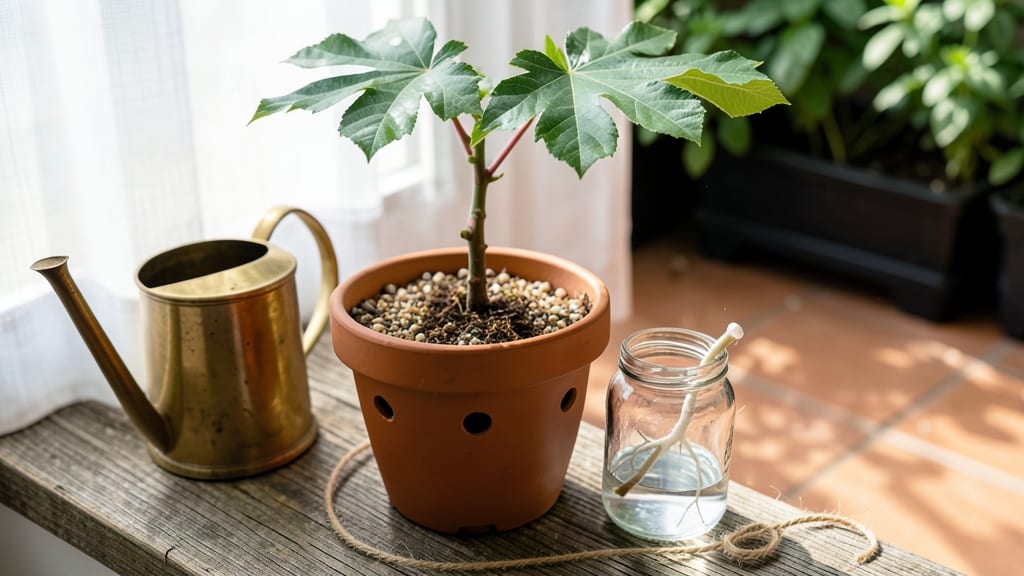
That first ripe fig from your grocery store could grow into a tree. 🌱 I’ve propagated fig trees this way three times now—each time, the surprise of watching roots sprout from something as simple as a fruit still makes my gardening friends skeptical.
The secret? Patience and the right conditions to coax those roots into action.
You’ll need just a few supplies: a fresh, organic fig (conventional ones often have growth inhibitors), a jar of water, and a sunny windowsill. The process starts with removing the stem from the fig’s top—this is your cutting—and placing it in water.
Within 2-4 weeks, you might see tiny roots forming if you’ve got the timing right. Most beginners rush this step, but letting the cutting callous over for a day first makes all the difference.
Once roots appear, transplant into soil and watch your little tree grow. It’ll take 6-12 months before you see significant growth, but the payoff? A hardy fig tree that produces fruit in just 2-3 years.
The best part? You’ll avoid nursery prices and get a plant uniquely yours, with the exact flavor profile you love.
Troubleshooting is half the fun—rot means your cutting’s too wet, while slow growth usually signals insufficient light. Keep the water fresh, rotate the jar for even light exposure, and you’ll be well on your way to a thriving fig tree.
Even if the first attempt fails, you’ll learn something valuable for the next try.
📚 In This Guide
- What you need
- Instructions
- Tips and common mistakes
- Wrapping up and next steps
What you need
- ● Fresh, ripe figs: Choose organic or pesticide-free figs (3–5 per attempt). Look for ones with a stem—this is where roots will sprout!
- ● Sharp scissors or pruning shears: Sterilized to avoid contamination (1 pair).
- ● Clean water: Filtered or distilled (1–2 gallons). Tap water is fine if left out for 24 hours to dechlorinate.
- ● Small glass or jar: Clear, at least 8–12 oz (240–360 mL) with a wide mouth (1–2 jars). A mason jar works great!
- ● Pebbles or small stones: Smooth, clean river rocks or aquarium gravel (½ cup). These keep the fig stem submerged but above water.
- ● Patience: Roots can take 4–8 weeks to appear—consistency is key!
- ○ Rooting hormone: Optional gel or powder to speed up root growth (1 small bottle).
- ● Humidity dome: Plastic wrap or a clear plastic bag to retain moisture (1 sheet).
- ● Grow lights: If placing near a window isn’t an option (1–2 LED bulbs). Figs love bright, indirect light.
- ● Notebook: To track water changes, root progress, and growth milestones!
Step-by-step instructions for growing fig trees from figs
Here’s how I’ve successfully rooted fig cuttings—no special tools needed, just patience and a sunny windowsill.
🍇 Step 1: Select and Prepare the Fig
Choose a ripe fig that’s slightly firm but gives just a bit when pressed—overripe ones rot before roots form. Cut a 4-6 inch stem from the base of the fig, making sure it includes 2-3 nodes (those little bumps where leaves grow). Remove any leaves from the lower half of the stem to keep it clean.
This is the moment that matters: the stem must be freshly cut—older cuttings dry out too fast. Place it in a glass of room-temperature water immediately, leaving just the top node above water. Figs are stubborn starters, so don’t rush this step.
💧 Step 2: Root in Water Under Bright Light
Fill a clear glass or jar with enough water to cover the bottom 1-2 inches of the stem. Use filtered or rainwater if possible—tap water’s chlorine can slow rooting. Set the jar in a spot with bright, indirect light (like a south-facing window) where the temperature stays between 65-75°F. Direct sun will overheat the water and cook the stem.
Change the water every 3-4 days to prevent bacteria buildup. You’ll see tiny white roots in 4-6 weeks—that’s your signal everything’s working. If the water gets cloudy or smells funky, dump it and refresh immediately.
☀️ Step 3: Transition to Soil When Roots Form
Once roots reach 1-2 inches long, it’s time to plant. Fill a 6-inch pot with well-draining potting mix (I blend equal parts potting soil and perlite). Dig a hole deep enough to bury the stem up to the first node—this encourages stronger root growth lower down.
Gently remove the cutting from water, shake off excess moisture, and place it in the hole. Press the soil lightly around the stem so it stands upright. Water lightly to settle the soil, then move the pot to a bright, sheltered spot for a week while the roots adjust.
🌱 Step 4: Care for Your New Fig Tree
Keep the soil evenly moist but not soggy—figs hate wet feet. After two weeks, gradually introduce it to morning sun for a few hours daily, then full sun over 7-10 days. You’ll know it’s thriving when new leaves appear—usually within 4-6 weeks of transplanting.
Here’s the thing—figs grow fast once established. Fertilize lightly with a balanced 10-10-10 formula every 4-6 weeks during spring and summer. By next year, your cutting will be a 3-foot bush ready for pruning or fruiting.
Tips & tricks for growing fig trees from figs
Here's what I learned after rooting my first fig cutting—these tricks cut the guesswork and boost success.
Timing is Everything: The moment you cut the stem, it starts drying out. Work quickly to prepare your glass of water before cutting—don't let that stem sit exposed even for a minute. I've ruined cuttings by taking too long to set up the water, so have everything ready: glass, water, and a clean cutting tool. The faster you can get that stem submerged, the better your chances.
Light Matters More Than You Think: That bright, indirect light spot isn't just about warmth—it's about creating the perfect environment for root development. South-facing windows work best, but if you don't have one, use a grow light 6-12 inches above the cutting. I've seen cuttings fail in dim rooms where they looked healthy but never rooted. Watch for yellowing leaves—they're a sign your cutting needs more light.
Water Quality Can Make or Break It: Tap water's chlorine can inhibit root growth, so if possible, use filtered or rainwater. If you must use tap water, let it sit out uncovered for 24 hours to allow chlorine to evaporate. I've had cuttings that took twice as long to root when using untreated tap water. The water should always be room temperature—cold water shocks the stem and slows root formation.
Rooting Timeline Reality Check: Those 4-6 weeks to see roots can feel like forever, but don't rush it. I've tried forcing the process by using rooting hormones, but figs don't need them. Be patient—consistent care pays off. Keep track of when you started and celebrate small milestones like the first tiny white root appearing. That's when you'll know you're on the right track!
Pro Tips for Grow A Fig Tree From A Fig
- Here's what I learned after rooting my first fig cutting—these tricks cut the guesswork and boost success.
- Timing is Everything: The moment you cut the stem, it starts drying out.
- Light Matters More Than You Think: That bright, indirect light spot isn't just about warmth—it's about creating the perfect environment for root development.
Frequently asked questions
Got questions about growing a fig tree from a fig? You’re not alone! Here are answers to the most common queries to help you propagate like a pro.
How long does it take for a fig cutting to root in water?
A fig cutting typically takes 4–8 weeks to develop roots in water, depending on temperature and care. Keep it in bright, indirect light and change the water weekly. Patience is key—roots may appear slowly at first!
Can I use any fig from the grocery store to grow a tree?
Yes, but only fresh, organic figs work best—avoid waxed or treated varieties. Choose plump, ripe figs with visible seeds (like Black Mission or Brown Turkey). Store-bought figs may have fewer viable seeds, but it’s worth a try!
What if my fig cutting rots before rooting?
Rotting is common if the cutting sits too long in water or lacks airflow. Trim the stem just below the waterline if brown/mushy spots appear, and refresh the water. Use a rooting hormone or cinnamon powder on the cut end to prevent infection.
Should I plant the rooted cutting directly in soil or wait?
Wait until roots are 2–3 inches long before transplanting. Harden off the cutting by placing it near sunlight for a few hours daily. Use well-draining soil and a pot with drainage holes to avoid soggy roots.
Can I grow a fig tree indoors year-round?
Fig trees thrive indoors with 6+ hours of sunlight (south-facing window or grow lights). Keep temps between 60–80°F and water when the top inch of soil dries. Just be patient—indoor figs may take longer to fruit.
Wrapping up and next steps
Growing a fig tree from a fig is a rewarding journey that blends patience with the joy of nurturing life! 🌱 With just a ripe fig, a little water, and consistent care, you’ve unlocked the secret to expanding your green thumb’s reach.
Whether you’re dreaming of a backyard orchard or a container-friendly plant, the process is simpler than you think—and the sweet rewards make every step worthwhile.
Now that you’re armed with the know-how, take the next step: grab that fig, follow the steps, and watch your tiny cutting transform into a thriving tree. Share your progress with fellow plant lovers, and soon, you’ll be harvesting your own homegrown figs—literally from the ground up! 🍇✨