
Propagation
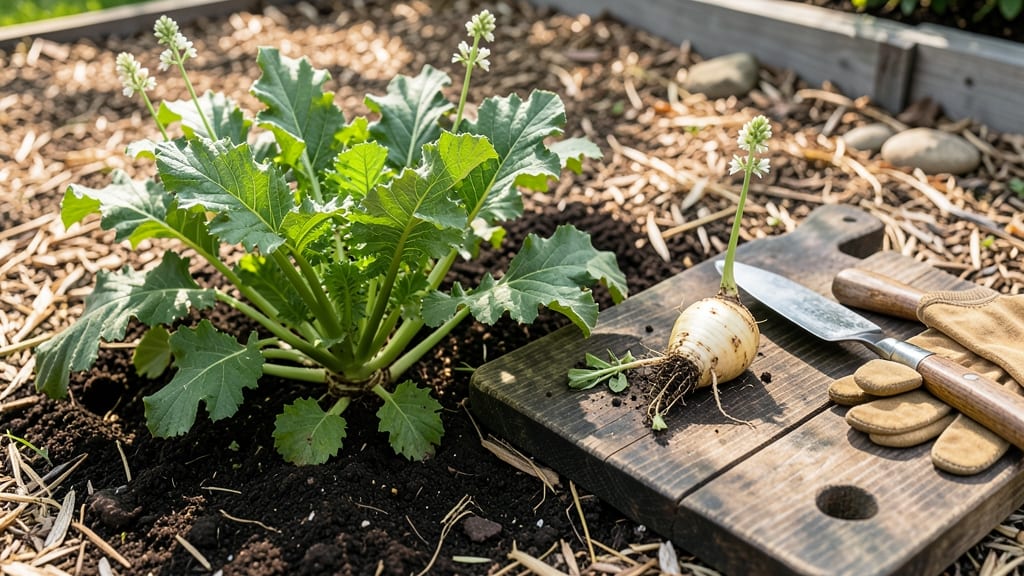
That store-bought horseradish root hiding in your fridge could grow into a permanent harvest—if you know the trick. 🌱 I’ve turned limp grocery-store roots into vigorous plants that spread faster than weeds, and you can too with just a few simple steps.
Start with a firm, plump root (no shriveled nubs)—cut off the top inch to expose fresh growth, then plant it 2 inches deep in moist, well-draining soil. Horseradish thrives in full sun but tolerates partial shade, making it perfect for backyard plots or even large containers.
The key? Consistent moisture—never let it dry out, or you’ll trigger dormancy.
Within 4-6 weeks, you’ll see shoots emerge, and by next season, your patch will spread aggressively—digging up roots is optional if you love fresh horseradish on demand. Just be warned: this plant doesn’t play nice with boundaries, so plant it where it can roam.
For container growing, use a 5-gallon pot with drainage holes—just monitor watering closely. And if pests like flea beetles appear, a row cover saves the day. The payoff? Fresh horseradish for years, straight from your garden.
📚 In This Guide
- What you need
- Instructions
- Tips and common mistakes
- Wrapping up and next steps
What you need
- ● Store-bought horseradish root: 1–2 fresh, firm roots (avoid pre-peeled or wilted ones—look for knobby, healthy-looking roots with a few sprouts if possible!)
- ● Well-draining potting mix: 1–2 bags (choose a high-quality, organic blend or mix with perlite/vermiculite for aeration)
- ● Container or garden bed: Option 1: A 6–8 inch deep pot (at least 6 inches in diameter) with drainage holes
- ● Option 2: A garden bed in a sunny, well-drained spot (horseradish roots can spread aggressively, so contain them if space is limited!)
- ● Watering can or spray bottle: For gentle, even moisture (horseradish hates soggy soil!)
- ● Pruning shears or sharp knife: For trimming roots or harvesting
- ○ Organic mulch (optional but helpful): Straw, shredded leaves, or compost to retain moisture and suppress weeds
- ● Rooting hormone: Speeds up sprout growth if your root is slow to wake up
- ● Compost or worm castings: Boosts nutrient-rich soil for faster, healthier growth
- ● Garden gloves: Horseradish sap can irritate skin—protect your hands!
- ● Row cover or shade cloth: If growing in hot climates (horseradish prefers cooler temps)
- ● Label or marker: To track planting dates (horseradish can take 6–12 months to mature!)
Step-by-Step instructions for reviving and regrowing horseradish
Here's how I transform a wilted store-bought root into a thriving, pungent plant in just a few weeks.
🪴 Step 1: Select and Prepare the Root
Choose a firm, unblemished horseradish root from the produce section—avoid any with soft spots or shriveled ends. The larger the root, the more vigorous your plant will be. Rinse it gently under cool water to remove any dirt, then pat dry completely with a paper towel.
Using a sharp knife, trim off any damaged sections and cut the root into 2-3 inch chunks, ensuring each piece has at least one bud or eye (the small bumps where new growth emerges). These buds are where your plant's energy will focus, so don't cut too close to them. I like to keep 2-3 buds per chunk for maximum regrowth potential.
💧 Step 2: Soak to Stimulate Growth
Fill a shallow container with room-temperature water and submerge the root chunks for 6-8 hours. This hydrates the cells and kickstarts metabolic activity. You'll see tiny bubbles forming around the buds—this is a good sign! Change the water halfway through if it becomes cloudy.
After soaking, drain the water completely and let the chunks air-dry for 10-15 minutes. This prevents rot when you plant them. If you're impatient, you can skip the drying step and plant immediately, but the roots may take slightly longer to establish.
☀️ Step 3: Plant in Well-Draining Soil
Fill a 6-8 inch deep container with a mix of 50% potting soil and 50% perlite or coarse sand to ensure excellent drainage—horseradish roots rot quickly in soggy conditions. Horseradish thrives in full sun to partial shade, so place your container where it gets at least 4-6 hours of sunlight daily.
Plant the soaked root chunks with the buds facing upward, about 2 inches below the soil surface. Space them 4-6 inches apart if planting multiple roots in one container. Gently firm the soil around them to eliminate air pockets, then water lightly until the soil feels evenly moist but not saturated.
🌱 Step 4: Maintain Ideal Conditions for Regrowth
Keep the soil consistently moist but never waterlogged—horseradish roots prefer moderate moisture. Water when the top 1 inch of soil feels dry to the touch, typically every 2-3 days depending on your climate. You'll know you're doing it right when you see new shoots emerging from the buds in 2-4 weeks.
Once the shoots reach 4-6 inches tall, you can transplant them into a larger container or directly into the garden. Horseradish is hardy and can tolerate temperatures down to 10°F, but it grows best in 60-75°F soil. If your area experiences frosts, wait until after the last frost date to plant outdoors.
✂️ Step 5: Harvest and Encourage Spread
You can harvest the roots anytime after 6-8 weeks of growth, but they'll be most pungent in their second year. To harvest, gently dig around the plant and lift it from the soil. Rinse off any dirt and store in a cool, dark place for up to 6 months. The more you harvest, the more the plant will spread—horseradish is aggressive and will multiply if left undisturbed.
If you're growing horseradish in a container, you can divide the roots every 2-3 years to keep the plant healthy. Simply dig up the root mass, separate the chunks, and replant them. This also gives you more plants to share with friends or use in your cooking!
Tips & tricks for perfect horseradish regrowth
These little details make all the difference between a thriving horseradish plant and one that fizzles out.
Root Selection: In Step 1, don't overlook the importance of those buds—each chunk should have at least one healthy eye. I've tried using chunks with only tiny buds, and they either fail to sprout or produce weak shoots. Look for roots with plump, firm buds that look ready to burst with energy. The more buds per chunk (up to 3), the better your chances of vigorous regrowth.
Soaking Strategy: The 6-8 hour soak in Step 2 is your secret weapon for jumpstarting growth. I've found that adding a small pinch of sea salt to the water (about 1/4 teaspoon per quart) helps prevent bacterial growth and keeps the water cleaner longer. This is especially helpful if you're soaking multiple chunks—the cleaner the water, the healthier your roots will be.
Planting Depth: When planting in Step 3, burying the chunks only 2 inches deep might seem shallow, but this is intentional. Horseradish roots need access to air to prevent rot, and planting too deep can suffocate them. The buds should be just below the soil surface, not buried deep. I like to make a small mound of soil and nestle the chunks into it rather than digging holes.
Light Exposure: The 4-6 hours of sunlight requirement in Step 3 can be tricky if you're growing indoors. If natural light is limited, supplement with a grow light placed 6-12 inches above the plants for 12-14 hours daily. Horseradish is a sun-lover, and insufficient light will result in leggy, weak growth. I've seen dramatic improvements in plant health after adding just a few hours of artificial light.
Pro Tips for Grow Horseradish From Store Bought Roots
- These little details make all the difference between a thriving horseradish plant and one that fizzles out.
- Root Selection: In Step 1, don't overlook the importance of those buds—each chunk should have at least one healthy ey...
- Soaking Strategy: The 6-8 hour soak in Step 2 is your secret weapon for jumpstarting growth. I've found that adding a...
Frequently asked questions
Got questions about reviving and regrowing horseradish from store-bought roots? You’re not alone! Here are some of the most common concerns—and their straightforward answers—to help you grow like a pro.
Can I grow horseradish from any store-bought root, or does it need to be organic?
You can absolutely grow horseradish from conventional store-bought roots! While organic roots may have fewer pesticides, horseradish is hardy and can still thrive. Just rinse the root thoroughly before planting to remove any residue. Pro tip: Choose a root with multiple "eyes" (buds) for better regrowth chances!
How long does it take for horseradish to regrow after planting?
With proper care, you’ll see green shoots in 2–4 weeks, and the root will start expanding in 6–8 weeks. Patience is key—horseradish grows slowly but steadily. Keep the soil moist and avoid disturbing the root until it’s well-established!
What if my horseradish root doesn’t sprout? What went wrong?
No sprouts? Don’t panic! Common issues include:
- Dormancy: Store-bought roots may need 2–4 weeks to wake up. Try soaking the root in water for 24 hours before replanting.
- Rot: Overwatering or soggy soil can kill the root. Ensure drainage and plant in well-aerated soil.
- No eyes/buds: Horseradish needs viable buds to sprout. Trim off any soft or mushy sections before planting.
Can I grow horseradish indoors or in containers?
Yes! Horseradish adapts well to containers, making it perfect for indoor growing (with a sunny windowsill or grow light). Use a 5-gallon pot or larger with drainage holes, and keep the soil consistently moist. Just be prepared for slower growth—indoor horseradish may take longer to mature than outdoor plants.
Do I need to harvest the entire root, or can I keep a piece for regrowing?
You can absolutely save a piece of your harvested horseradish for regrowing! Cut the root into 2–3 inch sections, ensuring each has at least one bud. Store the leftover pieces in a cool, damp paper towel until you’re ready to replant. This way, you’ll always have fresh horseradish on hand!
Is horseradish invasive? Should I worry about it spreading?
Horseradish is not invasive like mint or bamboo, but it can spread if left unchecked. To control growth:
- Plant in containers if space is limited.
- Harvest regularly to limit root expansion.
- Avoid planting near water sources or in disturbed soil where it might wander.
Wrapping up and next steps
Growing horseradish from a store-bought root is a rewarding and budget-friendly way to enjoy fresh, homegrown flavor year after year!
With just a little patience and the right conditions, you can transform a small piece into a thriving plant. Now that you’re equipped with the know-how, why not give it a try? Once your horseradish is established, consider sharing cuttings with friends or experimenting with new recipes—like homemade horseradish sauce or spicy roasted horseradish! 🌱