
Size
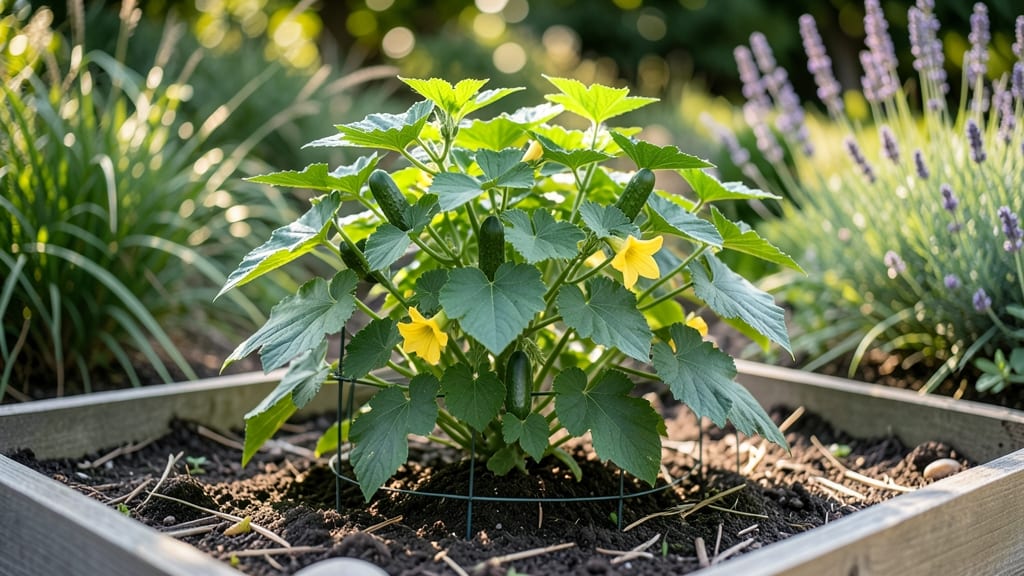
Grow mini cucumbers in full sun with well-draining soil, use trellises or cages for vertical support, and prune regularly to encourage bushier growth and smaller fruit. Plant seeds 1 inch deep, 12 inches apart, and harvest when 2-4 inches long for best flavor and yield.
Growing mini cucumbers starts with selecting the right variety, like 'Bush Champion' or 'Spacemaster,' which naturally produce smaller fruit.
These compact plants thrive in 6-8 hours of direct sunlight daily and prefer soil with a pH between 6.0 and 6.8 to maximize nutrient uptake. 🌱 The key to their success lies in proper spacing—giving each plant enough room prevents overcrowding, which can lead to disease and stunted growth.
Unlike their vining cousins, mini cucumbers often don't need as much vertical support, though a small cage or stake can still improve air circulation and make harvesting easier.
What sets mini cucumbers apart is their ability to produce consistently small fruit without needing extensive pruning. I've found that pinching off the tips of vines when they reach about 12 inches tall encourages the plant to focus energy on fruit production rather than climbing.
This technique works especially well in containers or small gardens where space is limited. Regular harvesting is another game-changer—removing ripe cucumbers prompts the plant to produce more, keeping the cycle going all season long.
💡 In This Article
- Optimal Growing Conditions for Compact Cucumber Varieties
- Pruning and Training Techniques for Bigger Harvests
Optimal growing conditions for compact cucumber varieties
Mini cucumbers thrive in conditions that balance sunlight, soil health, and temperature—think of them as sun-worshippers with precise needs. These compact varieties require 6-8 hours of direct sunlight daily to photosynthesize efficiently, but too much heat above 90°F can stress the plants, causing blossom drop.
The ideal temperature range sits between 70-85°F, where both growth and fruit development accelerate. Unlike their sprawling vining cousins, dwarf varieties like 'Bush Champion' have shallower root systems, so they're more sensitive to soil temperature fluctuations.
Soil composition makes all the difference—mini cucumbers demand well-draining soil with a pH between 6.0-6.8 to access essential nutrients like nitrogen and potassium. Sandy loam mixes well because it prevents root rot while retaining enough moisture (about 1-1.5 inches per week).
I've noticed that adding 2-3 inches of compost before planting boosts organic matter, which improves water retention and microbial activity. The key difference from vining types? Dwarf varieties need 20-30% less nitrogen to prevent excessive leaf growth at the expense of fruit production.
Spacing is where mini cucumbers earn their name—planting seeds 12 inches apart in rows 3-4 feet apart gives each plant enough room to develop without competing for nutrients. Overcrowding leads to poor air circulation, which invites powdery mildew, a common fungal disease that thrives in humid conditions.
For container growing, use pots at least 12 inches deep and wide, as dwarf varieties still need adequate root space to support their compact growth habit. 🌱 The trade-off? You'll sacrifice some yield per plant, but the convenience of small-scale harvesting makes it worth it.
Watering strategy is equally critical—deep watering 2-3 times per week (rather than daily shallow watering) encourages roots to grow downward, making plants more drought-resistant. Avoid wetting the leaves to prevent disease, and always water at the soil base.
Mulching with straw or shredded leaves helps maintain even moisture levels while suppressing weeds. What most gardeners don't realize is that mini cucumbers actually produce sweeter fruit when slightly water-stressed during flowering, as this triggers the plant to focus energy on fruit development rather than foliage.
One often-overlooked factor is companion planting. Mini cucumbers pair beautifully with herbs like dill and basil, which repel pests naturally, while marigolds deter nematodes. Avoid planting near potatoes or fennel, as these compete for nutrients and can stunt growth.
The right companions can increase your harvest by 20-30% while reducing the need for chemical interventions. For example, planting basil nearby improves both flavor and yield by attracting beneficial pollinators like bees.
Finally, consider your growing timeline. Mini cucumbers typically mature in 50-60 days from transplant, so starting seeds indoors 3-4 weeks before the last frost gives them a head start. Hardening off seedlings for 7-10 days before outdoor planting reduces transplant shock.
The result? A more robust plant that can handle early-season temperature swings and produce fruit consistently from the first harvest onward.