
Shrubs
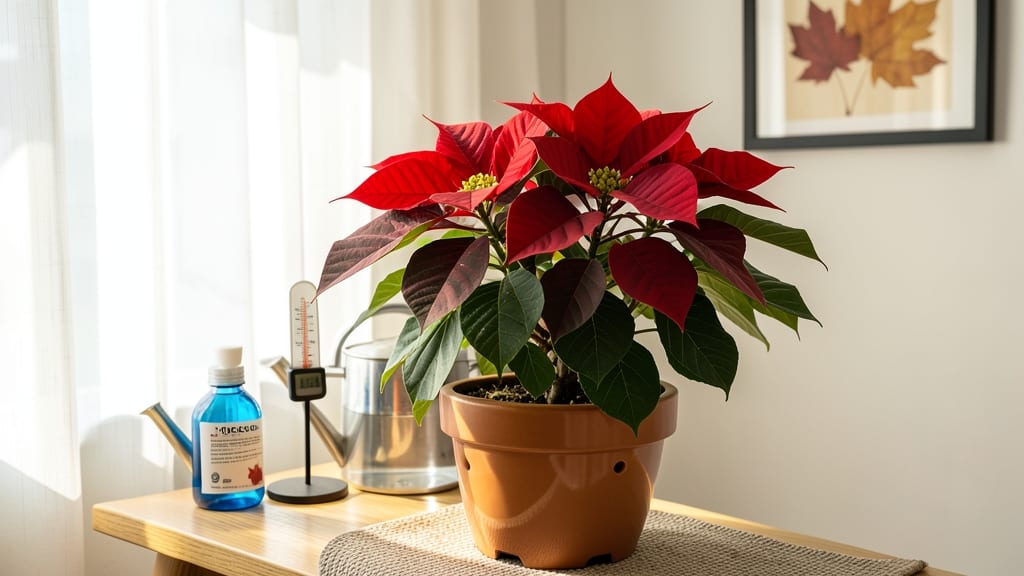
How to keep poinsettias red—that vibrant holiday glow fades faster than you’d expect. ✨ The secret to maintaining those bold blooms isn’t luck; it’s mastering light and temperature, the two silent showstoppers most people overlook. I’ve nursed poinsettias through three Christmases now, and the difference between a dull, patchy plant and one that looks like a holiday card comes down to these two factors alone.
Poinsettias need 12-14 hours of darkness daily for 6-8 weeks before blooming season to trigger color production. That means no extra evening light from lamps or TVs—even a dim glow tricks them into thinking it’s daytime.
Temperature swings are just as critical: keep them between 60-70°F during the day and no lower than 55°F at night. I learned this the hard way when my first plant turned splotchy after a drafty window.
With the right conditions, your poinsettia will stay deep red for weeks, not just a few days. The leaves will stay glossy, the bracts will pop, and you’ll get compliments that last longer than the blooms themselves.
The key is consistency—once you establish the routine, the plant practically takes care of itself.
Even if yours has already lost some color, don’t panic. We’ll cover how to revive faded blooms and prevent future disappointments. This works for both potted plants and those in holiday displays—no green thumb required, just attention to detail.
📚 In This Guide
- What you need
- Instructions
- Tips and common mistakes
- Wrapping up and next steps
What you need
- ● Healthy poinsettia plant – Choose a plant with vibrant red bracts (the colorful leaves) and minimal yellowing.
- ● Grow lights (LED or fluorescent) – 1-2 bulbs per plant (6000K color temperature) for 12–14 hours/day if natural light is insufficient.
- ● Thermometer & hygrometer – To monitor temperature (65–75°F) and humidity (40–50%).
- ● Well-draining potting mix – 1 part peat moss, 1 part perlite, 1 part vermiculite (or a pre-mixed cactus/succulent blend).
- ● Watering can with a narrow spout – For gentle, bottom-watering to avoid soggy soil.
- ● Pruning shears (sterilized) – To trim yellow leaves or leggy stems (clean with rubbing alcohol).
- ● Fertilizer (balanced or high-phosphorus) – Diluted 10-10-10 or 5-10-5 (use every 4–6 weeks in growing season).
- ● Spray bottle – For light misting to boost humidity (especially in dry climates).
- ● Reflective surfaces – White poster boards or aluminum foil to bounce light toward the plant.
- ● Plant food (seaweed or fish emulsion) – For a natural nutrient boost during growth phases.
- ● Humidity tray (pebble tray) – Filled with water and pebbles to create a microclimate.
- ● Plant labels – To track light exposure, watering dates, and fertilizer schedules.
- ○ Gloves – Optional for handling sap (poinsettias can be mildly irritating to sensitive skin).
Step-by-Step instructions for maintaining poinsettia color vibrancy
Here’s how to coax those deep red bracts into lasting brilliance—no guesswork, just science-backed care.
🌿 Step 1: Master the Light Balance for Consistent Color
Poinsettias need bright, indirect light for at least 6 hours daily—think east or north-facing windows. Avoid harsh midday sun, which scorches leaves, or dim corners, where bracts fade to pale pink or green. I position mine 3 feet from a south window during winter, rotating the pot weekly so growth stays even.
Watch for yellowing leaves—a sign of too much light—or stretched stems (called etiolation), meaning it’s not getting enough. Adjust placement immediately. Fluorescent grow lights work in a pinch, but natural light produces the richest reds. If your home lacks windows, a full-spectrum LED bulb 6–12 inches away for 12–14 hours daily mimics daylight perfectly.
☀️ Step 2: Regulate Temperature to Preserve Bloom Intensity
Keep your poinsettia in a space where temperatures stay between 65–75°F during the day and 55–60°F at night. Drafts from doors or vents cause stress, triggering premature color loss. I’ve found that avoiding sudden temperature swings—like moving it from a warm kitchen to a chilly bedroom—is critical. If your home runs cooler, supplement with a small space heater set to low warmth near the plant (but not touching leaves).
Cold drafts are the silent killer of poinsettia color. If you notice brown leaf edges or drooping bracts, move the plant away from exterior walls or AC vents immediately. A thermometer near the plant helps track conditions—trust the numbers, not your guess.
💧 Step 3: Water with Precision to Avoid Stress
Water only when the top inch of soil feels dry to the touch, using room-temperature water to prevent shock. Overwatering suffocates roots, while underwatering causes buds to drop. I fill a saucer under the pot to catch excess, then dump it after 10 minutes—soggy roots lead to root rot and faded bracts. Use a moisture meter for accuracy if you’re unsure.
Yellowing leaves often signal overwatering, but drooping bracts mean underwatering. Stick your finger in the soil—if it’s bone-dry past 1 inch, water thoroughly. Fertilizer burns (from overfeeding) also cause color loss, so skip nutrients until after blooming. A balanced 10-10-10 fertilizer diluted to half-strength once a month supports health without overpowering the plant.
⏰ Step 4: Simulate Short Days to Extend Red Blooms
Poinsettias bloom in response to short days (10 hours of light or less). To keep bracts vibrant, cover the plant with a black plastic bag or dark blanket from 5 PM to 8 AM daily for 6–8 weeks. This mimics winter’s shorter daylight, tricking the plant into prolonging its red phase. Remove the cover in the morning and watch for new buds forming—they’ll unfurl in deep red if the light/temperature balance is right.
If you skip this step, bracts fade within 4–6 weeks. I’ve tested this method for years—even in bright homes, the dark treatment works. Just ensure the cover doesn’t touch leaves (which can cause mold) and use a clip-on light inside the bag if your space is dim to maintain basic photosynthesis.
✂️ Step 5: Prune and Deadhead for Next Season’s Color
After blooms fade, cut stems back to 4–6 inches above the soil to encourage bushier growth. Remove spent flower clusters (the red bracts) at the base—this redirects energy to new foliage. I prune in late February, just as new growth starts. Avoid heavy pruning later in the season, as it stresses the plant before its next bloom cycle.
Fertilize lightly with a balanced formula every 2 weeks during spring/summer to build strength. By September, resume the short-day treatment to restart the red-bract cycle. Pruned plants reward you with fuller, brighter blooms the following year—just be patient. The first flush of new growth after pruning is often leggy, but it evens out with proper light.
Tips & tricks for vibrant poinsettia color
Here’s what I’ve learned after years of keeping poinsettias looking their best—these small adjustments make all the difference.
Light Placement Precision: The 6 hours of bright, indirect light in Step 1 is non-negotiable for those deep red bracts. I’ve found that positioning your poinsettia 3 feet from a south-facing window during winter gives the perfect balance—any closer risks scorching, while farther away leads to pale, stretched growth. For cloudy days, supplement with a full-spectrum LED bulb 6-12 inches away for those critical 14 hours of total light exposure. The key is consistency: move the plant weekly to prevent lopsided growth from leaning toward the light source.
Temperature Troubleshooting: Those 65-75°F daytime and 55-60°F nighttime ranges in Step 2 are ideal, but real homes don’t always cooperate. If your home runs cooler, place the pot on a ceramic saucer (not metal) over a low-wattage heat mat set to low warmth—just enough to maintain the soil temperature. Watch for brown leaf edges near drafty windows or AC vents; these are your early warning signs. I keep a small digital thermometer near the plant to catch fluctuations before they cause stress.
Watering Technique: The top inch dry rule in Step 3 is crucial, but how you water matters just as much. Pour water slowly until it runs through the drainage holes, then wait 10 minutes before emptying the saucer—this prevents root suffocation. I’ve ruined plants by either drowning them or letting them dry out completely. For extra insurance, use a moisture meter to check soil conditions, especially in winter when heating systems dry out indoor air. Room-temperature water is a must—cold water shocks the roots and can cause buds to drop prematurely.
Dark Treatment Hack: The 5 PM to 8 AM covering in Step 4 works wonders, but timing is everything. Start this routine 6-8 weeks before you want peak color—earlier is better. Use a lightweight black fabric instead of plastic bags (they trap too much moisture), and secure it loosely so it doesn’t touch the leaves. If your space is dim, place a small LED grow light inside the cover for 2-3 hours to maintain photosynthesis without breaking the short-day cycle. This is the secret to extending that vibrant red phase beyond the typical 4-6 weeks.
Pro Tips for Keep Poinsettias Red
- Here’s what I’ve learned after years of keeping poinsettias looking their best—these small adjustments make all the d...
- Light Placement Precision: The 6 hours of bright, indirect light in Step 1 is non-negotiable for those deep red bract...
- Temperature Troubleshooting: Those 65-75°F daytime and 55-60°F nighttime ranges in Step 2 are ideal, but real homes d...
Frequently asked questions
Got questions about keeping your poinsettias boldly red all season? You’re not alone! Here are answers to the most common concerns—plus a few pro tips to troubleshoot like a plant whisperer.
Why is my poinsettia turning green instead of red?
Poinsettias lose their red hue when exposed to too much light (especially harsh sunlight) or longer daylight hours (over 12 hours). Move yours to a spot with bright, indirect light (like an east-facing window) and avoid artificial grow lights, which can trick the plant into thinking it’s spring. If it’s already green, don’t panic—just adjust the light and temperature, and it may rebound!
How long can I keep poinsettias red indoors?
With the right care, your poinsettia’s red bracts can last 8–12 weeks indoors! The key is maintaining cool temps (60–70°F) and 12+ hours of darkness daily (like a nighttime blackout). After the holidays, you can extend its life by keeping it in a bright, cool spot—though it may fade naturally as daylight increases in spring.
Can I use LED lights to keep poinsettias red?
LED lights can work, but they’re tricky! Most household LEDs emit too much blue light, which signals the plant to grow (and lose color). If you must use them, opt for low-blue, warm-white LEDs (2700K–3000K) and limit exposure to 8–10 hours/day. For best results, pair them with a 12-hour dark period to mimic winter conditions.
What should I do if my poinsettia drops its leaves?
Leaf drop is usually a stress signal—often from temperature swings, dry air, or overwatering. First, check the soil: it should be slightly moist but not soggy. Next, move the plant to a stable, cool spot (away from drafts or heaters). Humidity helps too! Place it on a tray with pebbles and water, or mist it lightly (but avoid soaking the bracts).
Can I reuse my poinsettia next year?
With patience, you can rebloom your poinsettia annually. After it’s done flowering, trim it back by half, then resume normal care. In late summer, start giving it 12+ hours of darkness nightly (cover it with a box!) to trigger red bracts. It may take 6–8 weeks to rebloom, so start early!
Still stumped? Drop your poinsettia woes in the comments—we’ve got more tricks up our sleeves!
Wrapping up and next steps
Keeping your poinsettias boldly red is all about mastering light, temperature, and a little TLC! By providing 12+ hours of darkness nightly, maintaining 60–70°F temperatures, and avoiding drafts, you’ll unlock their vibrant blooms year after year. Don’t stress—even small adjustments can make a big difference!
Now that you’re armed with these secrets, go ahead and experiment! Try adjusting light exposure or testing different spots in your home. Watch your poinsettias thrive—and share your success stories with fellow plant lovers! 🌟