
Watering
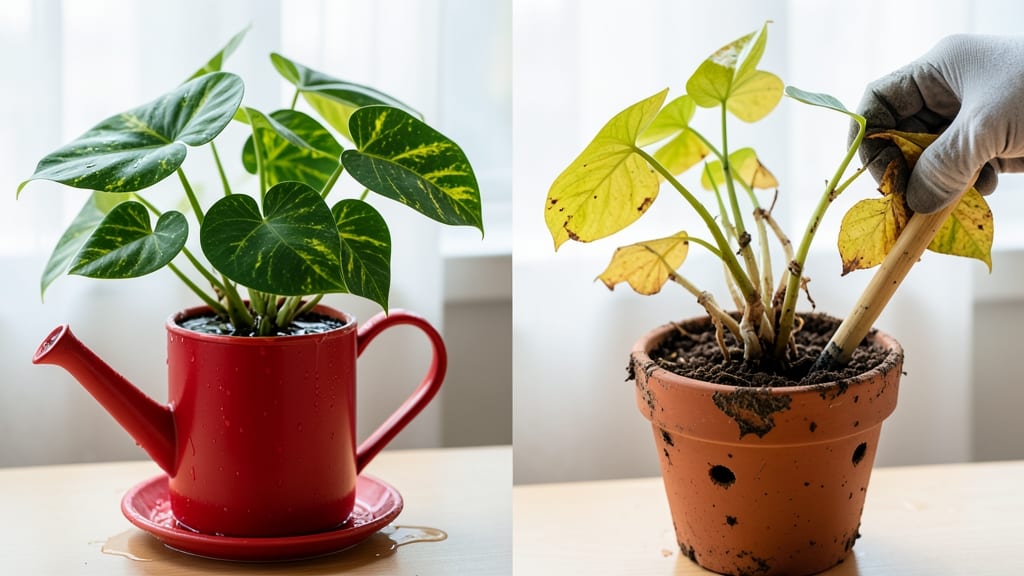
Your plants aren't just thirsty—how to know if plants are overwatered is the real question. 🌱 I've seen overwatering turn vibrant green leaves yellow faster than you can say "root rot," and the signs are often right in front of you if you know where to look.
Yellowing leaves that start at the bottom? Soggy soil that smells musty? Mushy stems that collapse at a touch? These are classic overwatering red flags. The problem isn't just too much water—it's poor drainage, compacted soil, or plants sitting in wet conditions too long.
Even my usually resilient snake plants have succumbed to this silent killer. The good news is recovery is possible. Let the soil dry out completely between waterings, repot plants in well-draining mix, and trim any mushy roots.
You'll see new growth within weeks as the plant adjusts to healthier moisture levels. Prevention is simpler: stick your finger in the soil before watering. If it's damp below the top inch, wait. This one habit saves more plants than any other tip I've learned—honestly, it's that important.
Root Causes Of Overwatering
Overwatering isn’t just a gardening mistake—it’s a silent killer of plants, often disguised as kindness. Too much water disrupts the delicate balance plants need to thrive, leading to stress, disease, and even death. Let’s break down the real reasons why this happens, so you can avoid repeating the same errors.
Plants need aeration in their roots to breathe. When soil doesn’t drain properly, excess water pools around roots, cutting off oxygen. This is especially common in:
- Clay-heavy soil – Compact and slow-draining, it holds water like a sponge.
- Containers without drainage holes – Pots act like bathtubs, trapping moisture.
- Over-mulching – Too much mulch (especially thick layers) suffocates roots and traps humidity.
💡 Pro Tip: Test your soil’s drainage by filling a pot with water, then timing how long it takes to drain. If it sits for more than 30 minutes, your soil needs amending with perlite, sand, or organic matter.
Even well-draining soil can become a swamp if you water on a schedule rather than by need. Common triggers include:
- Automatic timers – Set-and-forget systems don’t account for rain, humidity, or seasonal changes.
- Mistaking thirst for wilting – Some plants (like succulents) store water; others (like ferns) prefer consistently moist soil.
- Watering at the wrong time – Early morning is best; evening water can leave foliage damp overnight, inviting fungal infections.
⏰ Actionable Fix: Stick your finger 1-2 inches into the soil. If it’s dry, water; if damp, wait. Adjust frequency based on:
- Plant type (e.g., herbs need less than tropicals).
- Weather (hot/dry = more water; cool/rainy = less).
- Pot size (small pots dry faster than large ones).
Your garden’s microclimate plays a huge role. Overwatering often spikes when:
- Humidity is high – Air already saturated with moisture means soil stays damp longer.
- Low light conditions – Plants photosynthesize less, slowing water absorption and increasing rot risk.
- Cold temperatures – Roots become sluggish, struggling to process excess moisture.
🌡️ Science Check: In humid climates, reduce watering by 20-30% and space sessions further apart. Use a hygrometer to monitor humidity—ideal levels for most plants are 40-60%.
When soil stays soggy, pathogens thrive.
Overwatering creates the perfect breeding ground for: - Root rot (Phytophthora, Pythium) – Fungal infections that gnaw at roots, turning them mushy. - Powdery mildew – White, dusty coatings on leaves from trapped moisture. - Bacterial leaf spot – Dark, water-soaked lesions that spread rapidly in wet conditions.
🔥 Warning Sign: If your plant’s leaves develop yellow halos, blackened stems, or a musty smell, you’re likely dealing with an infection. Act fast with fungicide (copper-based for bacteria, neem oil for fungi) and reduce watering immediately.
Not all containers are created equal. Some materials retain moisture longer, increasing overwatering risks:
- Terracotta – Breathable but dries out quickly (great for succulents).
- Plastic – Traps moisture, ideal for tropicals but deadly for drought-tolerant plants.
- Glazed ceramic – Waterproof and heavy, mimicking a swamp.
🛠️ Fix It: If your plant is prone to overwatering, switch to a breathable pot (like unglazed terracotta) or add drainage enhancers (like orchid bark) to the soil mix.
Some plants crave moisture, while others despise it.
Common mismatches: - Tropical plants (e.g., ferns, calatheas) in succulent pots – They’ll drown. - Succulents (e.g., aloe, jade) in peat-heavy soil – Peat holds water like a sponge. - Bulbs (e.g., daffodils, tulips) in constant wet soil – They rot before blooming.
📊 Quick Guide:
| Plant Type | Ideal Watering | Overwatering Red Flags |
|---|---|---|
| Succulents | Every 2-3 weeks | Soft, wrinkled leaves |
| Tropicals | Keep soil moist | Yellow leaves, moldy stems |
| Herbs (basil, mint) | 1-2x/week | Drooping, mushy stems |
The biggest mistake? Not paying attention. Overwatering often starts with:
- Assuming "more is better" – Plants drink water like we drink soda; too much is toxic.
- Skipping the "finger test" – Relying on schedules instead of soil conditions.
- Using the wrong water – Tap water with high chlorine/salts can suffocate roots over time.
👀 Watch For:
- Yellowing leaves (especially lower ones).
- Wilting despite wet soil (a classic overwatering sign).
- Soil that smells like rot (ammonia or sulfur = trouble).
Once overwatering starts, it snowballs:
- Roots suffocate → Oxygen deprivation → Cell death.
- Fungi/bacteria invade → Rot spreads → Nutrient uptake stops.
- Leaves yellow/drop → Weakened plant → Susceptible to pests.
💡 Prevention Tip: If you’ve overwatered, act fast:
- Repot in fresh, dry soil.
- Trim dead roots with sterilized scissors.
- Hold off on watering for 5-7 days to let soil dry.
Revive Your Plants Step by Step
Now that you’ve identified the signs of overwatering, it’s time to take action! The good news is that many plants can bounce back with the right care. Below, we’ll map common causes to practical fixes—plus prevention tips to keep your green friends thriving.
Cause: Overwatered roots can’t absorb oxygen, leading to nutrient starvation and leaf discoloration.
How to Fix It:
- 🔥 Stop Watering Immediately Let the soil dry out completely before watering again. This prevents further root suffocation.
- 🍳 Adjust Your Watering Routine - Check soil moisture with your finger—insert it 1–2 inches deep.
If damp, wait. - Water deeply but less often—aim for 1–2 times per week (adjust based on plant type and climate). - Use the "drip test"—if water pools on the surface for more than 10 minutes, your soil may be too dense.
- 🌡️ Optimize Drainage
- Repot in well-draining soil (mix in perlite, sand, or coconut coir).
- Ensure pots have drainage holes—if not, drill them or use a cache pot (a decorative outer pot with a saucer underneath).
💡 Pro Tip: Yellow leaves on the bottom of the plant are often a sign of overwatering, while top leaves turning yellow may indicate underwatering or nutrient issues.
Cause: Waterlogged soil cuts off oxygen to roots, leading to rot and fungal growth.
How to Fix It:
- 👨🍳 Repot the Plant (If Needed)
- Gently remove the plant from its pot and trim mushy, black roots with sterilized scissors.
- Rinse roots with water to remove excess soil, then repot in fresh, well-draining mix.
- ⏰ Let the Soil Dry Between Waterings
- Use a moisture meter or stick your finger in the soil—water only when the top 2–3 inches are dry.
- For tropical plants, reduce frequency but increase water volume when you do water.
- 🔪 Prevent Fungal Growth
- Avoid wetting leaves when watering (use a watering can with a narrow spout).
- Space plants for airflow—crowded foliage traps moisture.
- Fungicide spray (like neem oil) can help if you spot mold or mildew.
💡 Pro Tip: If repotting isn’t an option, add a layer of gravel or pebbles at the bottom of the pot to improve drainage.
Cause: Overwatering weakens stems and prevents nutrient uptake, causing plants to sag or stop growing.
How to Fix It:
- 🌡️ Provide Support
- Stake tall or top-heavy plants (like tomatoes or peppers) to prevent collapse.
- For succulents or herbs, reduce humidity by moving them away from other plants.
- 🍎 Boost Nutrients
- Flush the soil with water to remove excess salts (from tap water or fertilizers).
- Use a balanced, diluted fertilizer (half-strength) once the plant recovers to replenish nutrients.
- 🌱 Prune Damaged Foliage
- Snip off yellow, brown, or mushy leaves to redirect energy to healthy growth.
- Avoid pruning too much at once—focus on removing only the worst-affected parts.
💡 Pro Tip: Some plants (like ferns or calatheas) thrive in higher humidity—if yours is drooping, a pebble tray with water nearby can help without overwatering.
Once your plants are back on track, keep these habits to avoid future overwatering:
| Habit | How to Do It |
|---|---|
| Know Your Plant’s Needs | Research your plant’s native environment (e.g., desert cacti vs. rainforest ferns). |
| Use the Right Pot | Terracotta dries faster than plastic; ensure size matches root growth. |
| Water in the Morning | Reduces evaporation and gives plants time to absorb moisture before night. |
| Monitor Weather | Adjust watering for rain, heatwaves, or cold snaps. |
| Invest in Tools | Moisture meters, self-watering pots, or drip irrigation systems can help. |
Final Thought: Overwatering is a common mistake, but with these fixes, your plants can recover—and even grow stronger! Start with the most severe symptoms, adjust gradually, and soon you’ll have a thriving green space. 🌿✨
Frequently asked questions
Why do my plant's leaves turn yellow when I water it regularly?
Yellowing leaves are a classic overwatering sign, especially when they start at the bottom. Too much water blocks oxygen to roots, causing nutrient starvation. Check if the soil stays soggy longer than 24 hours after watering—this is a red flag. Try letting the top 1-2 inches dry completely before watering again.
Can I save a plant with mushy stems and black roots?
Yes, but act fast! Trim away all mushy, black roots with sterilized scissors, then repot in fresh, well-draining soil. Withhold water for 5-7 days to let roots recover. For stubborn cases, a fungicide spray (like neem oil) can help prevent further rot. Most plants bounce back if you catch it early!
How often should I water my houseplants to avoid overwatering?
There's no one-size-fits-all answer—it depends on your plant type and environment. For most houseplants, water when the top 1-2 inches of soil feel dry. Succulents need water every 2-3 weeks, while tropical plants prefer consistently moist (but not soggy) soil. Always check with your finger before watering!
What's the difference between overwatering and underwatering wilting?
Easy to spot: Overwatered plants wilt with soggy soil, while underwatered plants have dry, crispy soil. Another clue? Overwatered leaves feel soft and mushy, while underwatered leaves are dry and papery. Press your finger into the soil—if it's damp, you're overwatering!
Can I use coffee grounds to help with overwatered soil?
Actually, coffee grounds can make overwatering worse—they compact soil and reduce drainage. Instead, mix in perlite or sand to improve aeration. For recovery, focus on letting soil dry completely and repotting in fresh, well-draining mix. Your plants will thank you!