
How To
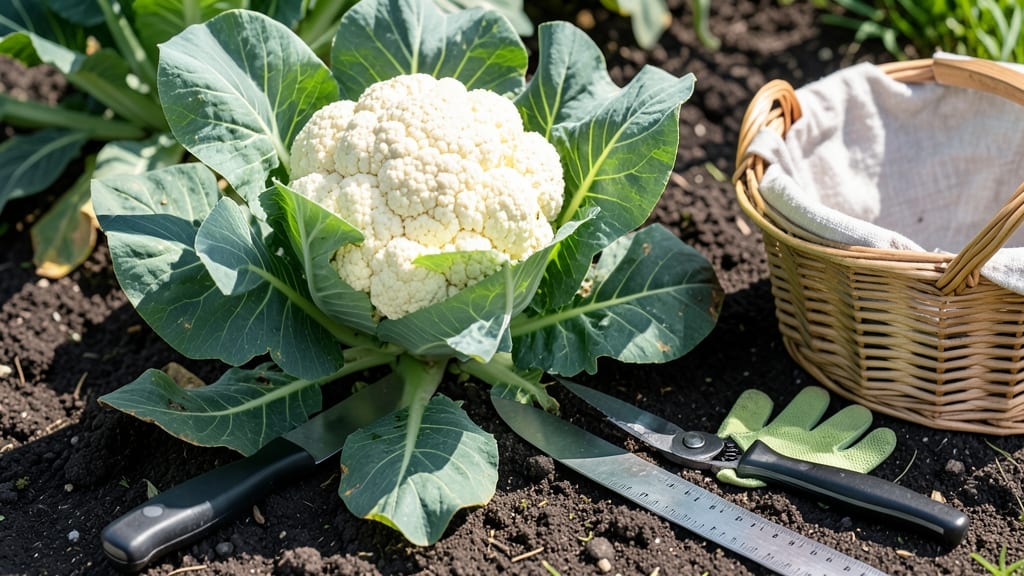
Knowing how to know when to harvest cauliflower can mean the difference between a crisp, flavorful head and one that’s bitter or woody. Too early, and you’ll miss peak sweetness; too late, and the plant may bolt or produce loose curds.
Most gardeners focus on days-to-maturity, but the real secret lies in three simple checks: head size, color consistency, and firmness. I’ve learned that skipping these visual cues often leads to disappointment—especially when temperatures climb past 75°F during summer harvests.
In this guide, I’ll walk you through how to spot these signs in your own garden, including how to handle different varieties (white, purple, or orange) and avoid common mistakes that ruin the harvest. Ready to pick your cauliflower at the perfect moment?
Whether you’re a first-time grower or a seasoned gardener, these 3 key checks will help you harvest cauliflower that’s tender, compact, and packed with flavor—every single time.

3 Key cauliflower curd color & size checks for perfect harvest timing
Harvesting cauliflower at the right moment transforms your garden into a flavor powerhouse. The difference between a tender, sweet head and a bitter, woody mess often comes down to 3 simple visual checks most gardeners overlook.
Let’s break down the exact color, size, and texture cues that signal your cauliflower is ready to pick—before it’s too late.
First, focus on the head’s diameter. For most varieties, you’re aiming for a 6- to 8-inch-wide curd. Smaller than 6 inches? It’s likely still developing. Larger than 8 inches?
You’ve missed the window. Dwarf varieties (like Purple of Sicily) may mature slightly smaller, while standard types (like Snowball Y Improved) can reach the upper limit. Measure with your hand—if it fits snugly between your thumb and pinky, it’s likely ready.
Next, examine the color consistency. A fully mature head should display a uniform hue—whether that’s creamy white, deep purple, or golden orange.
Look for no green streaks (a sign of immaturity) or yellowing/browning edges (a sign of overripeness). Purple varieties, like Graffiti, should have a vibrant, even lavender tone, while orange types, like Cheddar, should glow like a sunset.
Finally, check the leaf condition. Healthy outer leaves should begin to yellow and die back as the plant redirects energy to the head. If the leaves are still lush and green, the curd isn’t ready.
Conversely, if the leaves are completely brown and crispy, you’ve waited too long. This is your plant’s way of saying, “It’s time!”
🥬 Cauliflower Harvest Readiness
3 Key cauliflower curd color & size checks for perfect harvest timing
Cauliflower heads mature at different rates depending on the variety and growing conditions, but three key visual cues will tell you exactly when to harvest. First, check the curd color—it should be fully developed and consistent, whether white, purple, or orange.
Second, measure the head size—most varieties reach 6-8 inches in diameter at peak ripeness. Finally, observe the outer leaves, which should start yellowing while the curd remains tight.
White cauliflower is ready when the curd turns a creamy white with no green tinges. Purple varieties develop a deep violet hue, while orange types show a golden-yellow tone. Ignoring these color signals often leads to overripe heads that turn yellowish-brown and develop a bitter taste.
Timing is everything—harvest too early, and the curd won’t be fully formed; too late, and the texture suffers.
| Check | Ready Signs | Not Ready Signs |
|---|---|---|
| Curd Color | Consistent white/purple/orange | Green tinges or patchy hues |
| Head Size | 6-8 inches in diameter | Small (<5 inches) or oversized |
| Outer Leaves | Yellowing and drying | Still green and healthy |
| Texture | Firm and compact | Soft or spongy |
Don’t rely solely on days since planting—weather conditions like heat waves or cool spells can delay maturity. For example, late-spring plantings may need 10-14 extra days to reach harvest size compared to early-season crops.
If your cauliflower is growing in partial shade, the curd may develop more slowly, so monitor it closely for color changes.
Pro tip: Use your fingers to gently press the curd. If it feels firm like a dense apple and doesn’t leave an indentation, it’s ready. A soft or mushy texture means it’s past its prime.
For purple varieties, the color should be vibrant—not faded or streaky. Orange types should have a rich golden tone, not dull or brownish patches.
Seasonal timing matters too. In USDA Zone 6a, most cauliflower varieties are ready for harvest between mid-June and early August, but early varieties like ‘Snowball Y Improved’ may mature as early as late May.
Late-season plantings could extend harvests into September, but watch for bolting (premature flowering) if temperatures rise above 80°F.
Once you’ve confirmed all three checks—color, size, and texture—it’s time to harvest. Use a sharp knife or pruners to cut the stem about 1 inch below the curd.
This leaves the plant intact for potential side shoots in some varieties. Store harvested cauliflower in the fridge for up to 5-7 days or freeze it for longer storage.