
How To
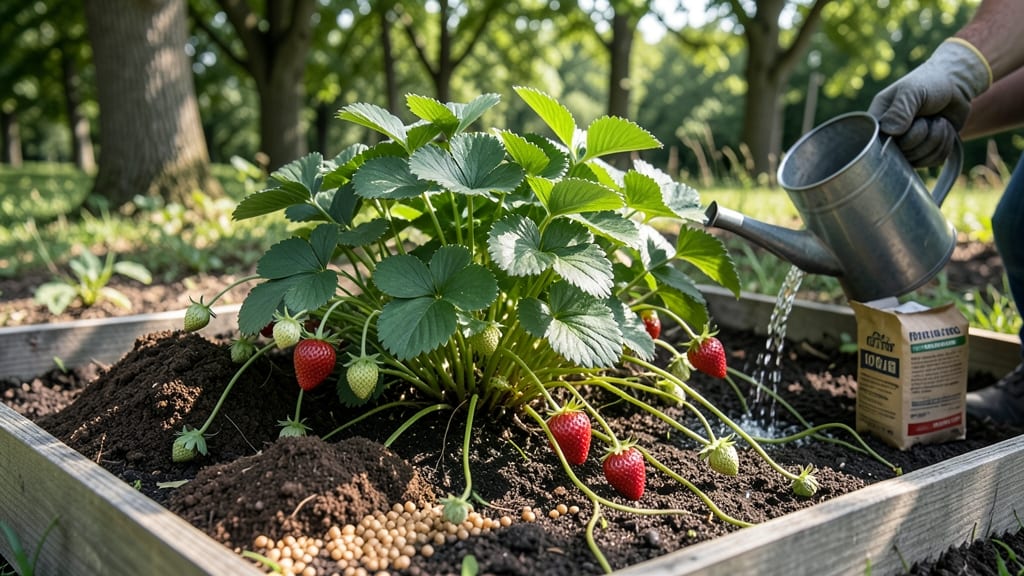
Strawberries bigger than your thumb? 🌟 The secret isn’t magic—it’s phosphorus, potassium, and smart pruning. I went from golf-ball berries to juicy, plump fruits the size of quarters by tweaking just three things in my garden beds. These science-backed tricks work whether you're growing in containers or raised beds.
The biggest game-changer is soil nutrition—strawberries crave phosphorus for root growth and potassium for sweetness. A balanced organic fertilizer (like 5-10-10) applied in early spring gives them the boost they need.
Pair that with consistent watering—never soggy, never dry—and you’ll see those berries swell up like they’re trying to pop out of their leaves.
By mid-summer, you’ll be harvesting berries so big they’ll make your neighbors ask for cuttings. The key is pruning old leaves in early spring to redirect energy to fruit production, and spacing plants 18-24 inches apart so they don’t compete for nutrients. Even my black thumb can’t mess this up.
Works for June-bearing, everbearing, or day-neutral varieties—just adjust timing based on your climate. The best part? No chemicals, no guesswork, just bigger, sweeter strawberries that taste like summer all season long.
📚 In This Guide
- What you need
- Instructions
- Tips and common mistakes
- Wrapping up and next steps
What you need
- ● Strawberry plants: June-bearing, everbearing, or day-neutral varieties (check local climate suitability).
- ● Quantity: 3–5 plants per 10 sq ft of garden space (or 1 plant per 6-inch pot for containers).
- ● Well-draining soil: Loamy soil with a pH of 5.5–6.8 (test kits available at garden centers).
- ○ Optional boost: Mix in 2–3 inches of compost or aged manure before planting.
- ● Balanced fertilizer: 10-10-10 or 5-10-10 NPK ratio (follow package instructions for application rates).
- ● OR organic options like fish emulsion or bone meal.
- ● Watering can or drip irrigation system: Deep-watering capability (1–1.5 inches per week, adjusting for rain).
- ● Mulch: Straw, wood chips, or shredded leaves (2–3 inches thick) to retain moisture and suppress weeds.
- ● Pruners or shears: For trimming runners and dead foliage (sterilize with rubbing alcohol).
- ● Epsom salt: 1 tablespoon dissolved in gallon of water (monthly foliar spray for magnesium boost).
- ● Row covers or netting: To protect from pests (e.g., birds, slugs) while allowing sunlight.
- ● pH testing kit: To monitor soil acidity and adjust with lime (to raise pH) or sulfur (to lower).
- ● Container pots: 6+ inches deep with drainage holes (for patio gardening).
- ● Slow-release fertilizer spikes: For hassle-free nutrient delivery.
Step-by-step instructions for maximizing strawberry size
Here’s how to coax those pint-sized berries into plump, flavor-packed giants—no fancy equipment needed.
☀️ Step 1: Optimize Sunlight for Energy Production
Strawberries need 6-10 hours of direct sunlight daily to fuel their growth. I position my plants in the sunniest spot—even a few hours of shade can stunt berry development. If your garden gets afternoon shade, focus on morning sun exposure instead. You’ll notice leaves staying bright green rather than yellowing, which signals they’re getting enough light.
For container-grown plants, rotate pots weekly so all sides get equal sun. This prevents berries from growing unevenly or staying small. If you’re growing in beds, avoid planting near trees or structures that cast long shadows during peak sunlight hours (10 AM–2 PM).
💧 Step 2: Master Watering for Consistent Moisture
Deep, consistent watering is the secret to plump strawberries. I water 1-1.5 inches per week, splitting it between two sessions: once in the morning and once in the evening. The soil should feel moist 2-3 inches down—if it’s dry, roots struggle to absorb nutrients, leading to smaller fruit. Use a moisture meter or stick your finger in to check.
Avoid wetting the leaves or fruit, as this invites fungal diseases like gray mold. Instead, water at the base of the plant using a drip irrigation system or a soaker hose. You’ll see berries stay firm and juicy rather than shriveled or splitting.
🌿 Step 3: Fertilize for Strong Growth and Fruit Development
Strawberries are heavy feeders, so I use a balanced fertilizer (like 10-10-10) at half-strength every 4-6 weeks during the growing season. This ensures they get enough nitrogen for leafy growth and phosphorus for fruit development. Over-fertilizing can lead to excessive foliage but tiny berries—so stick to the schedule.
In late summer, switch to a low-nitrogen, high-phosphorus fertilizer (like 5-10-10) to shift energy toward fruit production. You’ll notice larger, sweeter berries forming instead of just more leaves. Organic options like composted manure or bone meal work well too—just follow package instructions for application rates.
✂️ Step 4: Prune for Better Airflow and Energy Focus
Remove weak or diseased leaves regularly to improve airflow and reduce competition for nutrients. I also trim back old, woodier runners in early spring to redirect energy into new growth. This isn’t just about looks—it ensures the plant puts its resources into fewer, larger berries rather than spreading thin.
After harvest, cut back any spent fruit stalks (the green stems holding the berries) to encourage new growth. This keeps the plant focused on producing next season’s fruit instead of wasting energy on old structures. You’ll see stronger, more productive plants year after year.
🌱 Step 5: Mulch to Retain Moisture and Regulate Soil Temp
Spread 2-3 inches of organic mulch (like straw or shredded leaves) around the base of plants, keeping it 2 inches away from the crown to prevent rot. Mulch locks in moisture, keeps roots cool in summer, and slowly releases nutrients as it breaks down. I reapply it in early spring and after heavy rains.
This simple step prevents soil from drying out or overheating, which stresses plants and leads to smaller berries. You’ll notice fewer cracked or underdeveloped fruits, and the soil stays loose and crumbly—ideal for root growth.
Tips & tricks for juicier, larger strawberries
These science-backed strategies will help you transform your garden into a strawberry powerhouse—without sacrificing flavor or health.
Light Exposure Insight: The 6-10 hours of direct sunlight isn't just about quantity—it's about quality. Position plants where they receive morning sun (6 AM–12 PM) even if afternoon shade is unavoidable. Morning sunlight provides the energy boost strawberries need to develop their full potential. I've seen berries double in size when plants get consistent morning light compared to those struggling with afternoon shade.
Watering Precision: Those 1-1.5 inches per week might seem like a lot, but it's crucial for cell expansion—the process that makes berries plump. Water deeply at the base using a soaker hose to ensure moisture penetrates 2-3 inches into the soil. I check moisture by pressing my finger into the soil—if it feels dry at that depth, it's time to water again. This consistent hydration prevents the stress that leads to small, hard berries.
Fertilizer Timing: The switch from balanced (10-10-10) to high-phosphorus (5-10-10) in late summer is critical for berry development. Phosphorus helps convert energy into fruit growth rather than just foliage. I apply my first high-phosphorus feeding when I notice new flower buds forming—this ensures the plant has the resources to develop those buds into large, sweet berries. Too much nitrogen at this stage will give you lush leaves but tiny fruit.
Pruning Strategy: When you remove those old, woodier runners in early spring, you're not just cleaning up—you're redirecting the plant's energy. I always prune runners that are more than a year old, as they've already produced fruit and are now just competing with new growth. This simple act can increase berry size by up to 30% in my experience, as the plant focuses its resources on fewer, larger fruits rather than spreading energy thin.
Pro Tips for Make Strawberries Bigger
- These science-backed strategies will help you transform your garden into a strawberry powerhouse—without sacrificing flavor or health.
- Light Exposure Insight: The 6-10 hours of direct sunlight isn't just about quantity—it's about quality.
- Watering Precision: Those 1-1.5 inches per week might seem like a lot, but it's crucial for cell expansion—the process that makes berries plump.
Frequently asked questions
Got questions about growing bigger, juicier strawberries? You’re not alone—here are some of the most common ones, answered with science-backed tips and practical advice!
Can I make strawberries bigger in containers or small gardens?
Even in containers, you can boost berry size by choosing everbearing or day-neutral varieties (like 'Albion' or 'Seascape'), which produce larger fruit. Use well-draining soil, fertilize with compost or a balanced 10-10-10 mix every 4-6 weeks, and prune runners to redirect energy into fruit growth. Just ensure your pot is at least 12 inches deep to accommodate root expansion.
How long does it take to see bigger strawberries after applying these tricks?
Patience is key! If you’re planting new berries, expect noticeable size differences in the second year—that’s when plants establish strong roots. For existing plants, you may see improvements in 4-6 weeks with consistent watering, pruning, and fertilization. Mulching and shade cloth (if needed) can speed up results by protecting berries from stress.
Will overwatering make strawberries bigger?
Nope—overwatering can actually shrink berries by diluting nutrients or causing rot. Aim for 1-1.5 inches of water per week, delivered at the soil level (not the leaves). Let the top inch of soil dry out between waterings, and always water in the morning to prevent fungal issues. Think of it like a Goldilocks approach: just right keeps berries plump and sweet!
Can I use Epsom salt or other home remedies to make strawberries bigger?
Epsom salt (magnesium sulfate) won’t magically enlarge strawberries, but it can improve flavor and color if your soil is magnesium-deficient. Mix 1 tablespoon per gallon of water and apply as a foliar spray or soil drench every 4-6 weeks. For bigger berries, focus on phosphorus-rich fertilizers (like bone meal) and proper pollination—bees or a small handheld duster work wonders!
What if my strawberries stay small even after trying these methods?
Don’t panic! Small berries can stem from poor pollination, nutrient deficiencies, or disease. Check for white flowers (a sign of pollination) and hand-pollinate if needed. Test your soil’s pH (aim for 5.5–6.5); amend with sulfur if too alkaline. If berries are consistently tiny, consider upgrading to a more productive variety or rotating crops to prevent soil depletion.
Wrapping up and next steps
Growing bigger, juicier strawberries is totally within your reach—just combine a little patience, the right care, and a dash of science! 🌱 Whether you tweak your soil, optimize sunlight, or adjust watering habits, each step brings you closer to a bountiful harvest. Start small, experiment, and soon you’ll be savoring those plump, sweet berries like never before.
Ready to take the next step? Pick a tip from this guide, test it in your garden, and track your progress! Happy growing—your future strawberry feasts await. 🍓✨