
Container Gardens
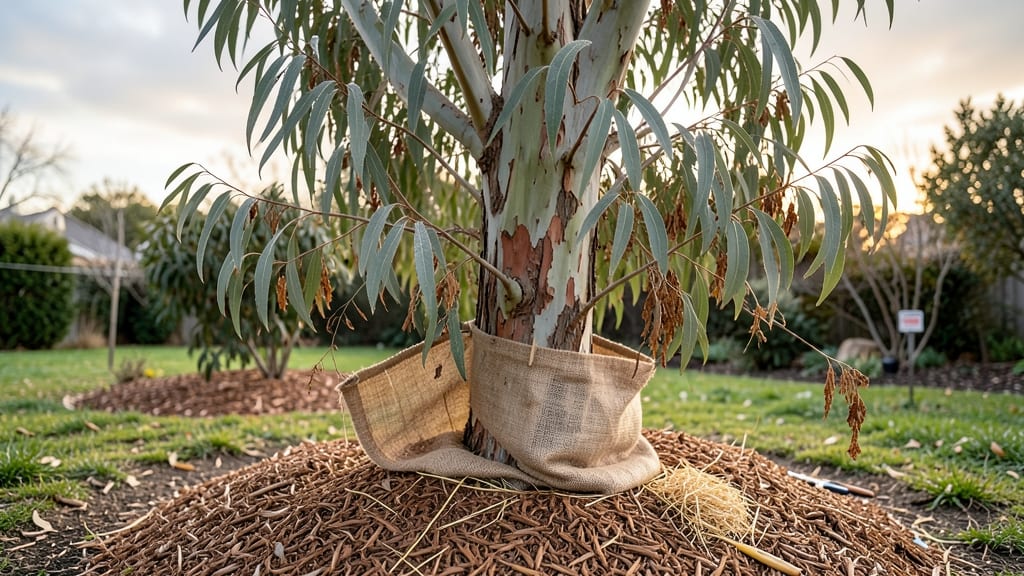
Overwintering eucalyptus saves your fragrant trees when frost threatens. 🌿 Last winter, my 10-foot silver dollar gum nearly died until I learned these cold-hardy tricks—now it thrives through Zone 7 winters with minimal effort.
The key isn't just wrapping the trunk (though that helps) but protecting the roots and adjusting watering before the ground freezes.
You'll need burlap, mulch, frost cloth, and a moisture meter. Prune back 1/3 of the foliage in late fall to reduce stress, then mound 6-12 inches of mulch around the base.
Container-grown eucalyptus needs extra insulation—wrap pots in bubble wrap and move them to an unheated garage or against a south-facing wall. The goal is to keep roots from freezing while letting the plant go dormant naturally.
By mid-winter, check for dry soil every 3-4 weeks—overwatering kills more eucalyptus than cold. Look for crispy leaf edges (normal) versus blackened stems (danger). With these steps, your tree will push fresh growth by late April, smelling like a coastal breeze again.
Even in Zone 6, I've seen eucalyptus bounce back with proper prep.
Pro tip: Group plants together—their combined heat helps. And skip the holiday lights; eucalyptus doesn't need extra warmth, just protection. Here's how to make it work for your climate, whether you're in the Pacific Northwest or the Mid-Atlantic.
📚 In This Guide
- What you need
- Instructions
- Tips and common mistakes
- Wrapping up and next steps
What you need
- ● Eucalyptus plant: A cold-hardy variety (e.g., Eucalyptus pauciflora or Eucalyptus cinerea) potted in a 15-20 gallon container with drainage holes.
- ● Well-draining potting mix: 10-15 gallons of a blend with 50% perlite or pumice and 50% peat or coconut coir to prevent root rot.
- ● Container or pot (if repotting): A 1-2 gallon larger than the current root ball, with drainage holes and a stable base (add saucer for water runoff).
- ● Mulch: 2-3 inches of organic mulch (e.g., straw, pine bark, or shredded leaves) to insulate roots.
- ● Watering can or hose with spray nozzle: For gentle hydration—avoid overwatering!
- ● Frost cloth or burlap: 1-2 sheets (at least 3x3 feet) to wrap around the plant for light frost protection.
- ● Plant ties or twine: To secure frost cloth or burlap snugly around the tree.
- ○ Thermometer (optional but helpful): A soil or air thermometer to monitor temperatures below 20°F (-6°C).
- ● Anti-desiccant spray: Apply a light coating of wax-based spray (like Wilt-Pruf) to protect leaves from drying.
- ● Grow lights or LED bulbs: For indoor overwintering—place 12-16 inches above the plant for 12-14 hours of light/day.
- ● Heating mat (for indoor setups): A low-wattage (50-100W) mat to maintain 60-70°F (15-21°C) soil temps.
- ● Humidifier or pebble tray: To maintain 40-50% humidity if indoors.
- ● Slow-release fertilizer: A balanced 10-10-10 or organic option (like fish emulsion) to feed roots lightly in early spring.
Step-by-Step instructions for overwintering eucalyptus
Here’s how I protect my eucalyptus trees through winter—no fancy equipment needed.
🌿 Step 1: Assess Your Eucalyptus Variety and Location
Not all eucalyptus tolerate cold equally. If you have a tender variety (like Eucalyptus globulus), expect damage below 20°F, while hardier types (Eucalyptus pauciflora) may survive down to 10°F. Check your tree’s mature height—taller specimens need more protection.
Move potted eucalyptus to a sheltered spot before the first frost. If planted in the ground, group smaller trees together to create a windbreak. The goal is to mimic their native microclimates, where they grow in sheltered gullies. Watch for yellowing leaves—this signals stress from cold drafts.
❄️ Step 2: Prepare Mulch and Insulation
Rake back foliage from the base of the tree to prevent rot. Spread a 3-4 inch layer of mulch (straw, pine needles, or shredded bark) around the root zone, but keep it 6 inches away from the trunk. This insulates roots while allowing airflow to prevent fungal growth.
For potted specimens, wrap the container in bubble wrap or frost cloth and bury it halfway in the ground or a insulated bed. If your tree is in a pot, move it to a garage or unheated basement where temperatures stay above 35°F. Avoid heat sources—sudden temperature swings stress the plant.
🪴 Step 3: Protect the Canopy and Trunk
Wrap the trunk and lower branches of young or small trees with burlap or tree wrap. Secure it loosely—too tight, and it restricts growth. For larger trees, drape frost cloth over the canopy, securing it with stakes. This prevents desiccation from winter winds and reduces heat loss.
If your tree is in a pot, place it on a dampened foam board to insulate the bottom. Water the soil just before the first hard freeze—this helps the roots absorb moisture before the ground freezes. Avoid watering afterward, as soggy soil can lead to root rot.
☀️ Step 4: Monitor and Adjust Through Winter
Check your eucalyptus every 2-3 weeks for signs of stress: brown tips, wilting, or excessive leaf drop. If you notice ice encasement on branches, gently tap it off to prevent weight damage. Move potted trees to a sunnier spot if they look leggy—lack of light weakens them further.
If your tree is in the ground, add a second layer of mulch in late winter if temperatures drop unexpectedly. For potted specimens, ensure the soil stays slightly moist but never soggy. Overwatering in cold conditions suffocates roots. Watch for mold or mildew—this means the insulation is trapping too much moisture.
⏰ Step 5: Transition Back to Outdoor Conditions
Wait until spring temperatures consistently stay above 40°F before uncovering your tree. Gradually remove frost cloth over 7-10 days to harden it off. For potted eucalyptus, move them back outside after the last frost date, placing them in partial shade for the first week to avoid sunburn.
Prune any dead or damaged branches in early spring, cutting just above a healthy bud. Fertilize lightly with a balanced 10-10-10 mix to encourage new growth. If your tree looks stressed, a foliar spray of seaweed extract boosts resilience. With patience, your eucalyptus will bounce back stronger than ever.
Tips & tricks for overwintering eucalyptus
These cold-hardy strategies will help your eucalyptus thrive through winter without losing its beauty.
Variety-Specific Protection: The temperature thresholds in Step 1 are critical—Eucalyptus globulus (common eucalyptus) needs extra care below 20°F, while Eucalyptus pauciflora (snow gum) can handle down to 10°F. If you're in a transitional zone, consider planting both varieties to create a natural windbreak system. The taller the tree, the more vulnerable it is to windburn, so prioritize shelter for mature specimens.
Mulch Layering Technique: The 3-4 inch mulch layer in Step 2 should be fluffy, not compacted—think of it like a cozy blanket for roots. For extra insulation, mix in a handful of leaf litter (optional) to improve moisture retention. Always keep mulch 6 inches from the trunk to prevent rot, but don't skimp on coverage—this is where most heat loss occurs. A thick layer also deters voles and rodents that might nibble on young roots.
Frost Cloth Application: When draping frost cloth over canopies in Step 3, leave the top open slightly to prevent moisture buildup—condensation can freeze and damage leaves. Secure it loosely with stakes or clothespins, allowing for some airflow. For potted specimens, double-wrap containers with bubble wrap and frost cloth for maximum protection against temperature swings. The goal is to mimic their native microclimates where they grow in sheltered gullies.
Spring Transition Strategy: The 7-10 day hardening-off period in Step 5 is non-negotiable—sudden exposure to spring sun can scorch newly unfurled leaves. Start by removing frost cloth for just 2-3 hours daily, gradually increasing exposure. For potted trees, place them in partial shade for the first week after moving outside to avoid sunburn. This gradual transition prevents stress that could trigger early leaf drop.
Pro Tips for Overwinter Eucalyptus
- These cold-hardy strategies will help your eucalyptus thrive through winter without losing its beauty.
- Variety-Specific Protection: The temperature thresholds in Step 1 are critical—Eucalyptus globulus (common eucalyptus) needs extra care below 20°F, while Eucalyptus pauciflora (snow gum) can handle down to 10°F.
- Mulch Layering Technique: The 3-4 inch mulch layer in Step 2 should be fluffy, not compacted—think of it like a cozy blanket for roots.
Frequently asked questions
Got questions about keeping your eucalyptus thriving through winter? You’re not alone! Here are answers to the most common concerns—plus a few pro tips to help you troubleshoot like a pro.
Can eucalyptus survive winter outdoors in cold climates?
Most eucalyptus species are not cold-hardy and will die in frost (below 20°F/-7°C). However, Eucalyptus gunnii (Cider Gum) is the exception—it tolerates temps down to 10°F (-12°C) with proper protection (mulch, windbreaks). For other varieties, overwintering indoors or in containers is key!
When should I move my eucalyptus indoors for winter?
Time it right: Before the first frost (check your local frost date!). Aim for late fall (October–November in most zones). If leaves start yellowing or dropping, it’s a sign your plant is already stressed—act fast to prevent damage. Pro tip: Gradually acclimate it to indoor light to avoid shock.
What’s the best way to overwinter potted eucalyptus indoors?
Place your plant near a south-facing window (or under grow lights) for 6–8 hours of sunlight daily. Keep humidity high (mist leaves or use a pebble tray) and avoid drafts. Water sparingly—let the top 1–2 inches of soil dry out between waterings to prevent root rot.
Can I overwinter eucalyptus in the ground with extra protection?
Yes! For E. gunnii, mound 4–6 inches of mulch (straw, leaves, or pine needles) around the base and wrap the trunk with burlap or tree wrap to shield from wind. Add a cloche or frost blanket for extra insulation. Warning: Remove protection in early spring to avoid overheating roots.
My eucalyptus leaves are turning brown/yellow—what went wrong?
Brown leaves usually mean overwatering, cold stress, or low humidity. Yellowing can signal underwatering or nutrient deficiency. Check soil moisture (stick your finger in—it should be slightly damp but not soggy). If leaves crisp, it’s too dry; if they wilt, it’s overwatered. Fix: Adjust care and trim damaged leaves to encourage new growth.
How do I harden off eucalyptus before moving it back outside in spring?
Start 6–8 weeks before last frost by moving your plant outdoors for 2–3 hours daily, gradually increasing time. Acclimate it to sun, wind, and temps (aim for 50°F/10°C+). Pro tip: Fertilize lightly with a balanced 10-10-10 mix 2 weeks before transplanting to boost resilience.
Bonus: What if I don’t have space indoors—are there alternatives?
If indoor space is tight, try these low-effort alternatives:
- Greenhouse or sunroom: Mimics outdoor conditions with better temperature control.
- Unheated garage/porch: Keep temps above 35°F (2°C) and add grow lights.
- Overwinter as a cutting: Propagate healthy stems in water or soil—eucalyptus roots easily!
For container growers, E. cinerea (Argyle Apple) is a hardier option for cooler microclimates.
Wrapping up and next steps
Overwintering eucalyptus doesn’t have to be a challenge—with the right container setup, protection strategies, and care, your tree can thrive even in chilly months.
Remember, consistency is key: monitor moisture, shield from harsh winds, and keep an eye on temperature shifts to ensure your eucalyptus stays healthy and vibrant. 🌿❄️
Now that you’re armed with these cold-hardy tricks, it’s time to put them into action! Start by preparing your eucalyptus for winter this fall, and don’t forget to check in on it come spring for any signs of new growth.
Your hard work will pay off with a stunning, year-round container garden!