
Planting
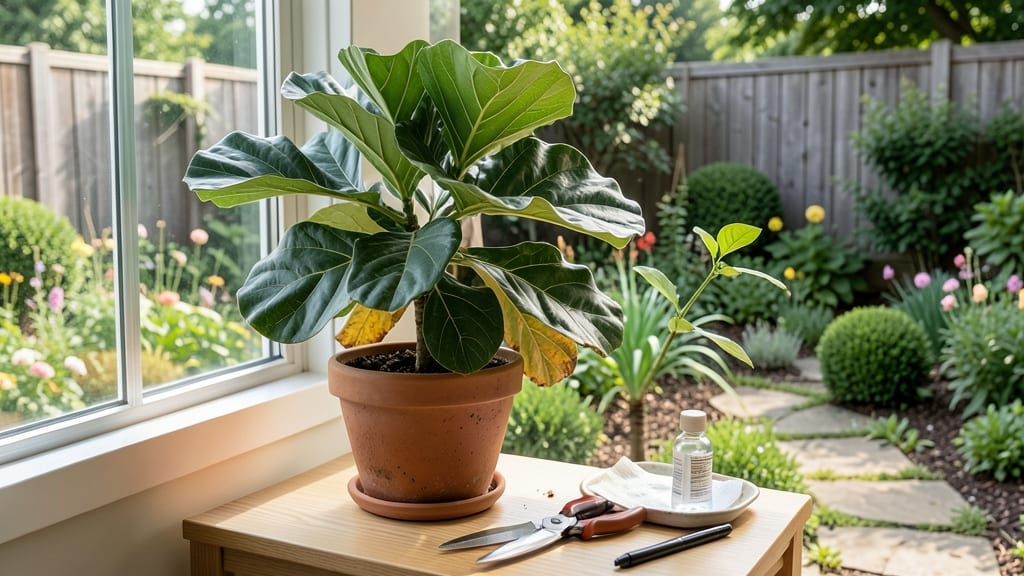
How to cut a fiddle leaf fig plant could make it 3x fuller with just a few strategic cuts. ✂️ I’ve pruned mine every spring for years, and the difference in growth is shocking—thicker stems, more leaves, and a bushier shape that fills empty spaces instantly. The key? Cutting at the right spots and knowing when to stop.
You’ll need sharp pruners (dull blades tear stems), rubbing alcohol to sterilize them, and a small pot for propagation. Prune in spring or early summer when the plant’s actively growing, and always cut just above a leaf node—that’s where new growth sprouts.
Avoid cutting more than ⅓ of the plant at once, or you’ll stress it.
What you’ll get is a fiddle leaf fig that reaches for the sky with dense foliage and fewer bare stems. The cuttings you take root easily in water or soil, giving you free plants.
Just keep the mother plant in bright, indirect light and water when the top inch of soil feels dry.
Works for leggy plants, overgrown tops, or even shaping a fuller silhouette. The best part? You’ll see new leaves forming within 4-6 weeks—proof that a little trim goes a long way. Ready to transform that tall, sparse fig into a lush statement piece?
Root Causes of Overgrowth
When your fiddle leaf fig (Ficus lyrata) starts looking leggy, sparse, or unruly, it’s often a sign that it’s time for a strategic trim. But why does overgrowth happen in the first place?
Understanding the science behind it will help you prune with purpose—and keep your plant thriving. Here’s a breakdown of the key triggers:
Fiddle leaf figs are tropical plants that naturally grow in dense, humid environments. When their roots become root-bound (cramped in a pot that’s too small), they struggle to absorb water and nutrients efficiently.
This leads to: - Slowed growth due to limited space for root expansion. - Stress signals that trigger rapid, weak stem elongation (a survival response to compete for light). - Reduced energy for leaf production, resulting in sparse foliage.
Actionable insight: If you notice roots circling the pot’s drainage holes or growing out of the soil, it’s a clear sign your plant needs both repotting and pruning to redirect energy.
Fiddle leaf figs are heliophytes—they crave bright, indirect light to fuel photosynthesis. When they don’t get enough light, they stretch toward the nearest source in a phenomenon called etiolation.
This causes: - Long, weak stems (internodes elongate to reach light). - Small, pale leaves (chlorophyll production drops). - Thinning canopies (energy is diverted to stem growth instead of leaves).
Pro tip: 💡 If your plant is leaning toward a window or has bare stems, it’s begging for more light or a strategic prune to encourage bushier growth.
Plants produce auxin, a growth hormone that regulates cell elongation.
When auxin levels spike (often due to stress or over-fertilization), your fiddle leaf fig may: - Grow excessively tall (auxin promotes stem elongation). - Drop lower leaves (the plant prioritizes new growth over old foliage). - Develop weak branch points (reduced lateral bud growth).
Key trigger: Over-fertilizing with high-nitrogen fertilizers can overstimulate auxin, leading to rapid but unbalanced growth. Always follow a balanced 20-20-20 or 10-10-10 fertilizer schedule (every 4–6 weeks in spring/summer).
Fiddle leaf figs experience flushing cycles—periods of rapid growth followed by dormancy.
If you prune at the wrong time, you might accidentally encourage uncontrolled legginess: - Spring/Summer: High humidity and warmth trigger active growth, but if light is insufficient, stems elongate. - Fall/Winter: Growth slows, but if pruned too late, the plant may struggle to recover before the next growth spurt.
Timing tip: ✨ Prune in early spring (just as new growth begins) or late summer (before fall dormancy) to align with the plant’s natural rhythm.
Stagnant air around your fiddle leaf fig can lead to fungal infections (like powdery mildew) or pest infestations, both of which stress the plant.
When stressed: - The plant diverts energy to defense mechanisms instead of leaf production. - Weak stems develop as the plant prioritizes survival over aesthetics.
Fix it: Ensure your plant has space between leaves (avoid overcrowding) and use a small fan (on low) to improve airflow—especially in humid climates.
While over-fertilizing causes issues, under-fertilizing can also trigger leggy growth. When key nutrients like phosphorus (P) or potassium (K) are lacking:
- The plant stretches stems to access more sunlight (a last-ditch effort to photosynthesize).
- Leaf discoloration (yellowing or browning edges) often accompanies poor nutrient uptake.
Diagnose it: Check your soil’s pH (fiddle leaf figs prefer 6.0–7.0). If it’s too acidic or alkaline, nutrients like iron or magnesium become unavailable, further stressing the plant.
If you’re seeing multiple signs (e.g., leggy stems + yellow leaves + root bind), pruning is your best tool to reset growth patterns. The goal? Encourage bushier, healthier branches by cutting back overgrowth and redirecting energy to the plant’s core.
Next up: How to Prune Like a Pro—where we’ll cover the exact cuts to make for maximum regrowth. 🔪✂️
Quick Fixes for Common Pruning Problems
Pruning your fiddle leaf fig (Ficus lyrata) is like giving it a stylish haircut—when done right, it thrives; when done wrong, it can stress out.
Below are practical, step-by-step solutions for the most common issues that arise after cutting, along with prevention tips to keep your plant happy and healthy.
Cause: Over-pruning, improper cutting technique, or shock from sudden stress. Fix It:
- 🔪 Trim Correctly – Use sterilized, sharp pruning shears (or scissors) to make clean cuts at a 45-degree angle, just above a leaf node (where leaves grow). Avoid tearing the stem.
- 💧 Hydrate Immediately – Water the plant thoroughly after pruning to reduce shock. Let excess water drain away to prevent root rot.
- 🌡️ Adjust Light & Humidity – Move your fiddle leaf fig to bright, indirect light (no direct sun for a few days) and increase humidity with a pebble tray or misting.
- 🌱 Propagate the Cuttings – If leaves are yellowing but the stem is healthy, root the cuttings in water or soil to revive them.
Prevention Tips: ✔ Never remove more than 1/3 of the plant at once—gradual pruning is gentler. ✔ Avoid pruning during extreme temperatures (hot summers or cold winters). ✔ Wait until new growth appears before heavy pruning—this means the plant is ready.
Cause: Underwatering, low humidity, or pruning too late in the season. Fix It:
- 💧 Check Soil Moisture – Stick your finger 1-2 inches deep into the soil. If dry, water until it drains from the bottom. Fiddle leaf figs like slightly moist (not soggy) soil.
- 🌬️ Boost Humidity – Place the plant on a humidity tray or group it with other plants. A light misting (1-2 times a week) helps too.
- 🍃 Trim Damaged Leaves – If edges are crispy but not mushy, snip them off with clean scissors. If the whole leaf is brown, remove it entirely.
- 🌿 Fertilize Lightly – After pruning, wait 4-6 weeks, then use a balanced liquid fertilizer (diluted to half strength) to support recovery.
Prevention Tips: ✔ Water consistently—fiddle leaf figs hate dry spells but also dislike "wet feet." ✔ Prune in spring or early summer when the plant is actively growing. ✔ Avoid drafty areas (AC vents, open windows) that dry out leaves.
Cause: Pruning at the wrong time, nutrient deficiency, or root damage. Fix It:
- 🌱 Prune for Structure – If growth is slow, cut back leggy stems to encourage bushier growth. Focus on removing the top 1/3 of the tallest stems to redirect energy.
- 💪 Feed the Plant – Use a balanced fertilizer (like 10-10-10) every 4-6 weeks in growing season. For slow growers, a slow-release granular fertilizer works well.
- 🌿 Check Roots – If the plant was recently repotted and growth stalled, gentle root pruning (trimming long, circling roots) can stimulate new growth.
- ⏰ Be Patient – Fiddle leaf figs may take 4-8 weeks to show new growth after pruning. Avoid over-pruning again until you see 2-3 new leaves.
Prevention Tips: ✔ Prune in early spring when the plant is entering its growth phase. ✔ Repot every 2-3 years to refresh soil nutrients. ✔ Avoid over-fertilizing—too much can burn roots and stunt growth.
Cause: Stress from pruning attracts pests, or tools weren’t sterilized. Fix It:
- 🔍 Inspect Leaves – Look for tiny webs (mites) or cottony patches (mealybugs). Isolate the plant if infested.
- 🧼 Clean Tools & Leaves – Wipe leaves with a neem oil solution (1 tsp neem oil + 1 tsp mild soap in 1 quart water) or rubbing alcohol (70% isopropyl) on a cloth.
- 💦 Spray Systemically – For severe infestations, use an insecticidal soap spray (follow label instructions) every 3-5 days until pests are gone.
- 🌿 Strengthen the Plant – Healthy plants resist pests better. Ensure it gets bright, indirect light and proper watering.
Prevention Tips: ✔ Sterilize tools with rubbing alcohol before and after pruning. ✔ Quarantine new plants for 2 weeks before introducing them to your fiddle leaf fig. ✔ Encourage beneficial insects like ladybugs to keep pests in check.
💡 Pro Tip: Always prune in the morning—this gives the plant the whole day to recover and reduces stress. And remember, less is more! A little strategic cutting goes a long way. 🌿✨
Frequently asked questions
Can I cut my fiddle leaf fig in winter?
Pruning in winter is generally not recommended because fiddle leaf figs enter a natural dormancy period. The plant conserves energy, and cutting during this time can stress it unnecessarily. Wait until early spring when new growth begins to give your plant the best chance to recover quickly.
How do I know where to cut on a fiddle leaf fig?
Look for the leaf nodes—these are the small bumps or joints where leaves grow along the stem. Make your cut just above a leaf node at a 45-degree angle. This encourages new growth to sprout from that spot, creating a bushier plant.
What should I do with the cuttings after pruning?
You have two great options! Place cuttings in a jar of water with just the stem submerged (no leaves touching) to root, or plant them directly in moist soil. Keep both in bright, indirect light and maintain humidity. Roots should appear in 2-4 weeks—then you can transplant water-rooted cuttings to soil.
Will pruning make my fiddle leaf fig grow faster?
Not necessarily—pruning redirects energy to create fuller growth rather than taller stems. The goal is to encourage bushier, healthier branches. You’ll see new leaves forming within 4-6 weeks if you’ve pruned correctly, but the plant won’t grow faster overall—it’ll just look more balanced and vibrant.
Can I use scissors instead of pruning shears?
Yes, you can use clean, sharp scissors for small cuts, but for thicker stems, pruning shears work better. The key is sharpness—dull tools tear stems, which can introduce infections. Always sterilize your tools with rubbing alcohol before and after cutting to prevent spreading disease between plants.