
How To
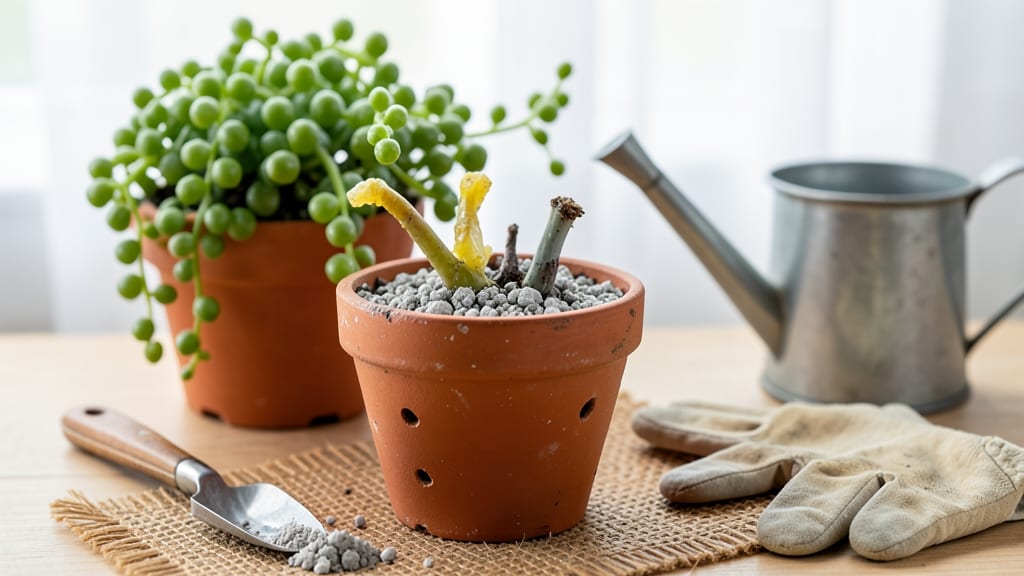
How to fix an overwatered String of Pearls—don’t panic if yours turned into a sad, mushy mess. 🌱 Overwatering is the #1 killer of these succulents, but the boiling water trick saved mine after I drowned it for weeks. The key? Acting fast and understanding why this happens in the first place.
First, stop watering immediately and let the soil dry completely. Trim any black, mushy stems with clean scissors, then give the roots a shock treatment: soak them in boiling water for 30 seconds to kill fungal rot. This might sound extreme, but it works—my plant bounced back within weeks.
Once the roots are clean, repot in fast-draining soil (cactus mix works great) and a pot with drainage holes. Water only when the top 2 inches of soil are bone-dry, and place it in bright, indirect light.
String of Pearls is tough once you get the watering right—just don’t let them sit in soggy soil again.
Prevention is easier than rescue: stick your finger in the soil before watering. If it’s damp, wait. If it’s dry, give it a drink. My plant’s now thriving, and I’ve got a zero-tolerance policy for soggy pots—lessons learned the hard way.
Root Causes Of Overwatering
Your Senecio rowleyanus (String of Pearls) may be drowning in more than just water—it’s often a mix of well-intentioned mistakes and environmental quirks. Understanding the why behind the soggy roots is the first step to reviving your plant.
Let’s break down the science and habits that turn your succulent’s soil into a swamp.
String of Pearls are drought-tolerant succulents, meaning they’ve evolved to store water in their plump, pearl-like leaves. When you water them too often, their roots can’t keep up with the moisture influx, leading to:
- Root rot: Fungal pathogens like Phytophthora and Pythium thrive in waterlogged conditions, breaking down root cell walls and cutting off nutrient uptake.
- Oxygen deprivation: Soil pores fill with water, suffocating roots. Without oxygen, roots switch to anaerobic respiration, producing toxic ethanol as a byproduct.
- Nutrient leaching: Excess water flushes away essential minerals (like nitrogen, phosphorus, and potassium) that roots need to function.
Actionable insight: Most String of Pearls only need water every 2–3 weeks, or when the top 1–2 inches of soil are completely dry. Stick your finger in the soil—if it’s damp, wait.
Not all pots are created equal. If your String of Pearls is housed in a container without:
- Drainage holes: Water pools at the bottom, creating a soggy root zone. Even "self-watering" pots can trap excess moisture.
- Perforated cache pots: Some decorative outer pots lack inner drainage layers, turning the soil into a sponge.
- Well-aerated soil mix: Heavy, compacted soil (like garden soil or clay) doesn’t allow water to escape, while cactus/succulent mixes with perlite or pumice do.
Science alert: String of Pearls roots need 20–30% air space in their soil to avoid rot. Without it, roots suffocate in 24–48 hours of overwatering.
Your plant’s environment plays a sneaky role in how it handles water. High humidity or cool temperatures slow evaporation, tricking you into thinking the soil is drier than it is:
- Humidity traps moisture: In homes with humidity >50%, soil stays damp longer. A hygrometer can help you monitor levels—ideal range for String of Pearls is 30–40% humidity.
- Cooler temps reduce transpiration: Below 65°F (18°C), plants absorb less water through their leaves, but roots still need oxygen. Overwatering in winter is a common killer.
- Lack of airflow: Stagnant air around the plant (e.g., crowded shelves or plastic-covered pots) increases fungal growth on wet foliage.
Pro tip: If your home is humid, reduce watering by 30–50% and place a fan nearby to improve airflow. In winter, let soil dry completely between waterings.
How you water matters as much as how often. Common mistakes include:
- Bottom-watering without drying: While this method encourages deep root growth, leaving water in the saucer for hours turns it into a petri dish for rot.
- Ice cube "shock" watering: Some gardeners use ice cubes to "shock" the plant into drinking. This can actually drown surface roots by creating localized flooding.
- Misting the leaves: String of Pearls hate wet foliage. Mist increases humidity around the plant, promoting fungal diseases like powdery mildew.
Best practice: Water only the soil, at the base, and empty saucers immediately after 10–15 minutes. Use room-temperature water to avoid thermal shock to roots.
Key takeaway: Overwatering is rarely just about "too much water"—it’s about misunderstood plant needs + environmental factors. Once you pinpoint the root cause (or causes), you can tailor your fix. Next up: how to rescue your soggy String of Pearls without losing it.
Revive Your String of Pearls Now
Overwatering can turn your String of Pearls into a sad, mushy mess—but don’t panic! With the right steps, you can nurse it back to health and prevent future mishaps.
Below, we’ve mapped out practical fixes based on the root cause of your plant’s distress, plus prevention tips to keep those teardrop leaves perky and happy.
Problem: Waterlogged soil suffocates roots, leading to rot and yellowing leaves.
Fix:
- 🔥 Remove the Plant Gently Carefully pull your String of Pearls out of its pot to inspect the roots. Healthy roots are firm and white; mushy or black roots are a red flag.
- 🍳 Trim the Damaged Roots Use sterilized scissors to snip off any soft, dark, or slimy roots. This stops the rot from spreading.
- 👨🍳 Repot in Fresh, Draining Mix Choose a pot with drainage holes (if it doesn’t have them, drill some!). Use a well-draining cactus/succulent mix—avoid regular potting soil, which holds too much moisture. Add perlite or pumice (20-30%) to improve aeration.
- ⏰ Let It Dry Before Watering Again Wait 5-7 days before watering. Stick your finger in the soil—if the top 2 inches are dry, it’s time to water. Bottom-watering (placing the pot in a tray of water for 10 minutes) helps prevent over-saturation.
💡 Prevention Tip:
- Upgrade your pot to one with multiple drainage holes or a cache pot (a decorative outer pot with a saucer underneath).
- Water only when the soil is bone-dry—String of Pearls stores water in its leaves, so it can go weeks without water.
Problem: Frequent watering (even with good soil) drowns roots, especially in humid climates.
Fix:
- 🔪 Adjust Your Watering Schedule String of Pearls thrives on neglect. Water every 2-3 weeks in spring/summer and every 4-6 weeks in fall/winter. Less is more!
- 🌡️ Test Soil Moisture Like a Pro
- Finger test: Stick your finger 2 inches deep—if dry, water; if damp, wait.
- Weight test: Lift the pot—if it feels light, it’s dry; if heavy, hold off.
- 🎯 Use the Boiling Water Trick (For Root Rescue!) If your plant is severely overwatered but still has some green leaves:
- Boil 1 cup of water, let it cool to room temperature.
- Water the plant with this cooled boiled water—it sterilizes the soil and gives roots a shock treatment to recover faster.
- Repeat once a week for 2 weeks, then switch back to room-temperature water.
💡 Prevention Tip:
- Group plants together to create a microclimate with slightly higher humidity—but never let them sit in saucers of water.
- Mist lightly only in extreme dryness (String of Pearls hates wet leaves).
Problem: Overwatering causes cellular damage, leading to soft, yellowing leaves.
Fix:
- 🍎 Prune the Damaged Leaves Snip off only the mushy, yellow leaves with clean scissors. Healthy leaves will regrow from the nodes.
- 🌡️ Increase Airflow Place your plant in a bright, indirect spot with good airflow (e.g., near a window but not in direct sun). Stagnant air = more humidity = more rot risk.
- ✨ Apply a Fungicide (If Needed) If you see black spots or mold, spray with a fungicide (like neem oil or hydrogen peroxide mix—3% solution, diluted 1:1 with water). Reapply every 5 days for 2 weeks.
💡 Prevention Tip:
- Rotate your plant weekly so all sides get even light—this encourages even growth and reduces stress spots.
- Avoid fertilizing until the plant is fully recovered (overwatered plants can’t handle nutrients).
If your String of Pearls is mostly mush but still has a few green leaves:
- 🔄 Propagate the Healthy Stems
- Cut a 6-inch section with at least 3-4 leaves.
- Let it dry out for 2 days (callus over) to prevent rot.
- Plant in dry, well-draining soil and do not water for 10 days.
- 🌱 Wait for New Growth Place the cutting in bright, indirect light and resist the urge to water. Roots will take 4-6 weeks to form.
💡 Prevention Tip:
- Keep a propagation log to track which cuttings root fastest—this helps you adjust care next time!
- Use a moisture meter ($10 on Amazon) to avoid guesswork.
Once your String of Pearls is back in shape, lock in its happiness with these habits: - Light: Bright, indirect sunlight (east or north-facing windows). Avoid harsh midday sun. - Pot Size: Small is better—a slightly root-bound plant stays drier. - Humidity: Low to moderate (30-50%).
If your home is dry, a pebble tray helps—but never let the plant sit in water. - Fertilizer: Once in spring with a diluted succulent fertilizer (½ strength). No feeding in winter!
Remember: String of Pearls is a drought-tolerant survivor—it’d rather be underwatered than overwatered. Trust the process, and your plant will bounce back stronger than ever! 🌟
Frequently asked questions
Why does my String of Pearls turn black and mushy after watering?
Black, mushy stems are classic signs of root rot from overwatering. When soil stays soggy for too long, fungal infections like Phytophthora attack the roots, cutting off oxygen and nutrients. The plant’s leaves and stems can’t absorb water properly, causing them to swell and turn black. Stop watering immediately and check if the roots are firm—if they’re soft or smell foul, you’ll need to trim them back.
Can I save a String of Pearls that’s completely collapsed and mushy?
Yes! If there are still some green leaves, cut healthy stems (6+ inches) and let them dry for 2 days. Plant in dry, gritty soil and avoid water for 10 days—this gives roots time to form without rot. Even if the main plant is lost, propagation works well for String of Pearls. If the entire plant is mush with no green, it’s likely too far gone, but you can try the boiling water trick on the soil before discarding.
How often should I water my String of Pearls after fixing overwatering?
After rescuing your plant, wait until the soil is completely dry (stick your finger 2 inches deep—if damp, wait longer). In spring/summer, water every 2-3 weeks; in fall/winter, stretch it to 4-6 weeks. Use the weight test: lift the pot—if it feels light, it’s dry. Always use a pot with drainage holes and empty saucers after 15 minutes to prevent soggy soil.
Will the boiling water trick work on other succulents too?
The boiling water trick is best for String of Pearls and similar succulents like Haworthia or Echeveria, but use caution. For delicate succulents (e.g., Lithops), boiling water can cause shock. Always cool the water to room temp first and avoid overdoing it—once a week for 2 weeks max. Test on a small section first if unsure. Most succulents prefer sterile soil (like hydrogen peroxide mix) over boiling water.