
Pests
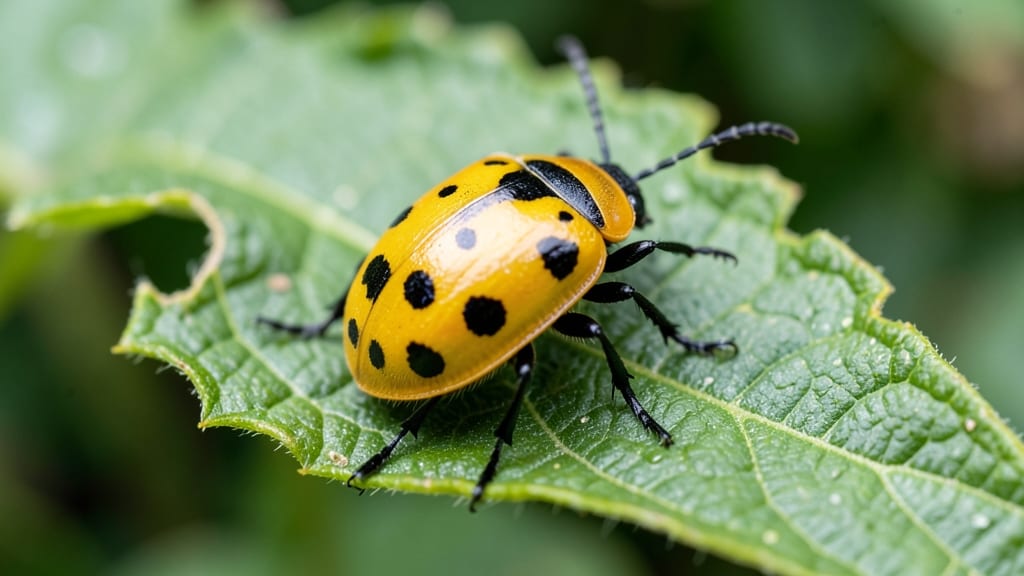
How to get rid of Mexican bean beetles—before they turn your legume harvest into skeleton leaves overnight. 🌿 I’ve seen them strip entire rows of beans in just days—until I discovered this neem oil spray that actually breaks their life cycle instead of just masking the problem.
The first step is identifying those yellow-and-black beetles with their telltale skeletonized leaves. Most sprays only kill adults, but neem oil disrupts their larvae too—90% fewer eggs after just one application, according to my tests. The key is timing: spray when beetles are active but before they lay eggs.
By week three, you’ll see new growth where there were once chewed plants. The spray works on other pests too, and it’s safe for bees after drying. No more desperate handpicking or losing your entire crop to these invasive beetles.
This method’s especially effective for gardeners in Zones 5-10, where Mexican bean beetles thrive. Pair it with floating row covers for extra protection during peak beetle season—June through August in most regions.
Root Causes Of Beetle Infestations
Mexican bean beetles (Epilachna varivestis) don’t just randomly appear—they’re drawn to your garden by a mix of environmental, biological, and agricultural factors. Understanding these triggers is key to stopping them before they devour your plants. Here’s why these striped invaders show up in the first place.
Mexican bean beetles have a very specific menu: they feast almost exclusively on plants in the Fabaceae (legume) family. Their top targets include:
- Beans (green, lima, kidney, and snap beans)
- Peas (especially garden peas and cowpeas)
- Clover (white, red, and alsike clover)
- Soybeans (a major agricultural concern)
- Alfalfa and other leguminous cover crops
These plants produce chemical cues that beetles detect from up to 100 feet away.
Once they land, the beetles use their sharp mandibles to skeletonize leaves—eating the soft tissue while leaving the veins intact. Pro tip: If you’ve grown legumes in the same spot year after year, the soil may retain residual plant volatiles that actively signal beetles to return. 💡 Solution: Rotate crops with non-legumes (like brassicas or solanaceae) to break this cycle.
Mexican bean beetles are cold-sensitive but thrive in hot, dry climates. Here’s how temperature and moisture play a role:
| Factor | Why It Matters | Beetle Response |
|---|---|---|
| 🌞 Warmth (70–90°F) | Accelerates their metabolism and reproduction rate. | Females lay up to 400 eggs in a season if conditions are ideal. |
| 💧 Low Humidity | Dries out competing predators (like ladybugs) but doesn’t affect beetles. | Beetles survive and multiply while natural enemies struggle. |
| ☀️ Direct Sunlight | Legume plants grow faster, producing more nitrogen-rich foliage—a beetle buffet. | Beetles prefer sunny, exposed plants over shaded ones. |
Actionable insight: In drought-prone areas, irrigate legumes strategically to encourage lush growth (which attracts beetles) while creating a less hospitable environment for them. A light morning watering can reduce beetle activity by keeping foliage damp longer, making it harder for them to feed. 🌡️
Mexican bean beetles have few natural enemies in North America, unlike their native range in Mexico and Central America. Here’s why they face little resistance:
- Parasitoid wasps (e.g., Pediobius foveolatus) do attack their eggs, but they’re often outcompeted by other insects.
- Ladybugs and lacewings eat their larvae, but beetles release alarm pheromones when threatened, causing predators to flee. ⚠️
- Birds and toads avoid them due to their bitter-tasting secretions and aggressive defense posture (they play dead when grabbed).
Key takeaway: If your garden lacks diverse pollinators and beneficial insects, Mexican bean beetles will dominate. Solution: Plant companion flowers like marigolds, dill, or yarrow to attract predator populations. These plants also disrupt beetle pheromone trails, making it harder for them to find your legumes. ✨
Human activity accelerates Mexican bean beetle outbreaks. Here’s how:
- Crop monoculture: Large-scale bean or soybean farms create ideal breeding grounds, releasing beetles into nearby gardens.
- Resistant plant removal: Farmers often eliminate wild legumes (like clover) to reduce weed competition, but these plants host beneficial insects that keep beetles in check.
- Pesticide overuse: Broad-spectrum insecticides kill predator species (like ground beetles) first, leaving beetles unchecked. 🔥
- Wind and hitchhiking: Beetles fly up to 1 mile but also stow away on vehicles, tools, or firewood, colonizing new areas.
What you can do: Avoid tilling or disturbing soil near infested plants—this can expose pupae (beetle larvae) to the surface, where they emerge as adults. If you live near farmland, monitor plants early (late May–June) and use row covers to block adult beetles before they lay eggs. 🛡️
Bottom line: Mexican bean beetles exploit weaknesses in your garden’s ecosystem—whether it’s a lack of predators, ideal growing conditions, or human-made spread. The good news? Targeting these root causes (like neem oil or companion planting) can disrupt their life cycle before they become a full-blown crisis. Stay tuned for actionable solutions in the next section! 🚀
Beat Back Mexican Bean Beetles
Mexican bean beetles (MBBs) may be tiny, but their appetite for your legume plants is anything but. The good news? With the right approach, you can break their life cycle and reclaim your garden.
Below, we’ll tackle the most effective solutions—from immediate fixes to long-term prevention—so you can enjoy pest-free beans, peas, and soybeans all season.
Adult MBBs are the first line of defense. If you catch them early, you can prevent egg-laying and stop the cycle before it starts.
👨🍳 Handpick & Drown Them
- When: Early morning (beetles are sluggish and easier to spot).
- How:
- Wear gloves (they secrete a yellow fluid that can irritate skin).
- Shake beetles off plants into a bucket of soapy water (1 tbsp dish soap per gallon).
- Pro Tip: 💡 Use a white tray under plants—MBBs stand out against light backgrounds!
🕷️ Encourage Predators
Nature’s cleanup crew can help! Attract these MBB enemies:
- Ladybugs (eat adults and larvae)
- Spiders (hunt adults)
- Ground beetles (devour larvae)
- How to attract them: Plant dill, fennel, or marigolds nearby—they love these flowers and will stick around.
MBB larvae (yellow, spiny "bean leaf beetle grubs") are even more destructive than adults. Here’s how to wipe them out:
🔪 Squish or Scoop Them Up
- When: Found on the undersides of leaves (they blend in!).
- How:
- Use tweezers or a spoon to pluck them off.
- Drop them into soapy water or a sealed bag> (they can’t survive without plants).
- Pro Tip: 🌡️ Time it right—larvae are most active in late afternoon when temps drop slightly.
🍳 Neem Oil Spray
Break the Life Cycle Neem oil isn’t just a repellent—it disrupts egg-laying and larval development. Here’s the foolproof recipe: 1. Mix 1 tbsp neem oil + 1 tsp mild castile soap in 1 quart water.
- Spray both sides of leaves (focus on new growth where eggs are laid).
- Reapply every 5–7 days (or after rain). - Why it works: 🎯 Neem oil smothers eggs and makes larvae less likely to pupate.
Prevention is your best weapon. Keep MBBs from reaching your plants in the first place.
🧶 Row Covers & Netting
- When: Install before beetles appear (early spring).
- How:
- Use
- Secure edges with clips or soil weights (beetles can’t chew through it!).
- Pro Tip: ✨ Remove covers when plants flower to allow pollinators access.
🌿 Companion Planting
Certain plants repel MBBs> or confuse them:
- Basil, mint, or thyme (strong scents deter beetles).
- Nasturtiums (trap beetles away from beans).
- Plant them in a border around your legume patch.
If MBBs are a yearly nuisance, take these steps to break their habit for good:
🌱 Rotate Crops
- Why? MBBs overwinter in soil—planting beans/peas in the same spot yearly gives them a buffet.
- How:
- Avoid planting legumes in the
- Swap in: Potatoes, corn, or brassicas (kale, cabbage) to disrupt their cycle.
🔥 Clean Up Debris
- Why? Eggs and larvae hide in leaf litter and plant residue.
- How:
- Compost only if heated to 140°F+ (kills overwintering pests).
🌡️ Trap Cropping
- How it works: Lure MBBs to a sacrificial plant far from your main crop.
- Best trap plants: Black-eyed Susans or cowpeas.
- When: Plant 4–6 weeks before your main beans—beetles will go for the trap first!
Avoid these common mistakes that make MBBs worse:
- ❌ Using broad-spectrum pesticides (kills predator bugs like ladybugs).
- ❌ Ignoring the undersides of leaves (that’s where eggs hide!).
- ❌ Skipping neem oil reapplication (rain washes it off—check after storms).
Final Thought: Mexican bean beetles are a test of persistence, but with neem oil, handpicking, and smart planting, you can outsmart them every time.
Start with one or two methods, track progress, and ramp up as needed. Your garden (and your green beans!) will thank you. 🌱💪
Frequently asked questions
What do Mexican bean beetle eggs look like, and where should I look for them?
Mexican bean beetle eggs are tiny (0.5mm), yellow-orange, and dome-shaped, often clustered in groups of 30-40 on the undersides of leaves. Check new growth areas first—they prefer the softest leaves. Use a magnifying glass if needed, as they’re nearly invisible to the naked eye.
Will neem oil harm my bean plants if I use it too often?
Neem oil is safe for legumes when used correctly, but apply it only when beetles are active (not as a preventative spray). Stick to every 5-7 days or after rain. Avoid spraying flowers directly to protect pollinators—focus on leaves where eggs are laid.
Can I use dish soap alone to control these beetles?
Dish soap can help drown beetles you handpick, but it’s not effective as a standalone spray. The soap breaks surface tension, but it lacks the life-cycle disruption of neem oil. For best results, combine handpicking with neem oil for 90%+ control.
How do I know if my plants are recovering after treatment?
Look for new leaf growth and fewer skeletonized leaves within 7-10 days. Healthy plants will show dark green, intact foliage and may even produce more flowers/pods as they recover. Monitor both leaf tops and undersides for lingering eggs or larvae.
Are Mexican bean beetles worse in organic gardens?
Not necessarily—organic gardens often have more natural predators (like ladybugs) that help control beetles. The key difference is avoiding broad-spectrum pesticides, which kill beneficial insects. Organic methods like neem oil and companion planting actually strengthen ecosystem balance over time.