
Size
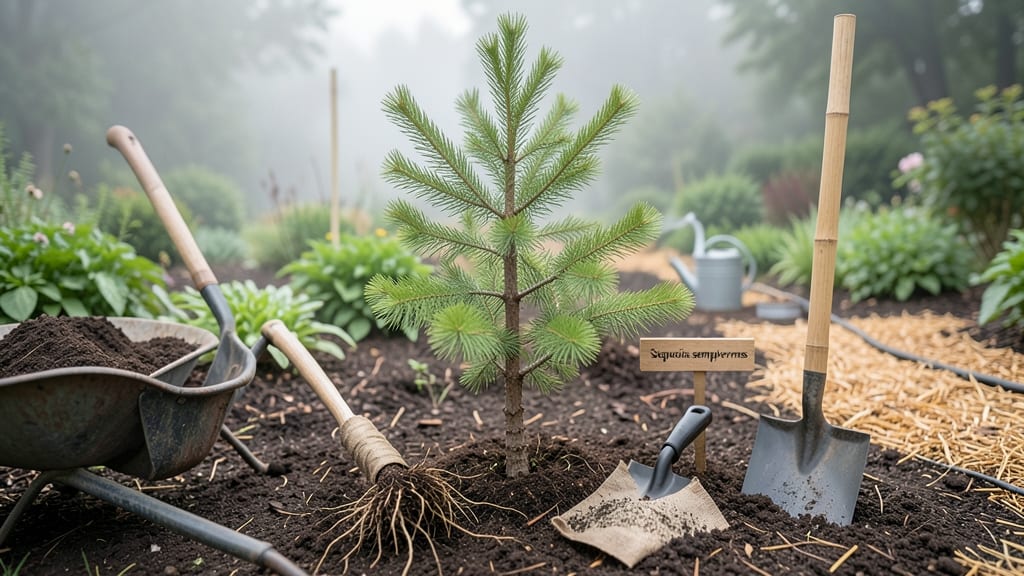
How to grow a redwood starts with a dream—and a 100-foot vision. 🌲 These ancient giants aren’t just trees; they’re living monuments that take centuries to reach their full glory. But with the right conditions, you can nurture one from a tiny seedling, even if your backyard isn’t a foggy California forest.
The secret lies in mimicking their natural habitat: cool, moist climates with well-draining, acidic soil and plenty of shade. Redwoods need space—think 30+ feet of clearance—and patience, as growth is slow but steady.
Most gardeners start with nursery-grown seedlings rather than seeds, since germination can take months (or years) under ideal conditions.
What you’ll get isn’t instant gratification—it’s a legacy. Imagine decades of watching your redwood rise, its bark developing that signature cinnamon hue, its branches stretching toward the sky like a living cathedral.
With consistent moisture, protection from wind, and a little extra care during dry spells, your redwood could one day cast shade over future generations.
Fair warning: this isn’t a project for small yards or impatient gardeners. But if you have the space and the time, there’s nothing quite like growing a tree that could outlive you—and every generation after. Let’s get those roots growing!
📚 In This Guide
- What you need
- Instructions
- Tips and common mistakes
- Wrapping up and next steps
What you need
- ● Redwood Seedlings or Cuttings: 1-2 Sequoia sempervirens (coast redwood) or Sequoiadendron giganteum (giant sequoia) seedlings (dwarf varieties like 'Pendulum' or 'Monument Valley' are best for home gardens).
- ○ Optional: Pre-germinated seeds (if available) for faster growth.
- ● Well-Draining Soil: 60% peat moss or coco coir (for moisture retention).
- ● 30% perlite or coarse sand (for aeration).
- ● 10% compost or worm castings (for nutrients).
- ● pH Level: 5.0–7.0 (slightly acidic to neutral).
- ● Growing Containers: 1–2 5-gallon fabric pots or wooden barrels (for young seedlings; redwoods hate root-bound stress!).
- ○ Optional: Raised beds (if planting outdoors in mild climates).
- ● Sunlight & Location: Full sun (6+ hours daily) or partial shade (for dwarf varieties in hot climates).
- ● Protected spot from strong winds (redwoods are top-heavy!).
- ● Watering Supplies: Watering can with rose attachment (for gentle, deep watering).
- ○ Optional: Drip irrigation system (for consistent moisture).
- ● Fertilizer: Balanced 10-10-10 or 20-20-20 fertilizer (diluted to half-strength).
- ○ Optional: Slow-release organic fertilizer (like fish emulsion or seaweed extract).
- ● Temperature: Redwoods thrive in USDA Zones 5–9 (dwarf varieties tolerate cooler temps better).
- ● Humidity: High humidity (60%+) is ideal—mist seedlings daily if air is dry.
- ● Outdoor Planting (Long-Term): Only attempt in coastal or foggy climates (or use a greenhouse in drier areas).
- ● Warning: Redwoods cannot survive frost below 15°F (-9°C) without protection.
- ● 💡 Start small: Dwarf redwoods (under 30 ft) are your best bet for home gardens—avoid full-sized specimens!
- ● 🌡️ Mimic nature: Redwoods love consistent moisture (think foggy forests, not deserts!).
- ● 🔄 Repot yearly: Redwood roots grow fast—upgrade pots as your tree outgrows its home.
Step-by-step instructions for growing a redwood tree
Redwoods aren’t just for redwood country—with patience and the right conditions, you can nurture these giants in your own yard.
🌱 Step 1: Select the Right Redwood Species and Sourcing
Start with a coast redwood (Sequoia sempervirens) or giant sequoia (Sequoiadendron giganteum)—both thrive in mild climates. I always buy 1-3 year-old container-grown seedlings from reputable nurseries, as they establish faster than seeds. Check the root system: healthy roots should be white and fibrous, not brown or mushy.
Real talk: If you live in a hot, dry climate, skip this project. Redwoods demand cool summers (60-75°F), high humidity, and year-round rainfall (30+ inches annually). Before buying, research your hardiness zone—coast redwoods tolerate zones 5-10, while giant sequoias prefer 5-8. Planting outside these ranges risks stunted growth or death.
🪴 Step 2: Prepare the Planting Site Like a Forest Floor
Redwoods need space—think 100+ feet tall and 10+ feet wide at maturity. Dig a hole twice as wide as the root ball but only as deep. The top of the root ball should sit 1-2 inches above ground level to prevent rot. Amend the native soil with 3-4 inches of compost mixed into the bottom of the hole—redwoods thrive in acidic, well-draining soil (pH 5.5-7.0).
Here’s the thing—redwoods hate competition. Remove all weeds and grass within a 10-foot radius of the planting site. Mulch the area with 3-4 inches of wood chips, keeping mulch 6 inches away from the trunk to prevent rot. Water deeply before planting to settle the soil—you’ll see the hole edges firm up slightly when done.
☀️ Step 3: Plant and Water for Immediate Stability
Gently remove the seedling from its container and loosen any circling roots with your fingers. Place it in the hole, backfill with native soil (not amended mix), and tamp lightly to eliminate air pockets. Water slowly and deeply until the soil is saturated—1-2 gallons per foot of tree height (so 3-6 gallons total for a young seedling).
Don’t overwater now. You’ll know moisture is right when the soil surface looks slightly damp but not glistening. After planting, water every 2-3 days for the first month, then taper to once a week once established. Redwoods hate soggy roots but also can’t handle drought—watch for wilting needles (a sign of underwatering) or yellowing leaves (overwatering).
🌿 Step 4: Provide Year-Round Care for Long-Term Growth
Fertilize once a year in early spring with a balanced, slow-release fertilizer (10-10-10). Apply ½ cup per inch of trunk diameter around the drip line (the edge of the tree’s canopy). Water deeply after fertilizing to help nutrients absorb. Prune only to remove dead or diseased branches—redwoods rarely need shaping.
This is the moment that matters: protect your redwood from wind. Young trees are vulnerable to root uprooting or stem breakage. If your yard gets strong winds, stake the tree temporarily with 3-4 stakes and flexible ties for the first 2-3 years. Remove stakes once the root system stabilizes—you’ll see new growth at the base as a sign it’s holding strong.
⏰ Step 5: Monitor for Pests and Climate Shifts
Redwoods rarely face pests, but aphids or spider mites can appear in dry conditions. Spray infested areas with neem oil (mix 1 tbsp per gallon of water) and repeat every 7-10 days until pests vanish. Watch for bark splitting in winter—this happens when temperatures drop below 20°F. If your area gets colder, wrap the trunk with burlap for insulation.
Patience is key. Your redwood will grow 1-2 feet per year in ideal conditions, but 50+ years to reach maturity. Celebrate the small wins: new needle clusters in spring, thicker bark by summer, and a canopy that finally shades your patio. With the right care, your backyard redwood will one day feel like a piece of the ancient forest.
Tips & tricks for perfect redwood growth
Between us, growing a redwood isn't just about planting a seedling—it's about creating the right conditions to mimic its natural habitat. Here's what nobody tells you about nurturing these ancient giants.
Species Selection Matters: While both coast redwoods and giant sequoias work, I've found coast redwoods (Sequoia sempervirens) establish slightly faster in container-grown form. Look for seedlings with white, fibrous roots—never brown or mushy. If you're in zone 5-7, giant sequoias might be your better bet for colder winters, but they need slightly more protection from wind. The key is matching your climate to the species' natural range.
Soil Preparation is Non-Negotiable: That 3-4 inches of compost in the planting hole isn't just decoration—it's the foundation for healthy root development. I always test my soil pH first (aim for 5.5-7.0) and add sulfur if needed. For the 10-foot weed-free radius, I use a landscape fabric under the mulch to prevent regrowth without smothering the tree. This mimics the forest floor where redwoods naturally grow.
Watering Wisdom: The 3-6 gallons of water for your young seedling might seem like a lot, but it's critical for establishing roots. I use a soaker hose for the first month to ensure even moisture penetration. That "slightly damp but not glistening" soil surface is your target—it prevents both waterlogging and drought stress. After the initial month, I switch to deep watering once a week during dry spells, watching for those wilting needles as my early warning system.
Wind Protection Strategy: Those 3-4 stakes for the first 2-3 years aren't just for show—they're vital for preventing root uprooting. I use flexible tree ties that won't cut into the bark as the trunk grows. The trick is to loosen them periodically as the tree thickens. You'll know you've done it right when you see new growth at the base—that's your redwood telling you it's stabilized.
Pro Tips for Grow A Redwood
- Between us, growing a redwood isn't just about planting a seedling—it's about creating the right conditions to mimic its natural habitat.
- Species Selection Matters: While both coast redwoods and giant sequoias work, I've found coast redwoods (Sequoia sempervirens) establish slightly faster in container-grown form.
- Soil Preparation is Non-Negotiable: That 3-4 inches of compost in the planting hole isn't just decoration—it's the foundation for healthy root development.
Frequently asked questions
Got questions about growing your own redwood? You’re not alone—these towering giants are tricky to cultivate! Below, we’ve rounded up the most common queries to help you navigate the process with confidence.
Can I grow a redwood tree from a seed?
Yes, but it’s a long process! Redwood seeds (from Sequoia sempervirens) take 2–5 years to germinate and decades to mature. For faster results, opt for a 1–3-year-old sapling from a nursery. Patience is key—these trees don’t rush!
How long does it take for a redwood to reach full height?
Redwoods grow 3–4 feet per year when young, but full maturity (300+ feet!) takes 600–1,000+ years. In your backyard, expect a 10–20-foot tree in 20–30 years—still impressive, but not a skyscraper!
What’s the best climate to grow a redwood?
Redwoods thrive in USDA Zones 7–10, with cool, humid summers and mild winters. They need plenty of rain (50+ inches/year) or consistent watering. If you’re in a drier area, consider coast redwood hybrids or dawn redwoods (hardier alternatives).
Why is my redwood sapling dying? Common issues and fixes.
- Yellowing needles: Overwatering or poor drainage. Let soil dry slightly between waterings.
- Brown tips: Low humidity or underwatering. Mist leaves or use a pebble tray.
- Stunted growth: Nutrient deficiency. Fertilize with acidic, iron-rich soil in early spring.
- Pests (aphids/spider mites): Spray with neem oil or introduce ladybugs.
Are there smaller redwood alternatives for home gardens?
If space is limited, try:
| Tree | Mature Height | Care Level |
|---|---|---|
| Dawn Redwood (Metasequoia glyptostroboides) | 40–60 feet | Moderate (tolerates drier soil) |
| Coast Redwood (Sequoia sempervirens) ‘Pendula’ (weeping form) | 20–30 feet | High (needs moisture) |
| Giant Sequoia (Sequoiadendron giganteum) ‘Pygmy’ | 10–15 feet | Low (drought-tolerant) |
These still pack old-growth vibes without the skyscraper commitment!
Wrapping up and next steps
Growing a redwood in your backyard is a rewarding challenge—one that connects you to nature’s giants while transforming your space into a living legacy. 🌲 With patience, the right conditions, and a little care, you can nurture a tree that may one day rival the ancient forests of California.
Start small, stay consistent, and remember: every seedling begins as a dream.
Ready to take the next step? Visit your local nursery to pick out your redwood seedlings, then mark your calendar for planting season—spring or early fall. Your future forest awaits!