
Size
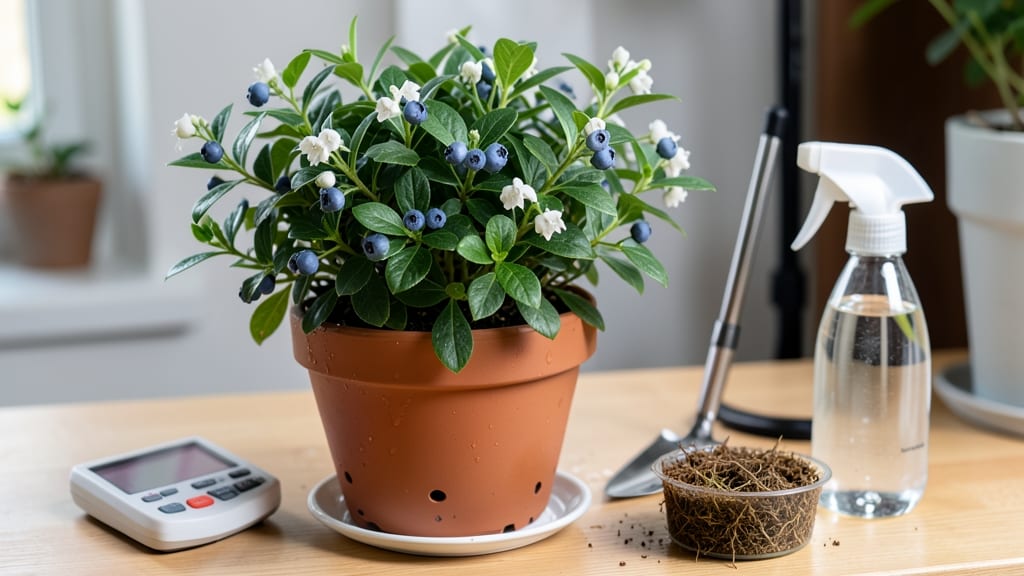
How to grow blueberries inside means year-round harvests in tiny spaces. 🌱 My first attempt with a dwarf bush turned my kitchen into a berry factory—no yard required. The secret? Matching the right variety to your indoor conditions and keeping everything in balance.
You'll need a dwarf bush (like 'Top Hat' or 'Peach Sorbet'), a 5-gallon container with drainage, and soil that stays acidic (4.5-5.5 pH). Light is the trickiest part—blueberries crave 6-8 hours of bright light daily, so supplement with a grow bulb if natural light falls short.
Temperature should stay between 60-75°F, and humidity matters too (think 50-60%).
By summer, you'll be picking sweet, juicy berries straight from your windowsill. The plants stay compact (3-4 feet tall), so they fit even in small apartments. Pollination is the only challenge—hand-pollinate with a soft brush or grow two bushes for cross-pollination.
Patience pays off: full harvests start in 2-3 years for container-grown plants.
Perfect for city dwellers, small spaces, or anyone who wants fresh berries without a garden. The key is consistency—light, water, and acidity. Once you nail those, you'll have blueberries on demand, no matter the season.
📚 In This Guide
- What you need
- Instructions
- Tips and common mistakes
- Wrapping up and next steps
What you need
- ● Dwarf blueberry bush: Choose a low-chill variety like 'Top Hat' or 'Peach Sorbet' (1-3 plants, depending on pot size).
- ● Containers: 5-gallon pots or larger (1 per plant). Ensure they have drainage holes!
- ● Well-draining potting mix: Acidic blend (pH 4.5–5.5). Mix 50% peat moss or coconut coir + 50% perlite or sand.
- ● Fertilizer: Acid-loving plant fertilizer (e.g., Miracle-Gro Azalea/Camellia) or organic options like fish emulsion.
- ● Grow lights: Full-spectrum LED (12–16 hours/day). A 24-inch fixture works for 1–2 plants.
- ● pH testing kit: Digital or liquid test strips to monitor soil acidity.
- ● Spray bottle: For gentle watering (avoid soggy soil!).
- ● Pruning shears: Sharp, sterilized shears for trimming.
- ● Self-watering system: Drip irrigation or saucers to maintain moisture.
- ● Humidity tray: A pebble tray with water to boost humidity (blueberries love it!).
- ● Pollination aid: A soft paintbrush to hand-pollinate flowers if bees aren’t visiting.
- ● Support stakes: For taller varieties (e.g., bamboo stakes or trellises).
- ● Blueberry companion plants: Like thyme or mint (non-invasive!) to deter pests.
Step-by-step instructions for growing dwarf blueberry bushes indoors
Here's how to cultivate thriving dwarf blueberry bushes inside—no greenhouse needed.
🪴 Step 1: Select the Right Dwarf Variety and Container
Choose a dwarf blueberry bush like 'Top Hat' or 'Peach Sorbet'—these stay under 3 feet tall and thrive in pots. Pick a 12-15 inch diameter container with drainage holes to prevent root rot. I use unglazed terra cotta because it breathes and mimics outdoor conditions better than plastic.
Fill the pot with acidic potting mix (pH 4.5-5.5)—regular soil won’t cut it. Mix 50% peat moss or coconut coir with 50% perlite or sand for drainage. The goal is a light, airy medium that mimics blueberry bogs. Tap the pot gently to settle the mix without compacting it.
🌱 Step 2: Plant and Adjust Soil pH
Dig a hole twice as wide as the root ball but only as deep as the top of the root flare. Gently remove the bush from its nursery pot and loosen any circling roots with your fingers. Place it in the hole so the top of the root ball sits just below the soil line—burying too deep suffocates the stem.
Test your soil pH with a meter kit—blueberries demand acidity. If your mix reads above 5.5, amend it with sulfur granules (follow package rates) or cotton compost. Recheck pH after 2 weeks. Water thoroughly after planting, but avoid soggy soil—blueberries hate wet feet.
☀️ Step 3: Position for Light and Temperature
Place your bush in the brightest spot—a south-facing window gets 6-8 hours of direct sun, but grow lights are essential if natural light is weak. Use a full-spectrum LED on a 14-hour timer (mimicking summer daylight). Keep the light 6-12 inches above the bush, raising it as it grows to prevent legginess.
Maintain 60-70°F days and 50-60°F nights. A heat mat under the pot helps in cool rooms, but avoid temperatures below 40°F—it stunts growth. If your home runs hot, place a pebble tray with water nearby to increase humidity without soggy soil.
💧 Step 4: Water and Fertilize for Acid-Loving Growth
Water when the top 1-2 inches of soil feel dry—blueberries need consistent moisture but never soggy roots. Use rainwater or distilled water if possible (tap water’s minerals raise pH over time). I water deeply in the morning, letting excess drain completely before refilling the saucer.
Feed every 4-6 weeks with an acid-loving fertilizer like Miracle-Gro Azalea/Camellia (high in iron and manganese). Avoid high-nitrogen blends—they promote leafy growth at the expense of berries. In late summer, switch to a low-nitrogen, high-phosphorus fertilizer to encourage fruiting.
✂️ Step 5: Prune and Pollinate for Fruit Set
Prune in early spring before new growth starts. Remove dead or crossing branches, then cut back last year’s wood by one-third to open the center. Blueberries flower on old wood, so avoid heavy pruning after June—you’ll sacrifice next year’s crop. I sterilize my pruners with rubbing alcohol to prevent disease.
Since indoor bushes lack bees, hand-pollinate in spring. Use a soft paintbrush to transfer pollen from flower to flower daily for 2 weeks. Watch for white blossoms—they’re your cue to start pollinating. Thin berries to 1 inch apart once they form to ensure larger fruit and prevent overcrowding.
Tips & tricks for growing thriving indoor blueberry bushes
Between us, growing blueberries indoors isn't just possible—it's a rewarding challenge that pays off with fresh fruit year-round. Here's what I've learned after watching my own bushes thrive (and occasionally struggle) in my kitchen.
Container Selection Matters: While the instructions mention 12-15 inch diameter pots, I've found that wider containers (up to 18 inches) give roots more room to spread horizontally, which mimics natural bog conditions. The extra space prevents root binding that can stunt growth. Terra cotta is ideal, but if you use plastic, add extra drainage holes—blueberries despise soggy feet. I always place a layer of pebbles at the bottom before adding my acidic mix to improve drainage further.
Light Strategy for Maximum Yield: Those crucial 6-8 hours of light? Don't skimp on quality. I've seen bushes with adequate light hours but poor growth because the spectrum was off. Invest in a full-spectrum LED that covers the entire plant, not just the top. Rotate your bush quarter-turns daily so all sides get even exposure—this prevents lopsided growth and ensures consistent fruiting. In winter, supplement with a grow light on a 14-hour timer, even if natural light is sufficient.
pH Monitoring is Non-Negotiable: The 2-week pH recheck after amending is just the beginning. I test my soil pH monthly using a digital meter—blueberries are sensitive to even slight pH shifts. If your mix creeps above 5.5, add a teaspoon of sulfur granules per gallon of soil and water thoroughly. The goal is to maintain that 4.5-5.5 range consistently. I've seen bushes with perfect light and water fail because their pH drifted too high over time.
Pruning Precision Pays Off: When you cut back last year's wood by one-third in Step 5, focus on removing branches that cross or grow inward. These competing branches steal energy from fruit production. I always make my cuts just above outward-facing buds—this encourages outward growth that's easier to pollinate and harvest. Sterilizing your pruners between cuts prevents disease spread, especially important when you're working with multiple branches.
Pro Tips for Grow Blueberries Inside
- Between us, growing blueberries indoors isn't just possible—it's a rewarding challenge that pays off with fresh fruit year-round.
- Container Selection Matters: While the instructions mention 12-15 inch diameter pots, I've found that wider containers (up to 18 inches) give roots more room to spread horizontally, which mimics natural bog conditions.
- Light Strategy for Maximum Yield: Those crucial 6-8 hours of light?
Frequently asked questions
Can I grow blueberries indoors year-round?
Yes! With the right setup—like a dwarf bush variety, proper lighting (grow lights or a sunny window), and a well-draining pot—you can enjoy fresh blueberries indoors regardless of the season. Just ensure your plant gets 6–8 hours of light daily and maintains temperatures between 60–80°F (15–27°C).
How long does it take for an indoor blueberry bush to bear fruit?
Patience is key! Most dwarf varieties take 1–3 years to produce fruit indoors, depending on care. Start with a healthy 1–2-year-old plant from a nursery to speed up the process. Prune regularly and fertilize with acid-loving plant food to encourage faster fruiting.
What’s the easiest dwarf blueberry variety for beginners?
For indoor success, try ‘Top Hat,’ ‘Peach Sorbet,’ or ‘Pink Lemonade’—they’re compact, disease-resistant, and thrive in containers. ‘Top Hat’ is especially beginner-friendly, staying under 2–3 feet tall and producing sweet berries reliably.
Why are my indoor blueberries not ripening or turning red?
Common culprits include insufficient light (move closer to a window or upgrade to grow lights), poor pollination (hand-pollinate with a soft brush), or nutrient deficiencies. Check soil pH (aim for 4.5–5.5) and ensure consistent watering—neither soggy nor bone-dry soil.
Can I grow blueberries in a small apartment with limited space?
Dwarf varieties fit perfectly on balconies, windowsills, or even countertops. Use a 5–10 gallon pot with drainage holes, and opt for self-pollinating types like ‘Blueberry ‘Bluecrop’ (dwarf)’ to save space. Just rotate the pot occasionally for even light exposure!
Wrapping up and next steps
Growing blueberries indoors isn’t just a dream—it’s a delicious, rewarding reality! 🌱 With the right dwarf variety, containers, and care, you’ll enjoy sweet, homegrown berries year-round. Start small, stay patient, and soon you’ll be savoring the taste of success (and maybe even sharing jars of jam with friends!).
Ready to take the next step? Pick your favorite blueberry variety and grab those containers—your indoor harvest is waiting! 🍇