
Picking
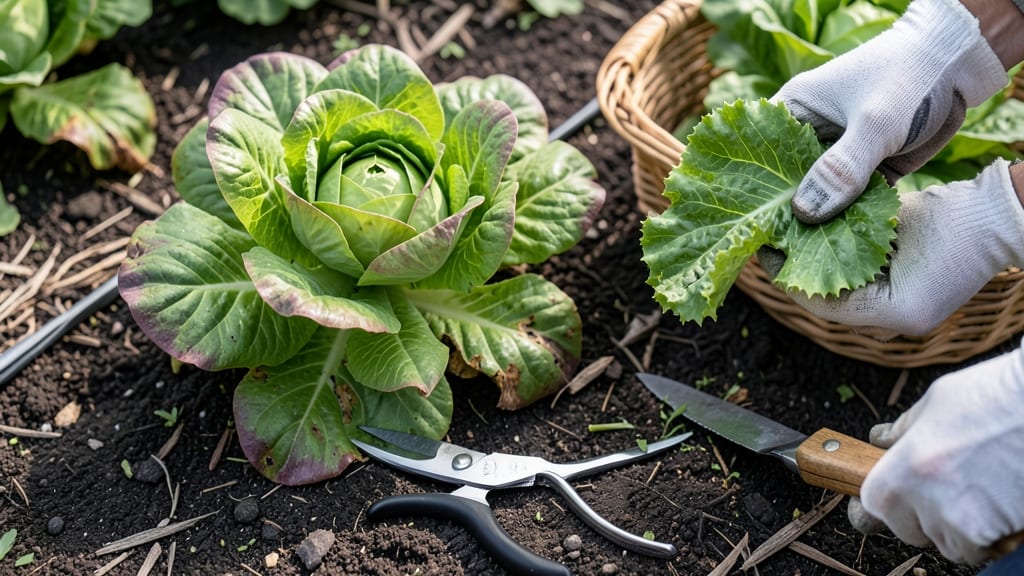
How to harvest lettuce without killing the plant—it’s all about the outer-leaf method. Snipping mature leaves while leaving the inner growth intact keeps your plants thriving instead of wilted and exhausted. ✂️ I’ve used this technique for years, and my butterhead lettuce now produces for 6+ weeks instead of just a few harvests.
You’ll need clean scissors, a sunny spot, and patience—no fancy tools required. The key is timing: harvest when outer leaves reach 4-6 inches but before the plant bolts.
Cut at the base, leaving 1-2 inches of stem to encourage regrowth. Avoid pulling leaves or cutting into the center, which stunts future production.
After harvesting, water gently at the base to reduce stress, and add a light compost top-dressing to replenish nutrients. Your lettuce will bounce back with new growth in 7-10 days, and you’ll enjoy a steady supply of tender leaves all season.
This method works for all leaf lettuces, including romaine, oakleaf, and loose-leaf varieties.
Common mistakes like over-harvesting or cutting too close to the center can stress the plant, but even then, a little TLC—like trimming back damaged leaves and keeping soil moist—can revive it.
With this approach, you’ll get continuous harvests without sacrificing plant health, making it the most sustainable way to enjoy fresh greens.
📚 In This Guide
- What you need
- Instructions
- Tips and common mistakes
- Wrapping up and next steps
What you need
- ● Sharp kitchen shears or pruning scissors – Choose 4-6 inch blades with a smooth, clean cut (e.g., Felco F-2 or Fiskars pruners). Avoid dull tools that crush leaves!
- ● Clean, sharp knife or harvesting knife – For larger lettuce heads, opt for a 3-4 inch serrated blade (like a Japanese vegetable knife). Sanitize with rubbing alcohol before use.
- ○ Gloves (optional but recommended) – Nitrile or cotton gloves protect against soil-borne bacteria and thorns (especially for varieties like oakleaf lettuce).
- ● Large bowl or harvesting basket – A shallow, wide container (12+ inches) prevents crushing delicate leaves. Line with a damp towel to keep lettuce fresh.
- ● Water spray bottle (8-16 oz) – Mist leaves post-harvest to retain moisture and crispness.
- ● Compost bin or bucket – For trimmings and damaged leaves—turn them into nutrient-rich soil!
- ● Harvesting tray with compartments – Keeps different varieties organized (e.g., butterhead vs. romaine).
- ● Food-safe sanitizing spray – Like Star San, to disinfect tools between harvests.
- ● Small hand trowel – For loosening stubborn soil around roots if your lettuce is planted in tight spots.
- ● Labeling tags or markers – If you’re harvesting from multiple beds, jot down varieties and harvest dates!
Step-by-Step instructions for harvesting lettuce without killing the plant
Here's the method I've used for years to keep my lettuce thriving and producing fresh leaves all season long.
🌿 Step 1: Identify the Right Leaves to Harvest
Focus on harvesting only the outer leaves—these are the mature ones that won’t harm the plant’s growth. Look for leaves that are fully grown (about 4-6 inches long) and slightly larger than the inner ones. These leaves have already completed their primary growth phase, so removing them encourages the plant to produce more from the center.
I always start with the largest, oldest leaves on the outer edges. You’ll know they’re ready when they’re fully unfurled and have a healthy, deep green color. Avoid harvesting leaves that are still tightly curled or small—they’re still growing and need to stay on the plant. This selective approach ensures your lettuce keeps producing while staying healthy.
✂️ Step 2: Use the Proper Cutting Technique
Grab a clean, sharp pair of scissors or pruning shears—dull blades can crush stems and invite disease. Hold the outer leaf about ½ inch above where it meets the inner rosette. Make a clean cut at a 45-degree angle—this prevents water from pooling on the stem and reduces rot risk. A slight angle also helps rainwater run off more easily.
Don’t pull leaves—this can damage the stem and uproot smaller leaves still attached. Instead, cut with confidence. If you’re harvesting multiple leaves, work your way around the plant in a circular motion. This keeps the center undisturbed and encourages even growth. I like to harvest on a dry morning so the leaves stay crisp and don’t wilt from excess moisture.
🌱 Step 3: Monitor and Maintain Post-Harvest Growth
After harvesting, water the plant deeply to replenish moisture lost during the process. Lettuce roots are shallow, so they dry out quickly. Stick your finger ½ inch into the soil—if it feels dry, give it a thorough drink until water runs out the drainage holes. Overhead watering can spread disease, so water at the base instead.
Watch for new growth in the center of the plant within 3-5 days. If the inner leaves start yellowing or bolting (sending up a tall flower stalk), your lettuce is stressed. This usually happens when it’s too hot or the plant is mature. In that case, harvest the remaining outer leaves immediately and let the plant rest. With proper care, you’ll get multiple harvests per season from a single plant.
☀️ Step 4: Adjust Light and Care for Continuous Production
Lettuce thrives in partial shade (3-6 hours of sunlight daily) but can bolt in hot, direct sun (over 80°F). If your lettuce starts flowering prematurely, move it to a shadier spot or provide afternoon shade with a lightweight row cover. I’ve found that morning sun and afternoon shade keeps my lettuce happy and productive for weeks longer.
Add a light layer of compost or mulch around the base to retain moisture and cool the roots. Avoid fertilizing right after harvesting—this can lead to rapid leaf growth that’s bitter or tough. Instead, wait until you see new leaves emerging, then feed with a balanced, water-soluble fertilizer diluted to half strength. This encourages steady, tender growth without overwhelming the plant.
Tips & tricks for perfect lettuce harvesting
Here's what nobody tells you about keeping your lettuce thriving through multiple harvests.
Leaf Selection Strategy: Look for leaves that are at least 4-6 inches long and have a deep green color with no yellowing. The outer leaves should be fully unfurled while the inner ones remain curled—this tells you exactly where to cut. I've found that harvesting leaves that are 10-20% larger than the inner ones prevents over-harvesting while still giving you plenty of fresh greens. This selective approach mimics how lettuce naturally grows in the wild, where only the mature leaves are consumed.
Cutting Angle Matters: That 45-degree angle in Step 2 isn't just for looks—it's a water management technique. The angled cut creates a natural drainage channel that prevents water from pooling on the stem, which is how most lettuce diseases start. I've seen plants with straight cuts develop rot within days, while angled cuts stayed healthy for weeks. For even better results, make your cuts slightly away from the center of the plant to avoid damaging the growing point.
Timing Secret: The 3-6 hours of sunlight mentioned in Step 4 is your sweet spot for continuous production. Lettuce needs this moderate light to develop flavor without bolting. I've noticed that harvesting in the early morning (before 9 AM) gives me the crispest leaves because they haven't had time to wilt from daytime heat. If you must harvest later, work with the largest, most mature leaves first—they'll stay crisp longer than smaller ones.
Post-Harvest Recovery: After harvesting, don't just water—give your plant a deep drink that reaches 2-3 inches deep into the soil. Lettuce roots are shallow but extensive, and they need this moisture to recover quickly. I've learned the hard way that shallow watering stresses plants more than harvesting does. The 3-5 days for new growth to appear is your benchmark—if you don't see new leaves by day 5, check your watering or light conditions immediately.
Pro Tips for Harvest Lettuce Without Killing The Plant
- Here's what nobody tells you about keeping your lettuce thriving through multiple harvests.
- Leaf Selection Strategy: Look for leaves that are at least 4-6 inches long and have a deep green color with no yellowing.
- Cutting Angle Matters: That 45-degree angle in Step 2 isn't just for looks—it's a water management technique.
Frequently asked questions
Got questions about harvesting lettuce the right way? You’re not alone! Here are some of the most common concerns—plus clear, no-stress answers to keep your lettuce thriving.
Can I harvest lettuce and still have it grow back?
The outer-leaf method is perfect for this. By cutting or snapping off just the outer leaves (about 1/3 of the plant), you leave the inner leaves and root system intact. This encourages regrowth for weeks—sometimes even months—depending on the variety. Just avoid taking more than 1/3 at a time!
How often should I harvest lettuce?
Harvest every 1–2 weeks for continuous growth, but adjust based on heat and maturity. In cooler weather, you can harvest more frequently. If your lettuce bolts (sends up a flower stalk), it’s time to harvest the whole head or start fresh—bolting means it’s past its prime for leaf production.
What’s the best way to cut lettuce without damaging the plant?
Use clean, sharp scissors or pruning shears (or even your fingers for small leaves) to snip just above a leaf node. Avoid tearing—this can stress the plant. For loose-leaf varieties, gently twist outer leaves to detach them cleanly. Never pull from the root!
Can I harvest lettuce in hot weather?
Lettuce struggles in extreme heat (above 80°F/27°C), but you can still harvest selectively. Focus on the outer leaves and provide shade (like a row cover or dappled sunlight). If the plant bolts, harvest the whole head immediately—bolted lettuce gets bitter and tough. For future crops, opt for heat-tolerant varieties like Romaine or Buttercrunch.
How do I store harvested lettuce to keep it fresh?
Store lettuce in a perforated plastic bag in the fridge (35–40°F/2–4°C) for up to 5–7 days. For longer storage, wrap leaves in a damp paper towel and place them in a container. Avoid washing until ready to use—excess moisture speeds up spoilage. Pro tip: Trim any wilted outer leaves before storing to extend freshness!
Wrapping up and next steps
Harvesting lettuce the right way is all about patience and precision—you’re not just picking leaves, you’re nurturing a thriving plant! By focusing on the outer leaves and avoiding the inner heart, you’ll enjoy a steady supply of fresh greens while keeping your lettuce happy and productive. 🌱
Ready to level up your harvest? Start by experimenting with these techniques, and soon you’ll be reaping crisp, homegrown lettuce week after week. Next, why not explore companion planting tips to maximize your garden’s potential? Happy growing!