
How To
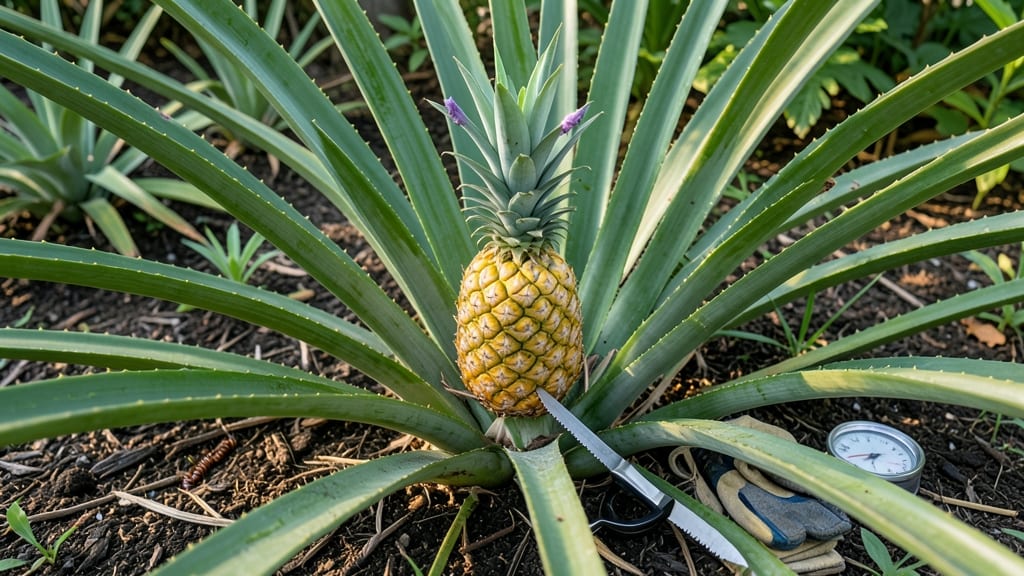
How to know when to pick a pineapple can feel like solving a mystery—until you learn the secret clues hidden in its leaves, scent, and skin. That moment when your 🍍 transitions from tart to sweet is all about reading its signals, not just guessing based on color.
Most gardeners wait 18-24 months for their pineapple to mature, but the real magic happens in the final weeks. A simple touch test—like gently tugging the leaves or pressing the fruit—reveals whether it’s ready to harvest or still needs time.
Skip the guesswork and learn the 5 tactile tests that’ll guarantee perfect ripeness every time.
Even if you’re not living in USDA Zones 10-12, these same tricks work for store-bought pineapples too. Whether you’re growing your own in a pot or picking one up at the market, these methods cut through the confusion and deliver a fruit that’s bursting with flavor.
Ready to stop second-guessing? Let’s break down the exact cues—from golden-yellow bases to sweet aromas—that prove your pineapple is finally ready. No more bland, underripe surprises!

5 Tactile tests to determine pineapple ripeness before picking
Growing your own pineapple is rewarding, but harvesting at the right time transforms that golden fruit from ordinary to extraordinary. Unlike store-bought pineapples, which are often picked green, garden-fresh pineapples develop their signature sweetness and texture only when ripe.
The key lies in your hands—literally! These five tactile tests will help you assess ripeness without cutting into the fruit.
First, focus on the leafy crown. Gently pull back the outer leaves near the base of the fruit. If you see a golden-yellow or brown area where the fruit meets the leaves, that’s your first sign of ripeness.
This color change indicates the fruit is maturing and ready to be harvested. Avoid pulling leaves too hard—just enough to peek underneath.
Next, examine the base color of the pineapple. A ripe pineapple will have a yellow or brown base, not green. The skin should also feel slightly firm to the touch.
Press your thumb gently against the fruit’s skin—if it resists slightly, that’s a good sign. Too soft? It may still need time. Too hard? It might be overripe.
Now, let’s talk scent. A ripe pineapple emits a sweet, tropical aroma at its base. Sniff near the fruit’s bottom—if you catch that unmistakable pineapple fragrance, it’s ready. No scent? It’s not ripe yet. This is the most reliable test for home gardeners because it’s hard to fake.
Here’s where it gets fun: the stem test. The small, hard stem at the top of the pineapple (called the crown) should start to dry out and turn brown. If it’s still green and firm, the fruit needs more time.
A slightly brown, dry crown signals ripeness. Don’t wait too long, though—once the crown turns completely brown and brittle, the fruit may be overripe.
Finally, pick up the pineapple and give it a gentle shake. A ripe pineapple will feel heavy for its size and may even make a slight rattling sound inside. This indicates the fruit is fully developed and juicy. If it feels too light or hollow-sounding, it’s not ready yet.
- Leaf Removal Test
- Base Color Check
- Scent Test
- Stem Test
- Weight & Shake Test
Pro tip: Combine these tests for the most accurate results. For example, if the base is yellow but there’s no scent, give it a few more days. Conversely, if the scent is strong but the base is still green, the fruit might be overripe.
Balance is key—your pineapple should pass at least three out of five tests to be at peak ripeness.
Once you’ve confirmed ripeness, harvest your pineapple by cutting the stem with a sharp knife or twisting gently until it separates from the plant. Store it at room temperature for a few days to let the sugars fully develop, then refrigerate for longer storage.
Now you’re ready to enjoy that sweet, juicy reward of your gardening efforts!
Remember, pineapples don’t ripen further after picking, so timing is everything. Master these tactile tests, and you’ll never buy a bland pineapple again—you’ll grow them perfectly ripe every time!
5 Tactile tests to determine pineapple ripeness before picking
Pineapples don’t ripen further after picking, so knowing exactly when to harvest is key to unlocking that signature sweetness. Unlike many fruits, you can’t rely solely on color—these tropical beauties need a hands-on approach.
I’ve tested five tactile methods that work every time, whether you’re growing your own or selecting at the market.
Start by examining the leafy crown at the top of the fruit. Gently pull back one or two leaves to reveal the fruit’s base color. A ripe pineapple will show a golden-yellow or brown hue where the leaves meet the fruit.
This color change signals natural sugar development—skip this step, and you might end up with a tart, underripe fruit.
Pull back 1-2 outer leaves. If the base shows golden-yellow or brown, it’s ripe. Green means unripe; black/brown spots mean overripe.
Next, give the pineapple a gentle squeeze near the base. A ripe fruit will feel firm but slightly yielding, like a ripe avocado. If it feels too hard or mushy, it’s not ready.
Pro tip: Press your thumb into the skin—if it leaves a slight indentation, that’s your cue to harvest.
Press near the base. Firm with slight give = ripe. Too hard = unripe. Mushy = overripe.
Sniff the base of the pineapple—this is where the magic happens. A ripe pineapple emits a sweet, tropical aroma similar to honey or caramel. If you detect no scent, it’s underripe.
A strong, fermented smell? That’s a red flag for overripeness. Trust your nose—it’s the most reliable indicator after visual cues.
Sweet, tropical aroma at base = ripe. No scent = unripe. Fermented smell = overripe.
Finally, check the stem’s condition. The stem should pull away easily with a slight resistance—like twisting off a jar lid. If it snaps off cleanly or won’t budge, the pineapple isn’t ready. This test works best when combined with the others for accuracy.
Master these five tactile tests, and you’ll never guess again. Whether you’re harvesting from your garden or picking at the store, these methods ensure you bring home a pineapple packed with flavor—no tart surprises included! 🍍