
Tools
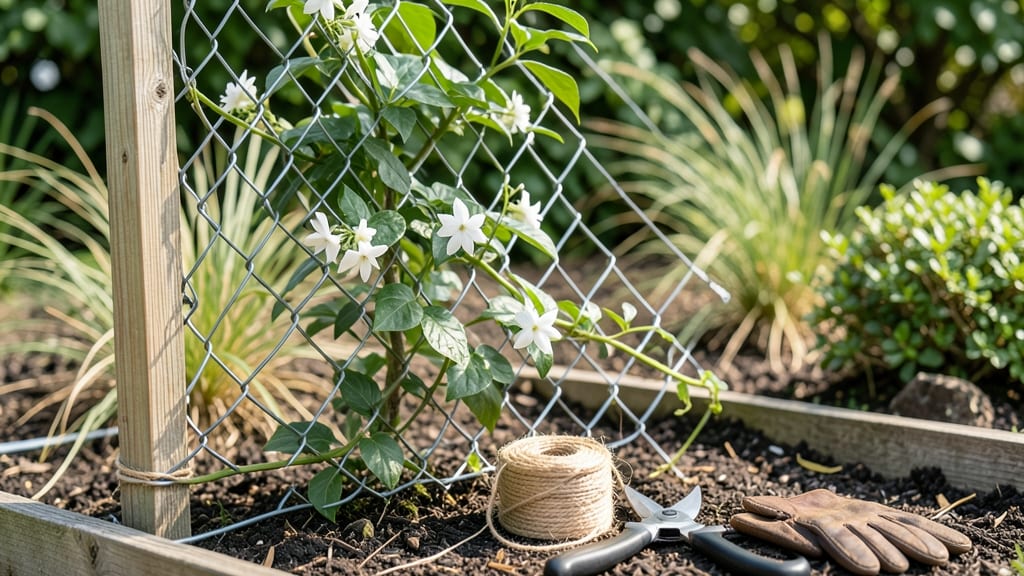
A wire trellis for jasmine transforms your garden into a fragrant paradise. ✨ I built my first trellis after struggling with flimsy plastic supports that sagged under the weight of my star jasmine vines—this one holds strong and looks intentional.
You’ll need galvanized wire (12-14 gauge), sturdy wooden stakes (4-5 feet tall), and a hammer for driving them into the ground. The key is spacing the wires 12-18 inches apart vertically, creating a ladder-like structure that gives vines plenty of grip.
My trellis stands 6 feet tall, perfect for climbing varieties like Jasminum officinale. Once installed, your jasmine will twine up the wires like a natural ladder, producing more blooms and healthier growth.
The fragrant flowers will cascade over the top, creating a living perfume cloud that lasts all summer. Position it where it gets at least 6 hours of sunlight for best results. This project takes under an hour and costs less than $20 for materials.
No more flimsy supports—just a durable, decorative centerpiece that doubles as a vine’s dream. Ready to get started?
📚 In This Guide
- What you need
- Instructions
- Tips and common mistakes
- Wrapping up and next steps
What you need
- ● 18- to 20-gauge galvanized steel wire (100–150 feet, depending on trellis size—thicker wire = longer lifespan)
- ● 4 wooden posts or stakes (4x4 inches, 6–8 feet tall; pressure-treated for outdoor durability)
- ● Heavy-duty zip ties or wire twist ties (20–30, for securing wire to posts)
- ● Measuring tape (25-foot tape for accuracy)
- ● Wire cutters (for clean, precise cuts)
- ● Post hole digger or auger (to bury stakes securely)
- ● Hammer or mallet (for driving stakes into the ground)
- ● Level or carpenter’s square (to ensure posts are straight and even)
- ● Concrete or gravel (to stabilize the base of posts and prevent shifting)
- ● Wire mesh or chicken wire (for added support if training heavy jasmine varieties)
- ● Decorative paint or stain (to match your garden’s aesthetic—fun for a cohesive look!)
- ● Gloves (to protect hands from wire and rough wood)
- ○ Staple gun (optional) (if attaching wire to a pre-built frame instead of stakes)
Step-by-Step instructions for building a wire trellis for jasmine
Here's how I create a simple yet sturdy wire trellis that gives jasmine vines the support they need to climb beautifully.
🪴 Step 1: Gather Materials and Tools
For this project, you'll need 12-gauge galvanized steel wire (the most durable for outdoor use), a wooden post (4x4 or larger for stability), post hole digger, concrete mix (5-gallon bag), wire cutters, gloves, and a measuring tape. I always use galvanized wire because it won't rust over time—jasmine vines can live for decades if given proper support.
Measure and cut your wooden post to 6-8 feet tall (jasmine thrives when climbing vertically). Dig a hole 1 foot deep and 1 foot wide for the post—this ensures it won’t wobble in wind or when vines grow heavy. Mix the concrete according to package instructions, then pour it into the hole while holding the post upright. Let it set for 24 hours before attaching the wire.
✂️ Step 2: Create the Trellis Frame
Once the post is secure, bend the galvanized wire into a pyramid or arch shape (whichever suits your space better). For a pyramid, cut four 6-foot lengths of wire and bend them into V-shapes with a 4-foot base and 6-foot height. Secure the base of each V to the post using wire twists or small zip ties—this creates a sturdy framework.
For an arch, cut two 8-foot lengths and bend them into semi-circles with a 4-foot span. Attach the ends to the top and bottom of the post, then cross the arches in the middle to form an X. This design is perfect for training jasmine to climb in a graceful curve. Test the structure by gently pulling on each wire—it should hold firm without bending.
🌿 Step 3: Add Horizontal Supports for Vine Guidance
Jasmine vines need horizontal wires to twine around as they grow. Using your wire cutters, create 6-8 horizontal rungs spaced 6-8 inches apart vertically. For a pyramid, attach these rungs diagonally between the V-wires. For an arch, weave the horizontal wires through the crossed arches, securing them with twist ties or by wrapping the wire around itself.
I like to add small loops at each horizontal intersection—these give the vines extra purchase points to cling to. You’ll see the difference in just a few weeks: vines that have loops to grab will grow thicker and climb faster than those struggling on bare wire. Leave 2-3 inches of slack between the loops so the wire doesn’t cut into the stems as they thicken.
💧 Step 4: Secure the Trellis and Plant Your Jasmine
Before planting, give the trellis a final stability check. Push and pull on each wire to ensure no wobble—jasmine vines can get heavy once established, especially varieties like Jasminum officinale. If any wires feel loose, reinforce them by twisting additional wire around the joints or adding extra zip ties.
Plant your jasmine vine 3-4 feet away from the trellis (they dislike being crowded at first). Gently guide the main stem toward the base of the structure and secure it with soft plant ties or a wire loop. Water deeply after planting to encourage root establishment. In 4-6 weeks, when new growth appears, start weaving the vines through the horizontal wires—this trains them to climb naturally.
☀️ Step 5: Maintain and Adjust as Vines Grow
Check the trellis monthly for signs of wear. If any wires sag or bend under the weight of the vines, tighten them immediately. I’ve seen jasmine vines double in thickness over a growing season—what starts as a delicate stem can become a 1-inch-thick vine if left unchecked.
Prune back any overly aggressive growth that crowds the trellis, focusing on encouraging upward and outward growth rather than letting vines tangle in the center. By late summer, your jasmine should be fully trained up the trellis, ready to burst into fragrant blooms next spring. The key is patience—jasmine grows slowly at first but rewards you with years of fragrant climbs if given proper support.
Tips & tricks for building a sturdy wire trellis for jasmine
Here's what I've learned after building trellises for jasmine vines in my garden for over a decade.
Material Selection: While 12-gauge galvanized steel wire is ideal, you can substitute with 14-gauge if that's all you have—just use two layers of wire at each connection point to maintain strength. The galvanized coating prevents rust, which is especially important for jasmine's long lifespan. I've also found that using bamboo canes as an alternative support works well for smaller varieties, though they won't last as long.
Post Placement Strategy: When positioning your 6-8 foot post, consider planting it slightly closer to the south side of your garden if you're in the northern hemisphere. This gives vines more morning sunlight to encourage vigorous growth. The 1 foot deep hole is critical—any shallower, and wind or vine weight will cause the post to lean over time. I always check for underground utilities before digging to avoid any surprises.
Wire Bending Technique: For the pyramid design in Step 2, use a pair of pliers to create clean 45-degree bends at the base of each V-shape. This creates a more stable triangle than a flat base. When making the arch, bend the wire gradually over a wooden dowel of the desired span to create smooth curves. Sharp bends can weaken the wire and create stress points that may break under vine weight.
Maintenance Secret: In Step 5, I recommend adding plastic cable ties at each wire intersection as an extra precaution against rust. These can be easily removed when it's time to prune or replace wires. Also, consider coating the wire with a clear outdoor sealant after assembly to extend its lifespan—this simple step can add years to your trellis's durability, especially in rainy climates.
Pro Tips for Make A Wire Trellis For Jasmine
- Here's what I've learned after building trellises for jasmine vines in my garden for over a decade.
- Material Selection: While 12-gauge galvanized steel wire is ideal, you can substitute with 14-gauge if that's all you have—just use two layers of wire at each connection point to maintain strength.
- Post Placement Strategy: When positioning your 6-8 foot post, consider planting it slightly closer to the south side of your garden if you're in the northern hemisphere.
Frequently asked questions
Got questions about building a wire trellis for your jasmine? Here are some common ones—and quick answers to help you get started with confidence!
What’s the best wire gauge for a jasmine trellis?
For lightweight jasmine vines, 14- to 16-gauge galvanized or coated steel wire works perfectly—it’s sturdy enough to support growth but easy to bend. Thicker wire (like 12-gauge) is overkill unless you’re in a windy area or training heavy varieties like Jasminum officinale.
How long does it take to assemble a wire trellis?
Most DIY wire trellises take 15–30 minutes to build, depending on size and design. Break it into steps: cutting wire (~5 mins), bending shapes (~10 mins), and securing stakes (~5 mins). Pro tip: Pre-bend wire sections if making multiple trellises to save time!
Can I use a wire trellis for other climbing plants?
Wire trellises work for clematis, roses, morning glories, and even cucumbers. Just adjust height—jasmine thrives on 4–6 ft supports, while cucumbers may need taller (6–8 ft) structures. For heavy climbers like passionflower, add extra cross-bracing or use 12-gauge wire.
What if my trellis sags after planting jasmine?
Sagging usually means the wire isn’t taut enough or the stakes aren’t deep. Fix it by:
- Driving stakes 12–18 inches deep for stability.
- Tightening wire loops with pliers before planting.
- Adding horizontal supports (like wooden slats) every 2–3 feet for extra strength.
Do I need to paint or coat the wire?
Galvanized or coated wire (like vinyl-coated) resists rust, so painting isn’t necessary—but if using bare steel wire, apply rust-proof spray paint for longevity. For aesthetic trellises, skip coating and embrace the rustic look! Jasmine’s fragrant blooms will distract from any patina.
Wrapping up and next steps
Creating a wire trellis for your jasmine vines is a simple yet rewarding project that will transform your garden into a fragrant paradise! 🌿 With just a few materials and a bit of patience, you’ve got everything you need to give your climbing beauties the sturdy support they deserve.
Now that you’re equipped with the know-how, it’s time to roll up your sleeves and get crafting—your jasmine will thank you with lush, fragrant blooms all season long!
Ready to take it further? Once your trellis is up, watch your jasmine thrive by pruning regularly, fertilizing gently, and training new growth along the wires. Happy gardening! 🌸