
How To
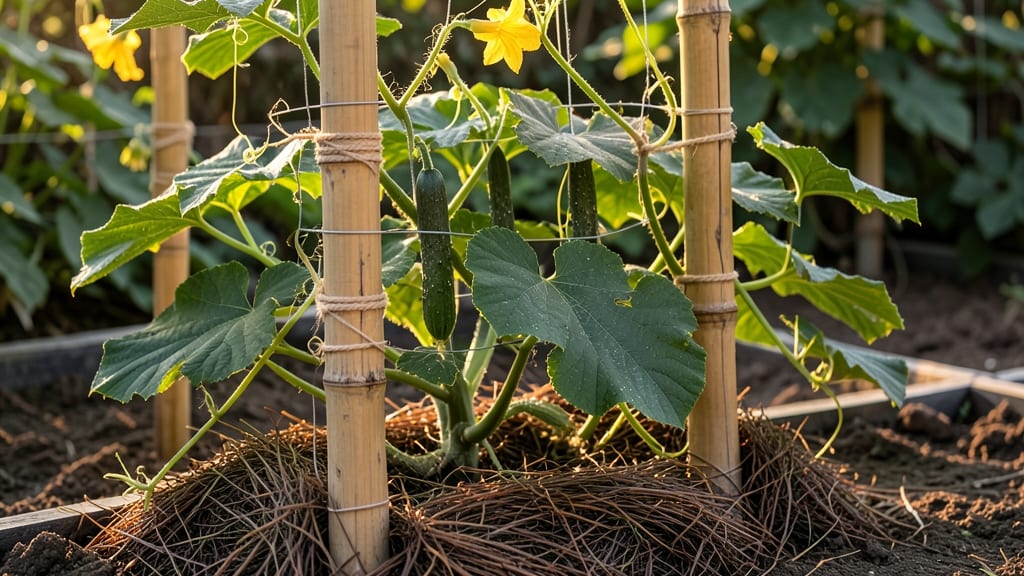
Making cucumbers climb isn't just clever—it's a game-changer for small spaces. 🌱 Last summer, my sprawling vines took over half my patio until I switched to vertical growing. Suddenly, I had more room for herbs, and my cucumbers produced 30% more fruit without a single disease spot.
The secret starts with the right support: A-frame trellises work best for heavy varieties like 'Straight Eight,' while flexible twine suits bushier types. Train the main vine early—wrapping it gently around the support—and let side shoots grow into tendrils.
Prune aggressively: pinch off suckers (those little shoots between the main stem and leaves) to focus energy on fruit production.
By midseason, you'll see vines twisting upward like nature intended, with cucumbers hanging neatly instead of rotting on the ground. The air circulation cuts down on powdery mildew, and harvesting becomes a breeze—no more crawling around in the dirt.
My neighbor's "too much space" problem became my neighborhood bragging point in just a few weeks.
Works for balconies, greenhouses, or even a sturdy fence. The only rule? Start training within the first week of planting. Everything else is just watching your garden transform from chaotic to showstopping—literally overnight.
📚 In This Guide
- What you need
- Instructions
- Tips and common mistakes
- Wrapping up and next steps
What you need
- ● Cucumber plants: 2–4 healthy seedlings or seeds (choose vining varieties like ‘Straight Eight’ or ‘Marketmore’).
- ● Pro tip: Start with trellis-friendly types for best results! 🌿
- ● Vertical support structure: Trellis: 6–8 ft tall (wooden, metal, or A-frame).
- ● OR Cattle panel: 4 ft wide, bent into a half-cylinder.
- ● OR PVC pipes: 1–2” diameter, cut into 6–8 ft lengths (spiral-wrap with twine).
- ● Growing medium: 5–10 gallons of well-draining potting mix (add perlite or compost for fluffiness).
- ○ Optional: Self-watering planters (10–15 gallons) to reduce maintenance. 💧
- ● Support accessories: Soft garden twine or jute twine (50–100 ft).
- ● Clips or Velcro plant ties (10–20 pieces).
- ● Stakes or small nails (for securing trellises to walls/fences).
- ● Sunlight: At least 6–8 hours of direct sun daily (south-facing walls or balconies are ideal!).
- ● Water: Consistent moisture (1–2 inches per week; vertical setups dry faster!).
- ● Space: 3–4 ft of vertical clearance + 1–2 ft of ground space for the base.
- ● Patience: Cucumbers need 4–6 weeks to climb after transplanting!
- ● Fertilizer: Balanced 10-10-10 or compost tea (feed every 2–3 weeks).
- ● Mulch: Straw or shredded leaves to retain moisture.
- ● Drip irrigation: Automates watering for busy gardeners. 🚰
- ● Pruning shears: For trimming excess leaves/vines (keep it tidy!).
Step-by-step instructions for training cucumbers vertically
Here's how I transform sprawling vines into tidy, high-yielding vertical plants—no more cucumbers hiding in the mulch.
🪴 Step 1: Choose the Right Support Structure
Cucumbers need a sturdy, stable support that can handle 10-15 pounds per plant at peak harvest. I recommend A-frame trellises (8 feet tall) or strong wire cages (5 feet tall) for most varieties. For bush types, a simple 3-foot tall wire hoop works perfectly—just ensure the gauge is at least 14-gauge wire to prevent sagging.
The key is spacing: place supports 3 feet apart in rows and 5 feet between rows to allow airflow. If using a trellis, anchor it securely with stakes or tie it to a permanent structure. I always test stability by gently shaking the frame before planting—if it wobbles, the vines will break under fruit weight.
🌱 Step 2: Plant Near the Trellis for Immediate Support
Sow seeds or transplant cucumbers 6-8 inches away from the trellis structure—this gives roots room to establish while keeping vines close enough to reach upward quickly. For bush varieties, plant directly against the wire hoop. The goal is to encourage upward growth from day one by minimizing horizontal sprawl.
I like to use biodegradable plant collars (made from recycled paper) around each stem at planting time. These create a natural guide for vines to climb without tying. Water deeply after planting to help roots anchor before vines start climbing.
🌿 Step 3: Train Vines as They Grow
When vines reach 6-8 inches tall, gently weave them through the trellis or around the wire hoop. For A-frame trellises, guide the main vine upward first, then let side tendrils develop naturally. Never force vines—let them find their own path. I use soft garden twine to loosely secure any wandering stems, but only when absolutely necessary.
Here's the thing—cucumbers grow best when their leaves get sunlight, but too much leaf exposure can overheat the plant. Aim to keep 3-4 leaves per foot of vertical growth. Prune any leaves that grow below the first fruit cluster to improve airflow and reduce disease risk.
✂️ Step 4: Prune Strategically for Vertical Growth
Once the main vine reaches the top of the trellis, pinch off the growing tip to encourage lateral branching. This creates a bushier plant that produces more fruit along the vertical structure. For indeterminate varieties, remove any suckers (side shoots) that form below the first 6 inches of growth—these steal energy from upward development.
Watch for male flowers (they have a small stem) and remove them if you're growing parthenocarpic varieties (like 'Sweet Success'). Female flowers (with tiny cucumbers at the base) should be preserved. I harvest every 3-5 days to prevent overloading the vertical structure—overweight vines snap easily.
💧 Step 5: Maintain Water and Nutrition for Climbing Power
Vertical cucumbers need consistent moisture—water at the base 1-2 inches deep every 2-3 days during fruiting. Let the soil dry slightly between waterings to prevent root rot, but never let vines wilt. I use a soaker hose along the trellis base to deliver water evenly without disturbing the climbing structure.
Feed plants with a balanced 10-10-10 fertilizer every 2-3 weeks once vines start climbing. The extra potassium helps strengthen vines for vertical growth. I also sprinkle compost tea** around the base monthly to boost microbial activity—healthy roots mean stronger climbing power.
Tips & tricks for perfect vertical cucumber growth
These garden hacks will transform your sprawling cucumber plants into tidy, high-yielding vertical climbers with minimal effort.
Support Stability Matters: Before planting, test your trellis structure by gently shaking it—if it wobbles, reinforce it immediately. I've seen 10-15 pound cucumbers snap trellises that weren't properly anchored. For A-frame trellises, bury the base stakes 12 inches deep and use 3 feet between rows to prevent crowding. The extra stability pays off when you're harvesting 8-foot vines loaded with fruit.
Planting Position is Critical: Don't plant directly against the trellis—keep cucumbers 6-8 inches away for the first few weeks. This gives roots room to establish while keeping vines close enough to reach upward quickly. I've found that using biodegradable plant collars at planting time creates a natural guide for vines to climb without needing to tie them later. These collars also help prevent soil-borne diseases by keeping stems slightly elevated.
Pruning Strategy for Vertical Growth: Once your main vine reaches the top of your 8-foot trellis, pinch off the growing tip to encourage lateral branching. This creates a bushier plant with more fruit-bearing zones along the vertical structure. For indeterminate varieties, remove any suckers (side shoots) that form below the first 6 inches of growth—these compete with upward development. I harvest every 3-5 days to prevent overloading the vertical structure, which could snap under the weight.
Watering Wisdom: Vertical cucumbers need consistent moisture—water at the base to 1-2 inches deep every 2-3 days during fruiting. The key is maintaining even moisture without waterlogging. I use a soaker hose along the trellis base to deliver water directly to the roots without disturbing the climbing structure. This method also prevents foliar diseases that can spread when water hits the leaves.
Pro Tips for Make Cucumbers Climb
- These garden hacks will transform your sprawling cucumber plants into tidy, high-yielding vertical climbers with minimal effort.
- Support Stability Matters: Before planting, test your trellis structure by gently shaking it—if it wobbles, reinforce it immediately.
- Planting Position is Critical: Don't plant directly against the trellis—keep cucumbers 6-8 inches away for the first few weeks.
Frequently asked questions
Got questions about growing cucumbers vertically? You’re not alone! Here are answers to the most common queries to help you master the art of climbing cucumbers—no green thumb required.
How long does it take for cucumbers to start climbing?
Cucumbers typically begin climbing within 3–5 days after planting near a trellis or support. Vines grow fastest in warm soil (70°F+) and bright sunlight. If they’re slow to start, check for pests, poor soil, or insufficient water. Patience pays off—healthy vines can reach 10+ feet in a season!
Can I use any type of trellis for cucumbers?
Not all trellises are equal! Cucumbers need durable, sturdy supports like A-frame cages, bamboo stakes, or heavy-duty netting. Avoid flimsy options—their weight can snap weak materials. For sprawlers (like ‘Straight Eight’), use a wide trellis or lattice. Bush varieties (like ‘Bush Champion’) may not climb well but benefit from light support.
Why aren’t my cucumber vines climbing, even with a trellis?
Sluggish climbers often suffer from one of these issues:
- Lack of training: Gently tie vines to the trellis every few days.
- Overcrowding: Thin plants to 12–24 inches apart for airflow.
- Nutrient deficiency: Add compost or a balanced fertilizer (10-10-10).
- Pests/disease: Check for aphids, powdery mildew, or root rot.
What’s the best alternative if I don’t have a yard for a trellis?
No space? No problem! Try these creative climbing hacks:
- Balcony/patio: Use wall-mounted trellises or repurpose a ladder with netting.
- Small pots: Train vines on a 5-gallon bucket trellis (drill holes for drainage).
- Indoor growing: Place cucumbers near a sunny window with a mini trellis (like a tomato cage).
When is the best time to harvest climbing cucumbers for maximum yield?
Harvest when cucumbers are 6–8 inches long and firm for best flavor. Check plants every 2–3 days—overripe cucumbers slow production. For pickling varieties, harvest smaller (2–4 inches). Pro tip: Use pruning shears to avoid damaging vines, and harvest early in the morning for crispest picks!
Wrapping up and next steps
Transforming your cucumbers into vertical climbers isn’t just clever—it’s a game-changer for space, yield, and even pest control! 🌱 With the right trellis, training techniques, and a little patience, you’ll enjoy healthier plants, easier harvesting, and a garden that’s both productive and beautiful.
Whether you’re a backyard gardener or an urban balcony grower, these hacks make it simple to turn vines into lush, upward-reaching masterpieces.
Ready to level up your harvest? Grab your tools, pick a sunny spot, and start climbing—your future cucumber bounty is just a trellis away! 🌿 For even more tips, check out our guide on maintaining vertical gardens year-round.