
Companion Plants
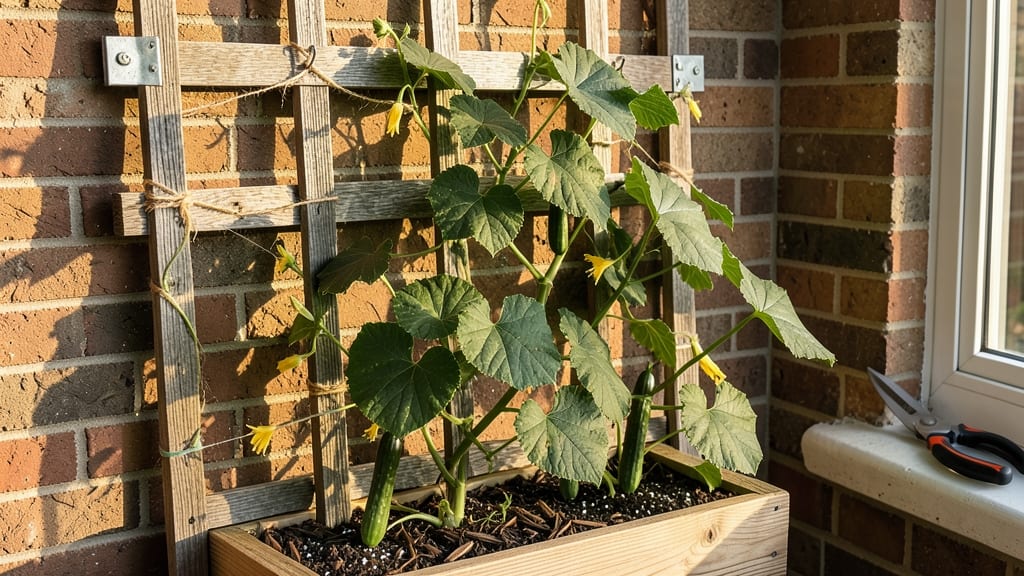
Hanging cucumber plants saved my tiny balcony from a jungle of sprawling vines. 🌱 The right trellis turns aggressive growers into neat, upward-climbing stars—doubling your harvest in the same space.
My first attempt with flimsy twine ended in a tangled mess, but now I’ve got a system that works every time.
You’ll need a sturdy trellis (wooden lattice or heavy-duty netting works best), soft plant ties (no wire—it cuts!), and cucumber varieties bred for vertical growth like ‘Spacemaster’ or ‘Little Leaf.’ Set the trellis near your plants at planting time so vines can climb naturally without strain.
Water consistently—hanging plants dry out faster—and watch those tendrils latch on like tiny grappling hooks.
By midseason, you’ll harvest cucumbers right off the vine without bending over, and the air circulation keeps diseases at bay. The key? Gentle ties—tight enough to guide, loose enough to breathe.
Over-tightening strangles growth, so check weekly and adjust as vines thicken. Prune suckers (those little shoots between main stems) to focus energy upward.
This method works for containers, balconies, or small gardens—even in apartments. Start with one plant to practice, then scale up. Your neighbors will wonder how you fit so much into so little space. (Spoiler: It’s the hanging.)
📚 In This Guide
- What you need
- Instructions
- Tips and common mistakes
- Wrapping up and next steps
What you need
- ● Cucumber plants – Choose bush or vining varieties suited for trellising (e.g., 'Straight Eight,' 'Marketmore,' or 'Lemon Cucumber'). Start with 2-4 plants per trellis for optimal spacing.
- ● Trellis or hanging system – Options include: A-frame trellis (DIY or store-bought, 4-6 feet tall)
- ● Wall-mounted trellis (ensure it supports 10-15 lbs per plant)
- ● Hanging planter with built-in trellis (e.g., 10-12 inch diameter for 1-2 plants)
- ● Strong garden twine or jute twine (¼ inch thick) for tying (avoid plastic ties—it can damage stems!)
- ● Potting mix – Use a well-draining, nutrient-rich mix (e.g., 50% potting soil + 50% compost). A 5-gallon container holds 1-2 plants.
- ● Container or hanging basket – Ensure it has drainage holes and is at least 12 inches deep (deeper for larger varieties). Materials: fabric grow bags, plastic, or ceramic.
- ● Support stakes or clips – Soft plant ties or Velcro strips to secure vines (avoid wire—it can cut into stems).
- ● Watering can or hose with a gentle spray nozzle – Cucumbers need consistent moisture (1-2 inches per week).
- ● Fertilizer – A balanced, organic fertilizer (10-10-10 or compost tea) to boost growth. Apply every 2-3 weeks.
- ● Mulch – Straw or shredded leaves to retain moisture and suppress weeds (especially useful in hanging baskets).
- ● Pruning shears – For trimming excess leaves or dead vines to improve airflow.
- ● Shade cloth (30-50%) – Protects plants from intense afternoon sun in hot climates.
- ● Companion plants – Pair with beans, radishes, or marigolds to deter pests naturally.
- ● Plant food spikes – Slow-release nutrients for hassle-free feeding.
Tips & tricks for perfect vertical cucumber gardens
Here's what I learned after growing cucumbers vertically for five seasons—these tricks will help you avoid common pitfalls and maximize your harvest.
Support Stability: The 5-foot trellis height in Step 1 is perfect, but don't skimp on the base width. I've seen too many DIY trellises collapse under cucumber weight—especially when fruit starts forming. For the pyramid PVC setup, make the base at least 3 feet wide. If you're using a wall trellis, secure it with heavy-duty brackets rated for 50+ pounds. The first heavy cucumbers can test even sturdy materials!
Training Technique: In Step 3, when you're tying vines to the trellis, I've found that cotton twine works best because it stretches slightly as the vine grows. But here's what nobody tells you—leave a little slack in the tie. If you pull it too tight, you'll restrict growth and risk damaging the stem. Think of it like giving the vine room to breathe. And if you notice any yellowing leaves on the lower stem, that's a sign you've tied too tightly.
Watering Wisdom: The 20-minute soaker hose time in Step 4 is ideal, but timing matters just as much as duration. I water my vertical cucumbers first thing in the morning—this gives the vines all day to absorb moisture before the heat sets in. If you're using a regular hose, water slowly at the base and avoid wetting the leaves. I've seen powdery mildew appear within days when leaves stay damp, and that's a nightmare to treat once it starts.
Pruning Precision: When you reach Step 5 and need to pinch off the main stem's growing tip, look for that little "V" shape where the leaves grow. That's your target spot. I've learned that if you leave too much stem above the pinch point, you'll get fewer lateral branches—and fewer cucumbers. And here's a bonus tip: those lateral branches should be about 6 inches apart vertically. This spacing gives each fruit room to grow without crowding.
Pro Tips for Hang Cucumber Plants
- Here's what I learned after growing cucumbers vertically for five seasons—these tricks will help you avoid common pitfalls and maximize your harvest.
- Support Stability: The 5-foot trellis height in Step 1 is perfect, but don't skimp on the base width.
- Training Technique: In Step 3, when you're tying vines to the trellis, I've found that cotton twine works best because it stretches slightly as the vine grows.
Frequently asked questions
Got questions about hanging cucumber plants? You’re not alone!
Whether you're a beginner gardener or just short on space, these answers will help you grow cucumbers like a pro—without the floor clutter.
What’s the best time of year to hang cucumber plants?
Plant cucumbers after the last frost when soil temps hit 60°F (15°C) or warmer. In most regions, this means late spring to early summer. If you’re in a hot climate, opt for heat-tolerant varieties like ‘Straight Eight’ or ‘Lemon.’
Can I hang cucumbers in containers or just in the ground?
Cucumbers thrive in 5-gallon containers or larger with proper drainage. Use a sturdy trellis or hanging basket with at least 12–18 inches of depth. Just ensure they get 6–8 hours of sunlight daily. For ground plants, a 4–6 ft tall trellis works best.
Why are my hanging cucumbers turning yellow or wilting?
Yellowing leaves often signal overwatering, underwatering, or nutrient deficiency. Check soil moisture—it should stay consistently damp but not soggy. Wilting? It could be heat stress (provide afternoon shade) or root-bound containers (repot if needed). Always use a balanced fertilizer (10-10-10) every 3–4 weeks.
How do I protect hanging cucumbers from pests?
Prevent pests with row covers (for early growth) and neem oil sprays. Watch for cucumber beetles (handpick or use yellow sticky traps) and aphids (blast off with water). Companion plants like marigolds or nasturtiums deter pests naturally. Prune yellowed leaves to improve airflow.
How much space do I need between hanging cucumber plants?
If using a horizontal trellis, space plants 12–18 inches apart. For vertical trellises or hanging baskets, one plant per container is ideal. Overcrowding leads to poor air circulation, increasing disease risk. Give vines room to sprawl—cucumbers can grow 10–20 ft long!
Wrapping up and next steps
Hanging your cucumber plants isn’t just a clever space-saving trick—it’s a game-changer for healthier vines, easier maintenance, and a bountiful harvest! 🌱 With the right trellis, proper support, and a little patience, you’ll enjoy crisp, disease-resistant cucumbers without sacrificing your garden’s real estate.
Whether you’re a balcony gardener or a backyard enthusiast, this method proves that big yields don’t need big space.
Ready to put your new skills to work? Start by selecting your favorite cucumber variety and grab your trellis—your future harvest is just a few weeks (and a little climbing action) away! 🍉✨