
How To
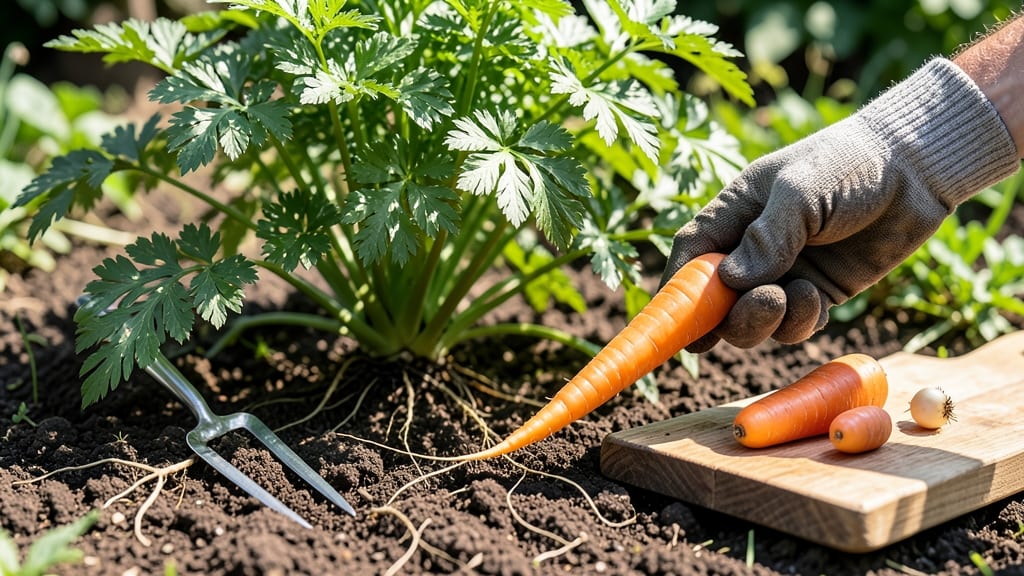
Knowing how to know when carrots are ready to pick can turn a garden full of 🥕 potential into a bounty of sweet, crisp roots—or a pile of tough, woody disappointments. Most gardeners wait too long, missing the perfect moment when flavor peaks and texture is just right.
The secret lies in three simple visual cues that tell you when your carrots are ready to pull. You don’t need fancy tools or years of experience—just your eyes and a little patience.
I’ll show you how to spot these signs without digging up every plant, so you can enjoy the harvest without the guesswork.
Timing matters more than you think. Harvest too early, and you’ll get small, underdeveloped roots. Wait too long, and they’ll turn bitter or split. The good news? With these 3 foolproof methods, you’ll never second-guess your harvest again.
Let’s break down the exact signals to watch for—so you can pull your carrots at their sweetest, crispest moment. Ready to become a carrot-harvesting pro?

3 Visual cues to harvest carrots at peak ripeness (with photos)
Knowing when to harvest carrots isn’t about guessing—it’s about reading three key visual cues that tell you the roots are ready. I’ve learned the hard way that waiting too long turns sweet carrots into tough, woody sticks, while harvesting too early leaves you with tiny, underdeveloped roots.
The good news? These signs are simple to spot once you know what to look for.
First, focus on the foliage. Healthy carrot leaves should be 6-8 inches tall and a vibrant, deep green. If you notice more than 50% of leaves turning yellow or wilting, that’s a sign the plant is shifting energy to the root—time to harvest.
But here’s the trick: don’t wait until all leaves yellow, or you risk missing the sweet spot.
The second clue is the soil visibility. Gently brush away a little dirt around the base of the plant. If the shoulder of the carrot (the top of the root) is about ½-inch wide and the carrot itself is 6-8 inches long, it’s likely ready.
This is especially true for standard varieties like Danvers or Nantes. If the soil is too compacted, the roots may fork or split, so loose soil helps them grow straight and even.
Third, test the root’s firmness. Use your fingers to gently squeeze the exposed part of the carrot. If it feels plump and resists slight pressure, it’s ready. A carrot that’s still soft or easily pierced with your fingernail needs more time.
Pro tip: Avoid harvesting when the soil is waterlogged or too dry, as this can stress the plant and affect flavor.
Here’s how I test readiness without digging up every plant: I’ll gently pull 1-2 carrots from the outer rows first. If they meet the size, color, and firmness criteria, the rest are ready too.
This method saves time and prevents over-harvesting. Plus, it’s a great way to check for pests or diseases early on.
Timing matters because carrots left in the ground too long can become woody and bitter. On the flip side, harvesting too early means small, underdeveloped roots with less sweetness. The 60-80 day window (depending on the variety) is your sweet spot.
For example, short-season varieties like Paris Market mature in about 50 days, while longer varieties like Chantenay take closer to 80 days.
One mistake I made early on was ignoring the top of the carrot. A rounded shoulder is a clear sign of readiness, while a pointed tip means it needs more time. Pay attention to this detail—it’s often the difference between a perfectly shaped carrot and one that’s still growing.
If you’re unsure, I recommend harvesting a few and tasting them. The sweetness and crunch will tell you everything you need to know!
Finally, remember that bolting (sending up a flower stalk) is a red flag. If your carrots bolt, they’ll develop hard, bitter seeds instead of edible roots. This usually happens in hot weather or long daylight, so plant bolt-resistant varieties like Danvers Half Long if you’re in a warm climate.
Harvesting at the right time isn’t just about size—it’s about flavor, texture, and avoiding waste.
Now that you know these three foolproof cues, you’ll never guess when to harvest again. Grab your gardening gloves, head outside, and enjoy the satisfaction of pulling perfectly ripe, sweet carrots straight from the earth! 🥕
How long carrots take to mature (and why timing matters)
Carrots don’t follow a one-size-fits-all timeline—they mature between 50 to 90 days, depending on the variety and growing conditions. Most gardeners aim for the 60–80 day sweet spot, where roots reach peak flavor and texture.
But skipping this window means tough, woody carrots or ones that split in the soil.
Short-season varieties like 'Paris Market' (50–60 days) are perfect for cool climates, while 'Danvers' (70–80 days) thrive in warmer zones. Soil temperature plays a huge role—roots grow fastest in 60–70°F soil, slowing down when it’s too hot or cold. That’s why summer-planted carrots often take longer to mature.
Daylight also affects timing. Carrots planted in spring (April–May) typically mature by July–October, while summer plantings (July–August) may not be ready until October–November. The trade-off? Harvesting too early gives small, underdeveloped roots, while waiting too long risks bolting (flowering) or woodiness.
🥕 Key Maturity Factors
- 🌡️ Soil Temp: 60–70°F = fastest growth
- ☀️ Daylight: 6–8 hours/day speeds up maturity
- 📏 Variety: Short-season (50–60 days) vs. long-season (70–90 days)
- ⏳ Harvest Window: 60–80 days = peak flavor
Here’s a pro tip: Test a few carrots at 50 days to check size. If they’re still small (3 inches), wait another 10–15 days. Overcrowding or poor soil can delay maturity by 2–3 weeks, so thin seedlings early to avoid competition.
If your carrots exceed 90 days, they’ll likely turn woody and pithy. The good news? You can still harvest them, but their flavor and texture won’t be ideal. For the best results, plant succession crops every 2–3 weeks to ensure a continuous harvest window.
Remember: Carrots don’t ripen after picking like tomatoes—they’re best enjoyed fresh from the garden. So mark your planting dates and set reminders for 60–80 days out to catch them at their crispest! 🌱