
Watering
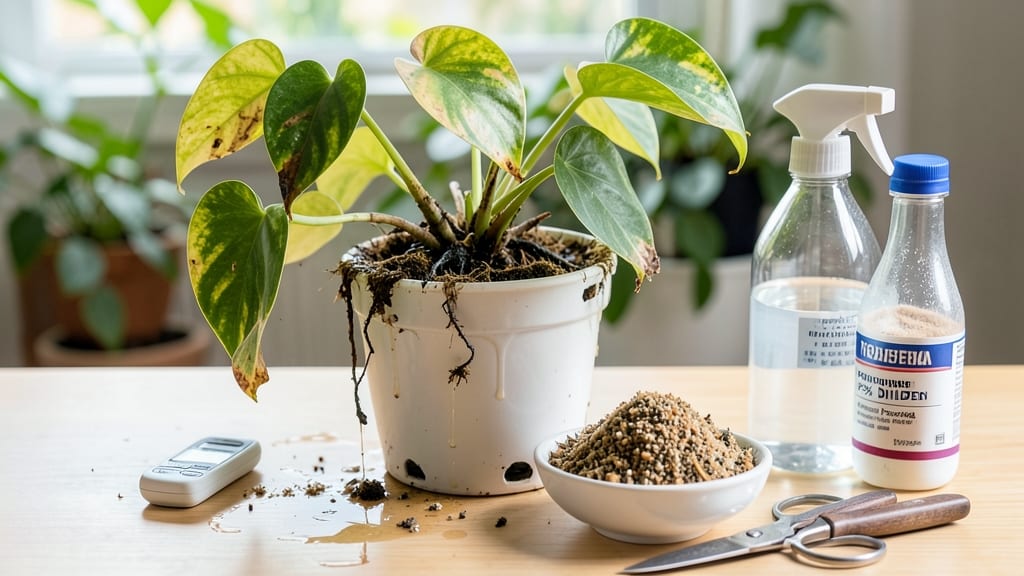
How to fix an overwatered indoor plant—it’s not as hopeless as it looks, and with the right steps, you can nurse it back to life. 🌱 I've nursed back more soggy roots than I'd like to admit, and the secret starts with recognizing the symptoms: yellowing leaves, mushy stems, or that telltale foul smell. The good news? Most plants bounce back with the right care, even when they look like they're checking out.
First, stop watering immediately and move the plant to a brighter spot—just not direct sun. Gently remove it from its pot and inspect the roots: healthy ones are firm and white, while rotten ones are brown and slimy.
Trim away the bad roots with clean scissors, then repot in fresh, well-draining soil. This isn't just about saving the plant; it's about giving it a fresh start.
Within 2-4 weeks, you'll see new growth pushing through if the roots were salvageable. The key is consistency: water only when the top inch of soil feels dry, and always use pots with drainage holes.
I've learned the hard way that even "low-light" plants need occasional air around their roots—otherwise, you're just creating a swamp.
For plants beyond saving, don't toss them—compost the roots instead. And here's the real game-changer: keep a moisture meter handy. It's the only way to stop guessing and start growing with confidence. Your plants will thank you with lush, vibrant leaves that actually stay that way.
Root of the Problem Explained
Overwatering is like a silent killer for your indoor plants—it sneaks up when you least expect it, and by the time you notice yellowing leaves or mushy stems, the damage may already be done.
But why does this happen? Let’s dig into the science behind it, so you can spot the warning signs before it’s too late.
🚨 The Issue: Many indoor plants suffer from overwatering because their containers lack proper drainage. Without drainage holes, excess water pools at the bottom of the pot, suffocating the roots and cutting off their oxygen supply.
Why It Happens:
- Compacted Soil: Some potting mixes retain too much moisture, especially if they’re heavy in peat or clay. When water isn’t allowed to escape, the roots sit in a soggy environment, leading to anaerobic conditions (lack of oxygen).
- Sealed Containers: Pots without drainage holes trap water like a bathtub, forcing roots to drown. Even decorative cachepots (outer pots without holes) can trap moisture if the inner pot isn’t breathable.
- Overpotting: Using a container that’s too large for the plant’s root system means more soil holds onto water longer than the roots can absorb it, increasing the risk of waterlogging.
Actionable Insight: If your plant’s pot lacks drainage, switch to one with holes or place a layer of gravel or perlite at the bottom to promote airflow. For cachepots, ensure the inner pot has drainage.
💦 The Issue: Watering on a strict schedule—whether it’s daily, every other day, or just because "it looks dry"—is a common mistake. Plants don’t follow your calendar; their water needs depend on light, humidity, and season.
Why It Happens:
- Ignoring Soil Moisture: Sticking your finger in the soil is the gold standard, but many people guess instead. If the top inch feels damp, the roots are likely already struggling.
- Seasonal Shifts: Plants in winter need far less water than in summer, yet people often keep the same routine. Cooler temps slow evaporation, so soil stays wet longer.
- Humidity Differences: High humidity (common in bathrooms or kitchens) means plants lose moisture slower, while dry air (like in heated rooms) speeds up evaporation—both can lead to over- or under-watering if you don’t adjust.
Actionable Insight: Check soil moisture before watering—if it’s damp, wait. Use a moisture meter for precision, or opt for self-watering pots with built-in sensors.
🍄 The Issue: Once roots start drowning, fungal and bacterial infections (like Pythium or Phytophthora) move in, causing root rot. These pathogens thrive in waterlogged soil, breaking down root tissue and blocking nutrient uptake.
Why It Happens:
- Oxygen Starvation: Roots need oxygen to respire (breathe). When submerged in water, they switch to anaerobic respiration, producing ethanol (alcohol) as a byproduct—this is toxic to the plant.
- Fungal Growth: Fungi like Rhizoctonia spread rapidly in wet conditions, clogging root cells and cutting off water/nutrient flow. You might see black, mushy roots or a foul smell.
- Weakened Defense: Overwatered plants become stressed, making them vulnerable to pests like fungal gnats or slime mold, which further damage roots.
Actionable Insight: If you suspect root rot, trim affected roots with sterilized scissors and repot in fresh, sterilized soil with perlite or sand for aeration.
🌱 The Issue: Not all plants thrive in the same soil. Heavy, clay-based mixes hold water like a sponge, while fast-draining cactus mixes leave roots thirsty. Using the wrong medium can turn your watering routine into a disaster.
Why It Happens:
- High Clay Content: Clay soils compact easily, reducing airflow and trapping moisture. Plants like ferns or calatheas need well-aerated, peat-based mixes, while succulents choke in them.
- Lack of Organic Matter: Soil with too little compost or peat retains water poorly, leading to uneven moisture levels. Roots at the bottom may drown while the top stays dry (a classic overwatering trap).
- No Amendments: Adding perlite, vermiculite, or orchid bark improves drainage, but many potting mixes skip these. Without them, water pools instead of draining.
Actionable Insight: Match your soil to the plant—succulents need 60% mineral, 40% organic; tropical plants prefer 50% organic, 50% peat. Always amend with perlite for better aeration.
🌡️ The Issue: Your home’s climate plays a huge role in how quickly soil dries out. Ignoring these factors can turn your watering habits into a guessing game.
Why It Happens:
- Low Light Conditions: Plants in dim corners (like bathrooms or north-facing windows) photosynthesize slower, so they transpire less water. This means soil stays wet longer, increasing rot risk.
- High Humidity: Areas like kitchens or showers keep air saturated, slowing evaporation. A plant that thrives in 40% humidity may drown in 70%.
- Poor Air Circulation: Stagnant air (like in closed rooms) traps moisture around leaves and soil. Fans or open windows help, but many forget this factor.
Actionable Insight: Adjust watering based on location—move plants to brighter spots if possible, or reduce watering in humid areas. Group plants together to create a microclimate with better airflow.
🌿 The Issue: Not all plants are created equal. A snake plant can survive weeks without water, while a peace lily wilts in a dry pot. Treating them the same leads to overwatering (or underwatering).
Why It Happens:
- Succulents vs. Tropicals: Succulents store water in leaves/stems, while tropicals (like pothos or ferns) need consistently moist soil. Mixing up their care is a fast track to root rot.
- Slow vs. Fast Growth: Mature plants with large root systems need more water than seedlings, but many water uniformly regardless of size.
- Dormancy Phases: Some plants (like onions or amaryllis) go dormant in winter, requiring almost no water. Yet people keep watering as usual.
Actionable Insight: Research your plant’s native habitat—desert plants (like jade) hate moisture; jungle plants (like calatheas) crave it. Water accordingly, and adjust for seasons.
Overwatering is rarely just about "giving too much water"—it’s usually a mix of poor drainage, ignored signs, wrong soil, or environmental mismatches. The good news?
Once you identify the real cause, fixing it is straightforward. Next up: how to revive your plant before the damage becomes permanent. 🚀
Revive Your Plant Now
Overwatering can feel like a death sentence for your leafy friends, but don’t toss that drooping plant just yet! With the right steps, you can nurse it back to health—sometimes even saving it from the brink.
The key is acting fast, diagnosing the damage, and applying targeted fixes. Below, we’ll map out exact solutions for the most common overwatering symptoms, along with prevention tips to keep your green babies thriving long-term.
Cause: Root rot from excess moisture cuts off oxygen, causing leaves to yellow and wilt. Fix:
- Remove the plant from its pot and gently shake off old soil to inspect roots. 🔍
- Trim the damage: Snip off black, mushy, or slimy roots with sterilized scissors. Healthy roots are firm and white.
- Rinse roots in room-temperature water to remove excess soil and bacteria.
- Repot in fresh, well-draining soil—mix in perlite or orchid bark (20%) to improve aeration.
- Skip watering for 3–5 days to let roots recover. Place the pot in a shallow tray with pebbles (not water) to boost humidity.
💡 Pro Tip: If roots smell foul, soak them in a 1:10 hydrogen peroxide-water solution for 10 minutes to kill fungus before repotting.
Cause: Overwatered plants often suffer from anaerobic stress (roots suffocating in soggy soil). Fix:
- Test the soil moisture with your finger—if the top 2 inches are damp, wait before watering.
- Bottom-water your plant: Place the pot in a tray of water for 10–15 minutes, then drain completely. This encourages roots to seek moisture and prevents surface rot.
- Prop up wilting stems with a chopstick or toothpick to support them while roots recover.
- Move to brighter light (but avoid direct sun, which stresses weak plants). Most indoor plants thrive in indirect light.
⏰ Recovery Time: Some plants perk up in 24–48 hours; others may take a week. If no improvement after 7 days, repeat the root check.
Cause: Fungus thrives in wet, stagnant conditions—look for white fuzz, black spots, or a sour smell. Fix:
- Wash the pot with 1 part bleach to 9 parts water, then rinse and dry thoroughly.
- Treat the plant with a fungicide spray (like neem oil or copper fungicide) or a baking soda solution (1 tsp baking soda + 1 quart water + a drop of dish soap).
- Repot in sterile soil (sterilize soil in the oven at 200°F for 30 minutes if reusing).
- Improve airflow by spacing plants apart and using a small fan (on low) near them for 10–15 minutes daily.
🌡️ Prevention: Keep humidity below 60% and avoid misting leaves if your plant is recovering.
Cause: Chronic overwatering weakens roots, so the plant stops growing or produces small, pale leaves. Fix:
- Adjust your watering schedule: Water only when the top 1–2 inches of soil are dry (use a moisture meter for accuracy).
- Upgrade your pot: Terracotta pots dry faster than plastic—switch if your plant is prone to soggy soil.
- Fertilize lightly with a balanced, diluted fertilizer (half-strength) to encourage new growth. Overwatered plants are sensitive to salts!
- Prune dead leaves to redirect energy to healthy growth.
🎯 Long-Term Fix: Train yourself with the "finger test"—stick your finger in the soil before watering. If it’s damp, wait.
Cause: If roots are completely rotted (no white/firm roots remain), the plant may still be salvageable via cuttings. Fix:
- Take stem cuttings (4–6 inches long) from healthy parts of the plant.
- Dip in rooting hormone (optional but helpful) and plant in sandy, well-draining soil.
- Cover with a plastic bag (like a DIY greenhouse) to retain humidity, but ventilate daily to prevent mold.
- Keep soil lightly moist (not soggy) and place in bright, indirect light.
✨ Success Rate: Some plants (like pothos or snake plants) root easily in 2–4 weeks; others may take longer.
🔥 Final Reminder: Prevention is easier than revival! Water less, drain more, and check your plant’s needs—most indoor plants prefer dry spells over soggy soil. Now grab that droopy friend and give these fixes a try—your green thumb is about to get a second chance! 🌿
Frequently asked questions
How can I tell if my plant just needs water or is overwatered?
Check the soil first—if the top 1-2 inches are dry, it likely needs water. But if the soil feels soggy and the leaves are yellowing (especially lower ones) or wilting despite moisture, it's overwatered. Another clue: healthy roots are firm and white, while rotted roots are brown, mushy, and may smell foul when removed from the pot.
Can I save a plant with completely rotted roots?
Sometimes! If the stems are still firm and green, take 4-6 inch cuttings from healthy parts, dip in rooting hormone, and plant in fresh, well-draining soil. Cover with a plastic bag (like a DIY greenhouse) to retain humidity, but ventilate daily. Many plants like pothos or snake plants can regrow roots in 2-4 weeks this way.
What's the fastest way to dry out soggy soil?
Remove the plant from its pot and spread the roots on a paper towel or clean cloth. Let them dry for 1-2 hours in indirect light, then repot in fresh, well-draining soil. For the pot itself, leave it empty in a sunny spot for 24 hours to dry completely before reuse. This prevents fungal growth while roots recover.
Why does my plant keep getting overwatered even when I stop?
This usually means the pot lacks drainage holes or the soil retains too much moisture. Switch to a container with holes and use a mix with 20% perlite or orchid bark for better aeration. Also check your plant's native habitat—succulents need fast-draining mixes while tropical plants prefer moisture-retentive soil.
Is it safe to use hydrogen peroxide on overwatered plants?
Yes! A 1:10 dilution (1 part 3% hydrogen peroxide to 10 parts water) can help kill fungus and bacteria on roots. Soak affected roots for 10 minutes, then rinse and repot. This is especially helpful if you notice a foul smell or see black, mushy roots—it gives your plant's roots a clean start before replanting.